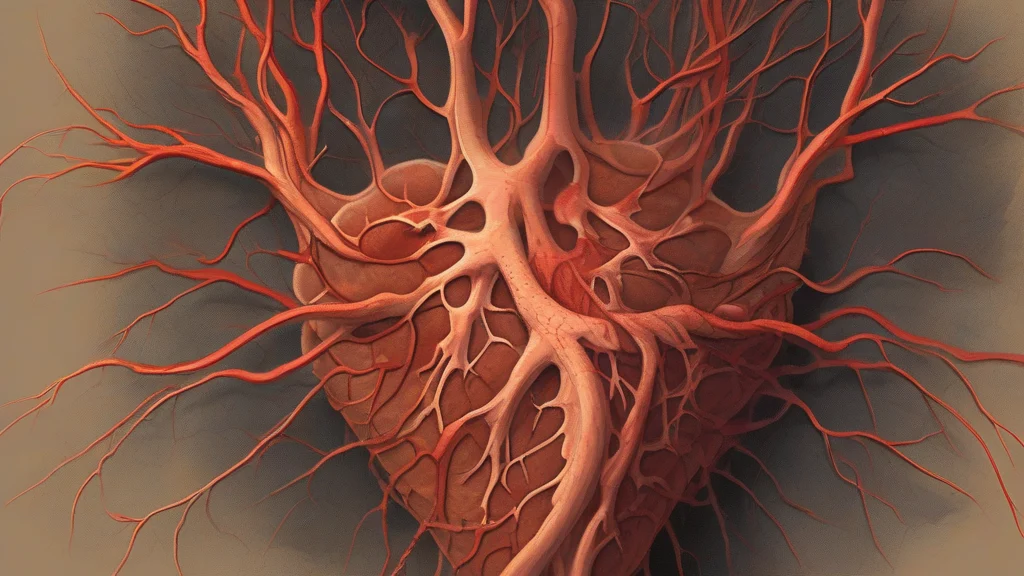
What does angiogenesis mean?
Angiogenesis is the biological process through which new blood vessels form from pre-existing ones. It is a fundamental mechanism in human physiology: embryos use it to build their circulatory systems, adults depend on it to heal wounds and repair damaged tissue, and the menstrual cycle involves regulated angiogenic activity. The word belongs chiefly to medical and scientific vocabulary, appearing constantly in research on cancer, eye disease, and regenerative medicine. Its importance stems from a key insight: solid tumors cannot grow beyond a few millimeters without recruiting their own blood supply, so tumors actively secrete signals that stimulate nearby vessels to sprout toward them. This discovery, championed by surgeon-scientist Judah Folkman, gave rise to anti-angiogenic therapies — drugs such as bevacizumab that starve tumors by cutting off their vascular lifeline. Understanding angiogenesis therefore means understanding both how the body builds itself and how medicine learned to interrupt that construction when it goes wrong.
nounThe physiological process by which new blood vessels form from pre-existing vessels, occurring normally in growth and wound healing and abnormally in diseases such as cancer.
- The biological process by which new capillaries develop from pre-existing blood vessels, especially during wound healing, embryonic development, or tumor growth.
"Tumors rely on angiogenesis to recruit the blood supply they need to grow beyond a few millimeters."
"Regular exercise promotes angiogenesis in skeletal muscle, improving oxygen delivery."
"The ophthalmologist explained that abnormal angiogenesis in the retina was threatening her vision."
Rarely used; angiogenesis is almost always treated as a singular uncountable noun in medical and scientific writing.
"The study compared angiogeneses across different tissue types."
Cancer cells hijack the body's own vessel-building machinery — blocking it with anti-angiogenic drugs won Judah Folkman's idea a place in modern oncology.
Reviewed by Deb Chak, Editor. AI-assisted content curated by RJS Tech Solutions LLP.
Etymology of angiogenesis
Angiogenesis derives from Greek roots: 'angeion' (vessel, originally a small container) combined with 'genesis' (origin or creation), joined in the form angio- + genesis. The compound reflects the pattern of modern scientific Latinized-Greek terminology rather than classical usage, having been coined in the twentieth century as vascular biology matured as a discipline. It shares its roots with other angio- terms such as angiography, hemangioma, and angiology, and with genesis-derived words like pathogenesis and spermatogenesis.
Related word forms
How angiogenesis is actually used
A technical term used almost exclusively in medical, biological, and scientific contexts; rarely encountered in everyday conversation. It carries no inherent positive or negative connotation — the same process can be beneficial (healing) or harmful (cancer).
Easily confused with angiogenesis
Vasculogenesis is the de novo formation of blood vessels from progenitor cells, whereas angiogenesis is the sprouting of new vessels from existing ones.
Arteriogenesis is the growth of existing collateral arteries into larger conductance vessels, while angiogenesis refers to new capillary sprouting.