
What does vascularization mean?
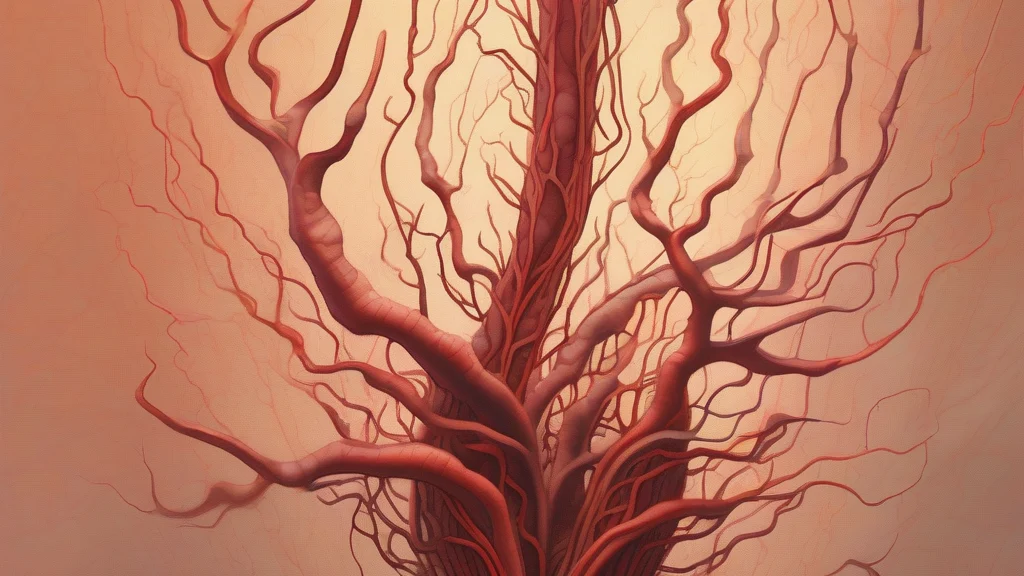
Vascularization is the biological process by which blood vessels form or develop within a tissue or organ. It is essential during healing, development, and tissue repair because cells need oxygen, nutrients, and waste-removal pathways supplied by the circulatory system. Medical researchers also study abnormal vascularization, particularly the extensive blood-vessel growth that can sustain tumours. The term is related to angiogenesis, although angiogenesis more specifically describes new blood vessels growing from pre-existing vessels. Vascularization can refer either to the process itself or to a tissue's resulting blood-vessel supply. It occurs in formal medical, biological, and engineering contexts and is not generally used in everyday conversation. The related verb, vascularize, is common in specialist writing, while the noun is usually treated as a mass noun rather than regularly counted.
nounThe process of forming or developing blood vessels in a tissue or organ; also, the condition of having a network of blood vessels.
- The process of developing blood vessels in a tissue or organ.
- The state of possessing or acquiring a blood-vessel network.
"The treatment inhibited vascularization of the tumour, limiting its supply of oxygen and nutrients."
"Impaired vascularization reduced the healing rate of the graft."
"Researchers used imaging to measure vascularization in the developing tissue."
Rare in general usage, though the plural may be used to refer to distinct instances or examples of the process.
"The researchers compared vascularizations in healthy and damaged tissues."
Without vascularization, wounded tissue cannot recruit the blood vessels needed for repair and recovery.
Reviewed by Deb Chak, Editor. AI-assisted content curated by RJS Tech Solutions LLP.
Where does vascularization come from?
Vascularization is formed from vascular, meaning “relating to blood vessels,” plus the suffix -ization, indicating the formation or development of a condition or structure. Vascular ultimately comes from Latin vasculum, a diminutive of vas meaning “vessel.” The same Latin foundation appears in related English words such as vasculature, vascularity, and vasculitis.
Related word forms
How vascularization is actually used
This is a formal medical and scientific term. It is generally used as a mass noun, especially when referring to a biological process, and often appears in discussions of wound healing, tumour growth, tissue engineering, and vascular disease.
Easily confused with vascularization
Vascularization is the general development or establishment of blood vessels in tissue, whereas angiogenesis specifically denotes the formation of new blood vessels from existing ones.
Neovascularization specifically refers to the formation of new blood vessels in tissue that previously lacked an adequate vascular network, often in a pathological context.