What does angsty mean?
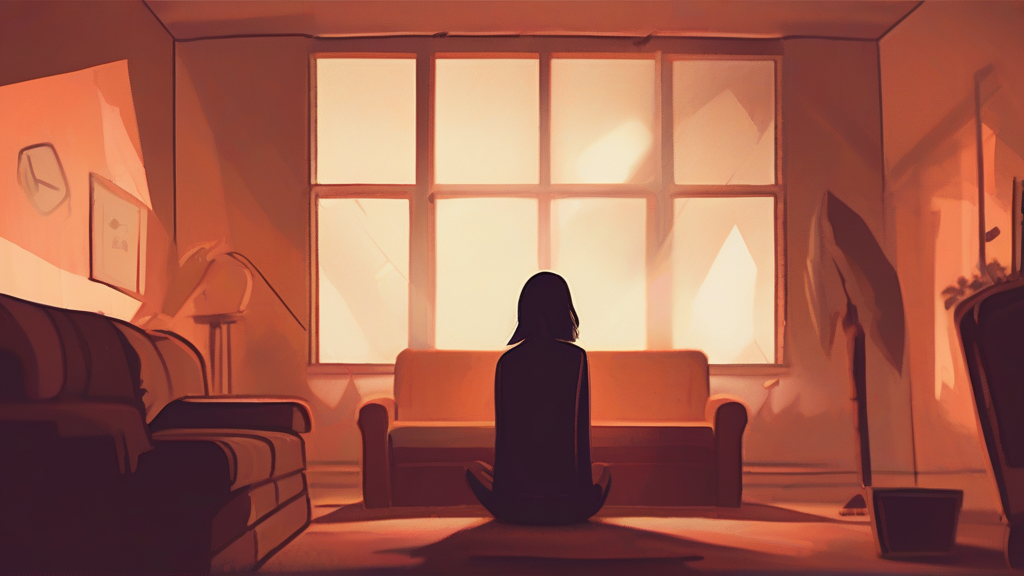
Angsty describes a state of anxious, moody frustration — the blend of anxiety, insecurity, and restless dissatisfaction most closely associated with adolescence. An angsty person broods, withdraws, or acts out against authority; an angsty song or film channels that same emotional turmoil into art. The word derives from "angst," a term of German and Danish origin that entered English through the writings of Søren Kierkegaard and was later popularized by existentialist philosophy and psychology. Though relatively recent in everyday use, "angsty" has become firmly established in casual speech, journalism, and pop-culture commentary, where it often labels teenage phases, grunge-era music, or coming-of-age fiction. It is informal in register and frequently carries a faintly wry connotation, implying the distress on display is somewhat self-indulgent. Its near-homophone "antsy," meaning merely restless or impatient, is a common source of confusion between the two words.
adjectiveFeeling or displaying anxiety, insecurity, and restless frustration, especially in a moody, self-conscious way typical of adolescence.
- Anxious, insecure, and frustrated in a moody or self-dramatizing way, especially characteristic of teenagers or adolescent behavior.
- (Of creative works such as music, film, or writing) marked by themes of youthful alienation, emotional turmoil, or rebellion.
"His angsty teenage poetry filled three notebooks before he discovered the guitar."
"She went through a distinctly angsty phase at fifteen, dyeing her hair black and slamming her bedroom door."
"The band's early albums were raw and angsty, full of songs about small-town boredom."
"Angsty" is barely a few decades old as a mainstream word, yet it instantly summons an entire cultural archetype: the brooding teenager scribbling dark lyrics in a notebook.
Reviewed by Deb Chak, Editor. AI-assisted content curated by RJS Tech Solutions LLP.
Etymology of angsty
Angsty is an adjectival derivative of "angst," a word borrowed into English from German and Danish in the mid-19th century, notably through the philosophical writings of Søren Kierkegaard, who explored angst as a fundamental feature of human freedom. The root itself is Germanic, related to "anguish" and ultimately to the idea of constriction or suffocating dread. The adjective "angsty" arose much later, gaining currency in late 20th-century American English, particularly in descriptions of adolescent moodiness and alternative rock culture.
How angsty is actually used
"Angsty" is informal and colloquial, rarely used in formal writing. It carries a slightly dismissive connotation when applied to people — suggesting the emotion is more performative than profound — though it can describe art neutrally or even approvingly.
Easily confused with angsty
"Antsy" means restless and impatient (fidgety, eager to move), while "angsty" means anxious and emotionally troubled in a moody, introspective way.