
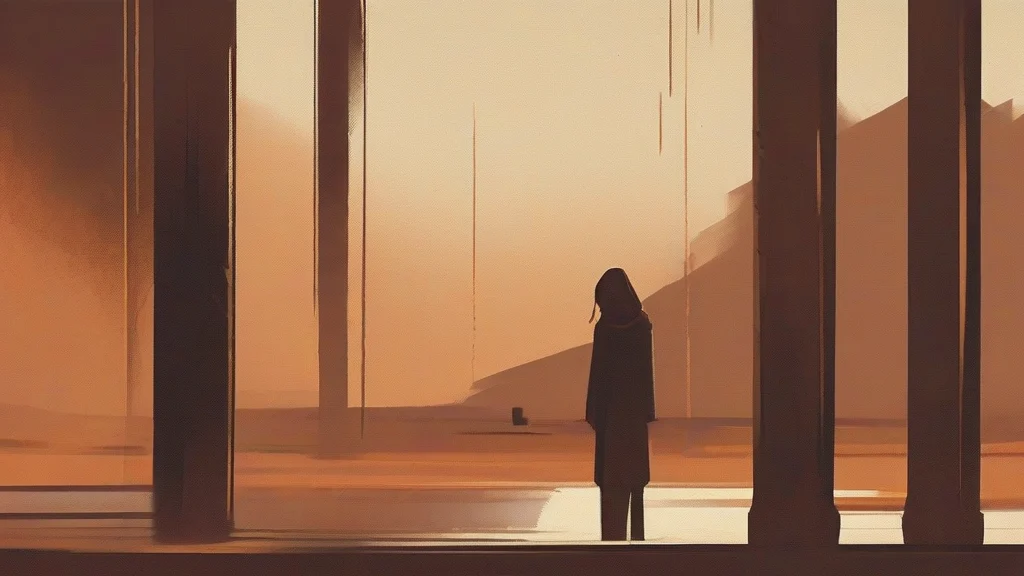
What does sullen mean?
Sullen describes someone who is angry, resentful, or displeased but expresses those feelings quietly rather than openly. The word often suggests withdrawal, a lack of enthusiasm, and a heavy or gloomy expression, as in a sullen silence or a sullen mood. It can be used for people in a temporary state, but it may also characterize a habitual disposition, especially in literary descriptions. In a secondary, more poetic sense, sullen can modify weather, skies, landscapes, or colours to create an atmosphere of darkness and foreboding. Compared with “sulky,” which usually focuses on deliberate silence or refusal to cooperate, “sullen” conveys a broader mood of brooding displeasure. The adjective is most often paired with expressions such as “look sullen” and “a sullen expression.” Its slightly literary tone makes it evocative in descriptive writing, while “moody” or “sulky” may be more natural in everyday conversation.
adjectiveAngry or resentful in a quiet, withdrawn, and often gloomy way. It describes a person’s mood, expression, or manner.
- Angry or resentful in a quiet, withdrawn, and gloomy manner.
- Dark or sombre in appearance or atmosphere, especially when describing weather or surroundings.
"She remained sullen after the argument, refusing to speak to anyone."
"The child was sullen and would not respond to his mother’s questions."
"A sullen grey sky hung over the coast, and the wind carried the smell of rain."
A sullen mood is often quieter than an angry outburst: the displeasure is implied by silence, lowered eyes, and a heavy manner.
Reviewed by Deb Chak, Editor. AI-assisted content curated by RJS Tech Solutions LLP.
Where does sullen come from?
The word entered Middle English from Anglo-French, where sullen meant “sulky” or “moody.” It is generally traced to the Latin adjective sullenus, which had the sense “sullen” or “sulky.” The modern form became established in English with meanings centred on silent displeasure, gloom, and a dark or threatening appearance.
Related word forms
How sullen is actually used
The word is literary and somewhat formal in modern usage. It commonly describes a person’s expression, mood, or manner, and can also be applied more poetically to weather, colours, or landscapes. “Sulky” is the more everyday term for a child’s or pet’s resentful silence.
Easily confused with sullen
“Sulky” emphasizes resentment expressed through deliberate silence or withdrawal, while “sullen” usually conveys a broader, more brooding mood of anger or gloom.
“Morose” focuses on a persistently dour or unsmiling disposition, whereas “sullen” can describe a temporary state as well as a person’s habitual manner.