
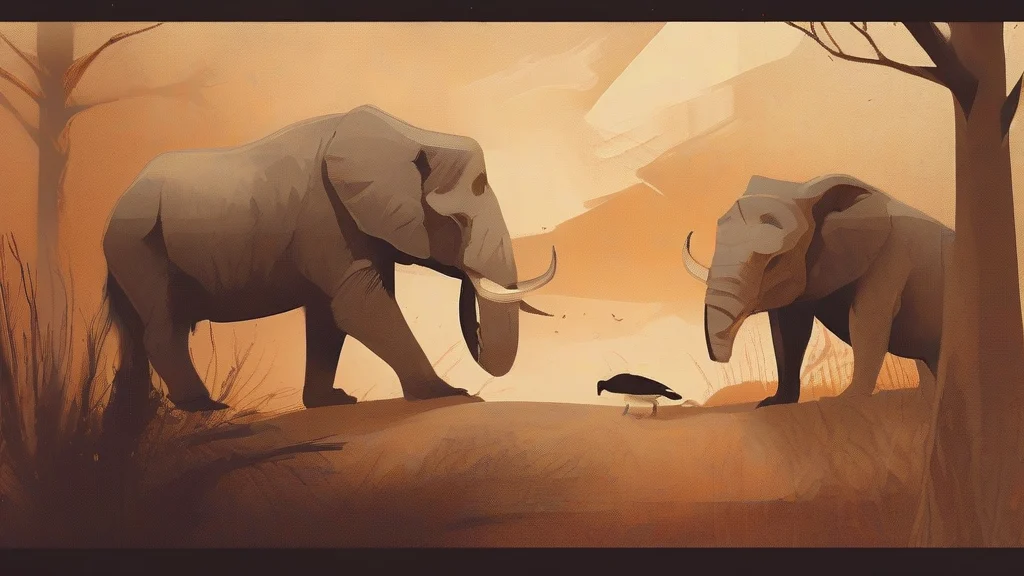
What does animality mean?
Animality is a formal noun denoting the condition or quality of being an animal — the bodily, instinctive, and unreflecting nature that humans share with other creatures, as opposed to their rational, moral, or spiritual capacities. In philosophical and literary writing it often marks a boundary: what separates humanity from the rest of nature, or what remains when civilization falls away. Applied to human behaviour, it usually carries a critical edge, suggesting brutishness, sensuality, or a lapse into coarse appetite, as when a critic describes a novel's characters as surrendering to sheer animality. Used more neutrally, it can simply acknowledge our biological continuity with other species, a point increasingly emphasized in evolutionary thought and animal studies. Derived from Latin roots shared with 'animal', the word has been part of English since the early seventeenth century and remains most at home in scholarly, critical, and elevated prose rather than everyday conversation.
The condition or quality of being an animal; the physical or instinctive nature of animals, especially as distinguished from the intellectual or spiritual nature of humans.
"Philosophers have long debated how much of our animality we share with other primates."
In neutral contexts the word is descriptive; applied to human conduct it frequently implies brutishness or excessive sensuality.
A brutish, coarse, or purely sensual quality in human character or behaviour.
"The film was criticized for indulging in scenes of unrelieved animality."
This sense is pejorative and appears mainly in literary criticism and moral commentary.
Rarely used in the plural; the plural may appear when referring to multiple distinct instances or manifestations of animal-like qualities.
"The essay catalogues the various animalities lurking beneath polite society."
Animality is the word philosophers reach for when they want to describe what is left of us when culture is switched off.
Reviewed by Deb Chak, Editor. AI-assisted content curated by RJS Tech Solutions LLP.
Where does animality come from?
Animality derives from Latin 'animalis' (having breath or soul, from 'anima' meaning breath or soul) combined with the English noun-forming suffix '-ity'. It entered English in the early seventeenth century, formed within English on the model of similar abstract nouns. It shares its root with 'animal', 'animate', and related words such as 'animated' and 'inanimate'.
How animality is actually used
Animality is a formal, largely literary or academic word, common in philosophy, art criticism, and discussions of human nature. When applied to people it often carries a negative connotation of coarseness or sensuality, though in neutral scientific or philosophical contexts it simply denotes the animal condition without judgement.
Easily confused with animality
Animalism refers specifically to the doctrine or theory that humans are essentially animals in nature and behaviour, while animality is the broader condition or quality of being animal-like.