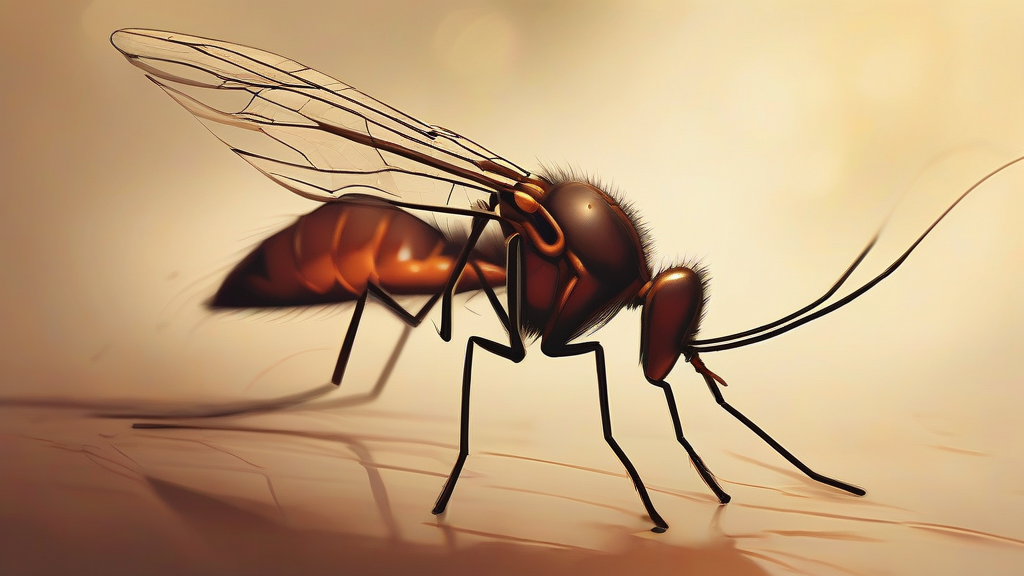
What does anopheles mean?
Anopheles is a genus of mosquito found throughout most of the world, best known as the primary carrier of malaria in humans. Of the several hundred species in the genus, only a few dozen reliably transmit Plasmodium parasites, the organisms that cause the disease. Female anopheles bite mostly between dusk and dawn, which is why bed nets and evening protection are central to malaria prevention. The name derives from the Greek anōphelēs, meaning 'useless' or 'hurtful' — a fitting label given the insect's role in human suffering. In everyday language the word appears chiefly in medical, scientific, and public-health writing, usually as 'the anopheles mosquito'. It is a technical term rather than a household word, but its association with one of humanity's deadliest diseases makes it significant well beyond entomology.
nounA genus of mosquito, several species of which transmit the parasite that causes malaria in humans.
- A mosquito of the genus Anopheles, the principal vector of human malaria.
"The researchers trapped anopheles at dusk to monitor malaria transmission in the region."
"Bed nets are one of the most effective defences against the night-biting anopheles."
"Only certain anopheles species can carry the malaria parasite."
As a Latinized genus name, Anopheles keeps the same form in the singular and plural; writers may refer to 'an anopheles' or simply 'anopheles' collectively.
"Several anopheles were collected from the traps overnight."
The word 'anopheles' comes from Greek for 'useless' or 'hurtful' — ancient Greeks named this mosquito after exactly what it does to us.
Reviewed by Deb Chak, Editor. AI-assisted content curated by RJS Tech Solutions LLP.
Etymology of anopheles
The word comes from the Greek anōphelēs, meaning 'useless' or 'hurtful', formed from the negative prefix a- combined with ōphelēs, 'profitable' or 'helpful'. It was adopted into Latin as the taxonomic genus name Anopheles when the mosquito group was formally classified in the early nineteenth century. The shared Greek root ōphelē- also underlies the name Ophelia, famously borne by Shakespeare's character.
How anopheles is actually used
Used mainly in scientific, medical, and public-health contexts. In formal taxonomy the genus name is capitalized as Anopheles; in general prose it often appears lowercase. The word functions as a mass noun referring to the genus or its members collectively.
Easily confused with anopheles
Aedes is a different mosquito genus that spreads diseases such as dengue and yellow fever, whereas Anopheles is the genus responsible for transmitting malaria.