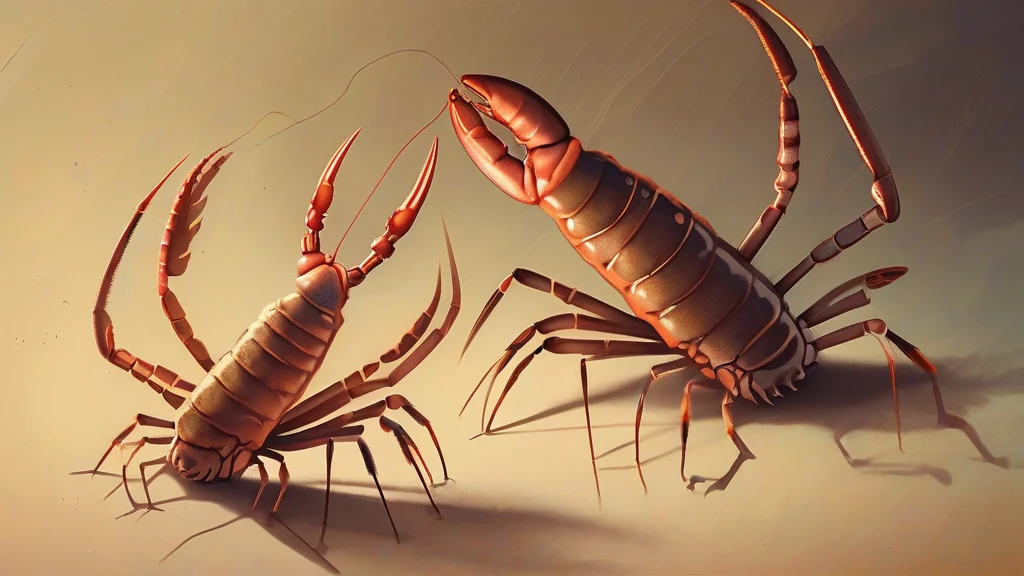
What does antennule mean?
An antennule is one of a pair of small, jointed sensory appendages located at the front of the head in crustaceans — animals such as crabs, lobsters, shrimp, and copepods. Anatomically, it is the first and smaller of the two pairs of antennae these creatures possess, which is why zoologists sometimes describe it simply as the 'first antenna.' Despite its modest size, the antennule is functionally vital: it carries chemoreceptors that detect dissolved chemicals in the water, allowing a lobster or crab essentially to taste its surroundings, and it also serves in touch and, in some species, balance and orientation. The word derives from Latin roots via the diminutive suffix '-ule,' meaning a small version of an antenna. Because it is a specialist term, 'antennule' appears almost exclusively in biology textbooks, research papers, and aquarium or marine-science writing rather than everyday conversation, but within its field it is precise, well established, and indispensable for describing crustacean anatomy accurately.
nounA small pair of segmented sensory appendages found at the front of the heads of crustaceans such as crabs, lobsters, and shrimp; the first and smaller pair of antennae.
- The smaller, anterior pair of sensory appendages on the head of a crustacean, used for touch, balance, and detecting chemicals in the water.
"The crayfish swept its delicate antennules through the water, sampling chemical cues from far upstream."
"Under the microscope, the water flea's branched antennules were clearly visible beating against the current."
"Decapod crustaceans rely on their antennules to navigate by smell, much as insects use their antennae."
Because antennules occur as a pair, references typically use the plural form; the singular is used mainly when discussing one appendage in isolation.
"Both antennules of the shrimp were damaged during molting."
A lobster 'tastes' the water with its antennules — tiny chemical sensors that can detect a single amino acid drifting past.
Reviewed by Deb Chak, Editor. AI-assisted content curated by RJS Tech Solutions LLP.
Etymology of antennule
The word 'antennule' is formed from 'antenna,' borrowed from Latin 'antenna' or 'antemna' (originally a yardarm of a sailing ship, later applied by naturalists to insect feelers), combined with the diminutive suffix '-ule' from Latin '-ulus,' meaning 'little.' It thus literally denotes a 'little antenna.' The term entered English scientific usage in the nineteenth century as comparative anatomy of arthropods developed, distinguishing the crustacean's first pair of head appendages from the larger second pair called the antennae. Its closest relatives are 'antenna,' 'antennae,' and adjectival forms like 'antennal.'
How antennule is actually used
Strictly a technical term of zoology and carcinology (the study of crustaceans); it is rarely encountered outside scientific literature. In casual contexts, people usually say 'antenna' or 'feeler' instead. The plural is 'antennules'.
Easily confused with antennule
An antenna is any of the paired sensory appendages on an arthropod's head, while an antennule specifically refers to the smaller, first pair found only on crustaceans.