What does anthocyanin mean?
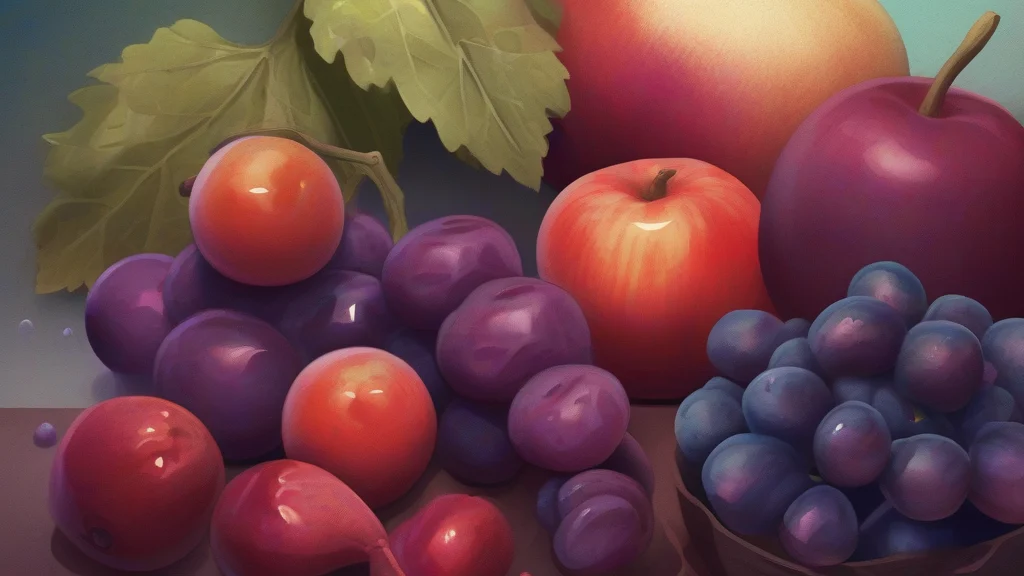
Anthocyanins are a group of water-soluble pigments belonging to the flavonoid family that give many plants their red, purple, and blue colors. They are responsible for the skin of grapes, the flesh of blueberries, the petals of violets, and the crimson tones of autumn foliage. Chemically, each anthocyanin consists of an anthocyanidin core linked to sugar molecules, and its color can shift with acidity — a property famously displayed by hydrangeas and by red-cabbage juice used as a homemade pH indicator. Beyond their visual role, anthocyanins attract pollinators and seed dispersers and protect plant tissues from ultraviolet light. In human contexts they appear frequently in nutrition and food-science writing, where berry-rich diets are studied for potential antioxidant benefits. The word is technical rather than everyday, but it surfaces regularly in discussions of colorful, healthful foods.
nounA water-soluble flavonoid pigment that produces red, purple, and blue colors in many fruits, vegetables, flowers, and leaves.
- As a class of water-soluble plant pigments responsible for red, purple, and blue coloration in fruits, vegetables, flowers, and autumn leaves.
"The deep purple of the blackberries comes from their high anthocyanin content."
"Red cabbage owes its vivid hue to anthocyanins, which shift toward blue in alkaline conditions."
"Breeding programs often select grape varieties for high anthocyanin levels to deepen wine color."
Because many distinct anthocyanin compounds exist, the plural is common when discussing the class collectively; the singular may refer to the class generally or to a single specific compound.
"Anthocyanins accumulate in the leaves as chlorophyll breaks down, producing brilliant fall colors."
The same anthocyanin molecule can turn a flower red in acidic soil and blue in alkaline soil — hydrangeas are literally a living litmus test.
Reviewed by Deb Chak, Editor. AI-assisted content curated by RJS Tech Solutions LLP.
Etymology of anthocyanin
The word derives from Greek roots: 'anthos,' meaning flower, and 'kyanos,' meaning dark blue, combined into the Neo-Latin scientific formation 'anthocyanin.' It was coined in the nineteenth century as chemists began isolating and naming plant pigments systematically. The same Greek elements give rise to cognates such as 'anthology' (a collection of flowers, figuratively) and 'cyanide' (from kyanos), reflecting how these roots spread through botanical and chemical vocabulary.
Related word forms
How anthocyanin is actually used
A technical term used mainly in botany, food science, nutrition, and chemistry; rarely encountered in casual conversation. Often appears in health and nutrition writing discussing antioxidant properties of berries and other colorful plant foods.
Easily confused with anthocyanin
An anthocyanidin is the aglycone (sugar-free) core of an anthocyanin; anthocyanins are anthocyanidins bonded to sugar molecules.
Carotenoids are yellow, orange, or red pigments that are fat-soluble, whereas anthocyanins are water-soluble and produce red to blue hues.
Flavonoid is the broader chemical class; anthocyanins are one subgroup within the flavonoids.