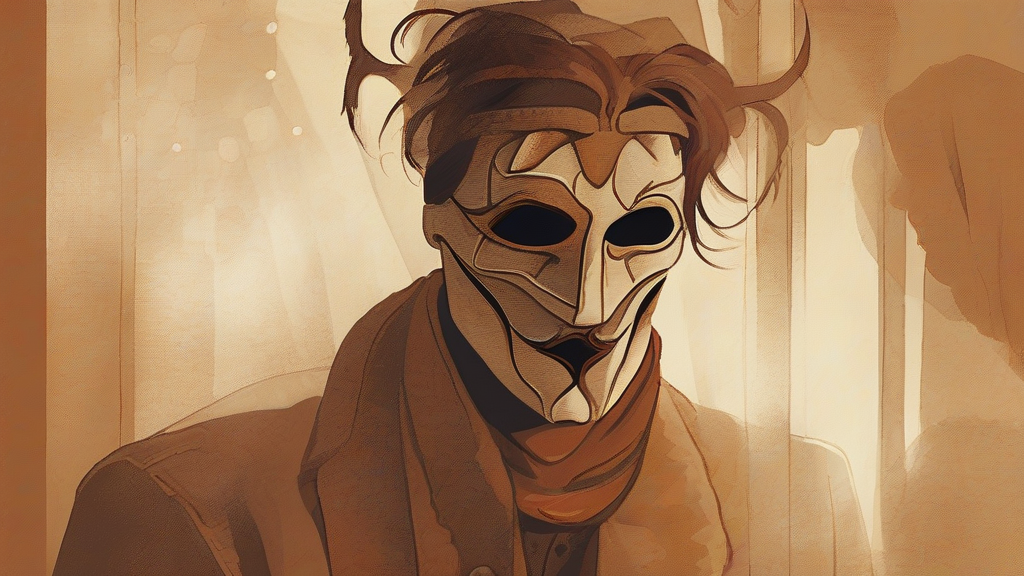
What does antimasque mean?
An antimasque is a comic, grotesque, or burlesque interlude performed as part of an English court masque in the early seventeenth century. While the masque proper presented idealized, harmonious dancing by costumed courtiers, the antimasque introduced figures of disorder — witches, satyrs, beggars, giants, or other monstrous characters — whose antics were ultimately banished or transformed by the arrival of the noble masquers. The form is closely associated with the poet Ben Jonson and the designer Inigo Jones, whose collaborations for the Stuart court established it as a distinct dramatic device. The term is now chiefly encountered in theatre history and literary criticism, where it also serves metaphorically for any chaotic element set against an ordered whole. Its enduring interest lies in how deliberately staged ugliness could heighten the beauty it opposed.
nounA comic, grotesque, or burlesque interlude performed before or within a court masque in the early 17th century, featuring dancers and figures of disorder who are ultimately banished by the masque proper.
- A comic, grotesque, or burlesque dance or interlude forming a contrastive prelude to, or interruption of, a court masque (early 17th century, especially in the works of Ben Jonson and Inigo Jones).
- By extension, any grotesque or antic performance element serving as a foil to something orderly or idealized.
"In Ben Jonson's masques, the antimasque of witches and satyrs was danced away by the arrival of the noble masquers."
"The antimasque of drunken poets staggered across the stage before the king's masquers descended in glory."
"Critics have read the chaotic antimasque as a deliberate foil that throws the harmony of the main masque into sharper relief."
Regular plural; commonly used when discussing multiple such interludes across different masques.
"Jonson's antimasques grew increasingly elaborate over the course of his career at the Stuart court."
Invented by Ben Jonson around 1609, the antimasque let witches, satyrs, and monsters storm the stage — only to be ceremonially banished by the beautiful dancers of the masque proper.
Reviewed by Deb Chak, Editor. AI-assisted content curated by RJS Tech Solutions LLP.
Etymology of antimasque
The word combines the prefix 'anti-' (Greek via Latin, meaning 'against' or 'opposite') with 'masque', the English spelling of 'mask', denoting the elaborate court entertainment. It emerged in early 17th-century England, coined during the development of the court masque — most often credited to Ben Jonson, who used the device in his masques from around 1609 onward. The underlying root 'masque/mask' derives from Old French 'masque', of uncertain further origin, possibly from Arabic 'maskhara' (buffoon) via Italian 'maschera'. Cognates include French 'masque' and Italian 'maschera'.
How antimasque is actually used
A specialized term of theatre history and Stuart court culture; rare outside scholarly writing on Renaissance drama. Almost always used with reference to the English court masque tradition of the early 17th century.
Easily confused with antimasque
A masque is the formal, idealized court entertainment itself, while an antimasque is the deliberately grotesque or comic counter-dance that precedes or interrupts it.