
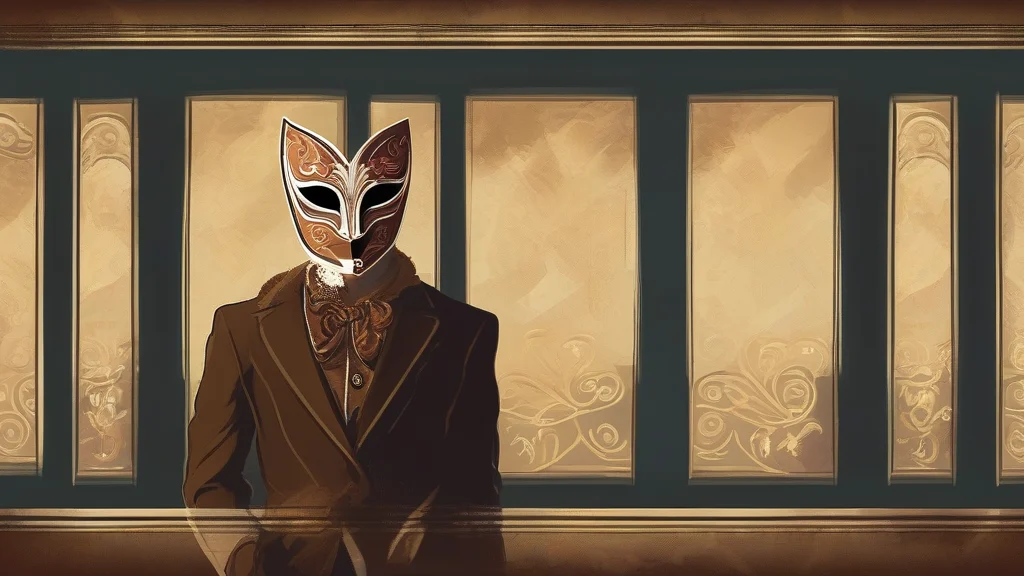
What does masque mean?
Masque is a literary and historical noun for an elaborate entertainment in which performers appear in masks and fanciful costumes. It is especially associated with the court masques of Renaissance and early Stuart Europe, where music, poetry, dance, scenery, and allegorical tableaux were combined for royal or aristocratic audiences. The word may also refer more narrowly to the mask or costume worn in such a performance. In modern writing, masque usually evokes the Renaissance stage and carries a tone of spectacle, pageantry, and artifice rather than ordinary costume play. It differs from mask, the everyday covering worn over the face, and from masquerade, which can denote either a disguise or a masked gathering. Although largely confined to literary, historical, and theatrical contexts today, masque remains useful because it names a distinctive form of early modern court entertainment and preserves the atmosphere of its mixture of visual splendor, poetry, and staged illusion.
nounA festive theatrical entertainment in which performers wear masks and elaborate costumes, especially the courtly pageants of 16th- and 17th-century Europe. By extension, a mask or costume worn for such an entertainment.
- An elaborate theatrical entertainment featuring masked and costumed performers, especially a court spectacle of the 16th or 17th century.
- A mask, disguise, or costume worn during such an entertainment.
"The court staged a masque in which dancers represented the four elements."
"The court masque ended with a dance beneath artificial moonlight."
"Her painted masque concealed every trace of her identity."
The regular plural is chiefly used for individual court entertainments, dramatic works, or their titles.
"Several masques were performed during the Christmas season."
A Renaissance masque could fill a hall with silk-clad figures, moving tableaux, music, and dance—all concealed behind masks.
Reviewed by Deb Chak, Editor. AI-assisted content curated by RJS Tech Solutions LLP.
Where does masque come from?
The English word was borrowed from French masque, which came from Italian maschera. Italian maschera is generally traced to Arabic maskharah, a term associated with jesting or masquerading. English usage developed especially around staged court entertainments, while mask became the usual spelling for a physical face covering.
Related word forms
How masque is actually used
In present-day English, masque is literary, theatrical, or historical and sounds deliberately archaic; it is not a neutral everyday substitute for mask or masquerade.
Easily confused with masque
A mask is a covering worn over the face, whereas a masque is principally a masked theatrical entertainment or performance.
A masque is a staged entertainment featuring masks, while a masquerade may be a disguise, a masked gathering, or the act of disguising oneself.