
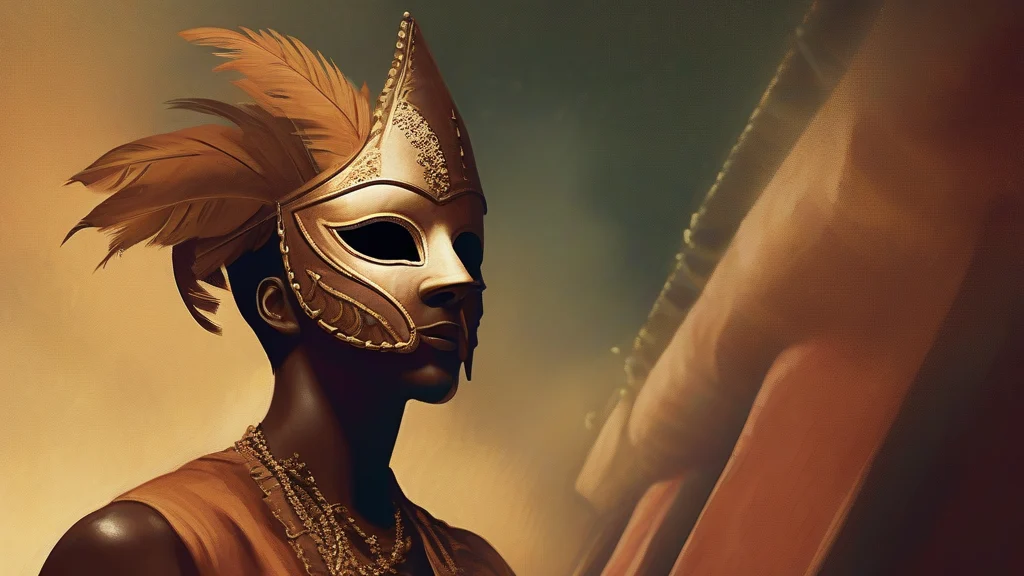
What does masquerader mean?
A masquerader is someone who conceals their true identity, status, or intentions behind a false appearance. The word often suggests deliberate deception: a masquerader may pretend to be honest, respectable, or socially superior while pursuing a concealed agenda. Because the metaphor draws on masked revelers whose faces and identities are hidden, the term evokes secrecy, inauthenticity, and the possibility of discovery. It can also describe a participant in a masquerade or masquerade ball, usually without implying dishonesty in that recreational context. In political and social commentary, “masquerader” is often contrasted with an authentic or transparent figure. The word is somewhat literary and more pointed than the general terms “impostor” or “pretender,” particularly when it describes someone who maintains an outward appearance that conceals a quite different reality.
nounA person who disguises their identity or pretends to be someone or something they are not. The term may also refer to a participant in a masquerade.
- A person who assumes a false identity, appearance, or character in order to deceive others.
- A person disguised in costume who participates in a masquerade or masquerade ball.
"The politician was accused of being a masquerader whose promises concealed a very different agenda."
"The stranger arrived in a borrowed uniform, and no one could tell whether he was an officer or merely a masquerader."
"At the masquerade ball, each guest concealed their identity beneath an elaborate mask."
The plural is used when referring to several people who conceal their identities or pretend to be someone other than themselves.
"The novel portrays the town's masqueraders as people who hide their loneliness behind elaborate social performances."
A masquerader hides behind a false face, but the deception is the only identity the costume makes true.
Reviewed by Deb Chak, Editor. AI-assisted content curated by RJS Tech Solutions LLP.
Where does masquerader come from?
The word was formed in the early 19th century by adding the agent suffix “-er” to “masquerade.” “Masquerade” comes through French from Italian mascherata, meaning a masked ball or disguise, and ultimately relates to the older word “mask.” The forms “masquer” and “masque” preserve related senses involving masked disguise or theatrical concealment.
How masquerader is actually used
The figurative sense is accusatory and may suggest deliberate deception rather than harmless role-playing. The sense referring to a participant in a masquerade is usually neutral.
Easily confused with masquerader
An impostor is someone who falsely claims a particular identity or status, whereas a masquerader more broadly conceals the truth of their identity, role, or nature.