
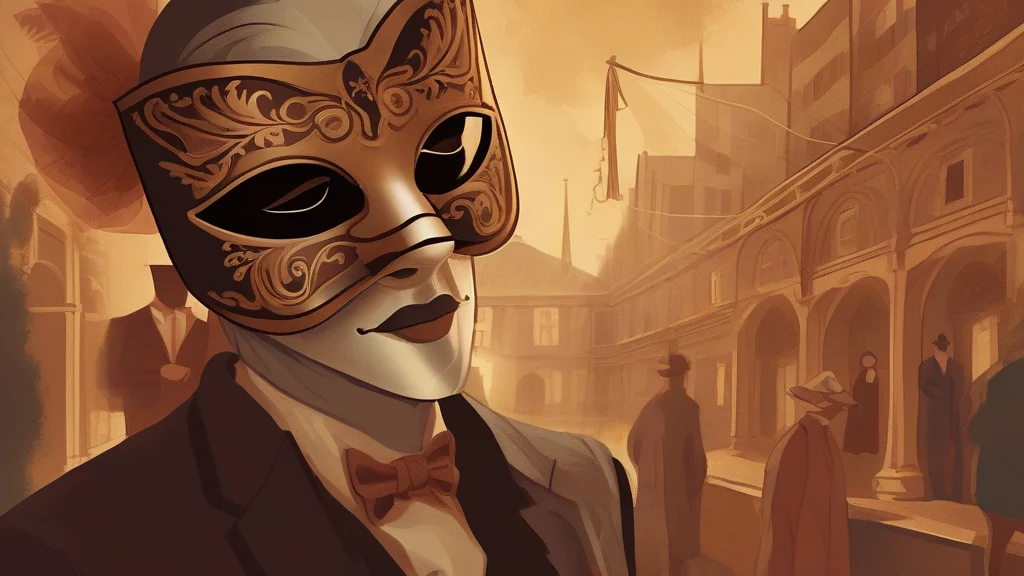
What does masquer mean?
Masquer is a relatively uncommon English word with both a verb and a noun. As a verb, it means to conceal one's true identity and pretend to be another person, role, or thing; in modern use it is often framed as “masquer as,” as in “masquer as a journalist.” Its connotations combine disguise with calculated deception, and it often carries a formal, literary tone. As a noun, masquer is an uncommon term for a masquerade, particularly a masked ball or entertainment. The more familiar modern alternatives are masquerade as a verb and masquerade as a noun. Etymologically, the word entered English from French in the early 17th century, ultimately tracing through Italian to Arabic maskharah, associated with mockery or jest. The word is memorable because a masquerade is both a physical concealment and a social performance: the disguise hides the person, while the assumed role persuades others to accept an identity that may be false.
To pretend to be someone or something else, especially by concealing one's true identity; to masquerade.
"The broker masquer as a legitimate investor to persuade others to invest."
Commonly used with “as” and more formal or literary than the more familiar verb masquerade.
A masquerade, especially a masked ball or masked entertainment.
"The village masquer was held in the great hall, with dancers in elaborate masks."
The noun is uncommon in contemporary English and is more characteristic of literary, historical, or archaic contexts.
The plural is standard but rarely encountered because the noun itself is uncommon.
"Several masquers joined the procession through the candlelit hall."
Masquer's ultimate Arabic ancestor meant “mockery” or “jest,” a pointed reminder that a masquerade is both a disguise and a performance of a false identity.
Reviewed by Deb Chak, Editor. AI-assisted content curated by RJS Tech Solutions LLP.
Where does masquer come from?
English borrowed masquer in the early 17th century from French masquer, a verb meaning to mask or disguise oneself. The French word comes from Italian maschera, which ultimately derives from Arabic maskharah, meaning mockery or jest. The same ancestry underlies mask, masque, and masquerade, which developed from related French and Italian forms.
Related word forms
How masquer is actually used
Masquer is relatively uncommon in modern English compared with masquerade. The verb often occurs in the construction “masquer as” and has a formal or literary tone.
Easily confused with masquer
Masquerade is the common modern word for both pretending to be someone else and a masked entertainment, whereas masquer is a less frequent alternative.
A mask is a physical covering for the face, while masquer usually describes the act of adopting a false identity or role.