What does aponeurosis mean?
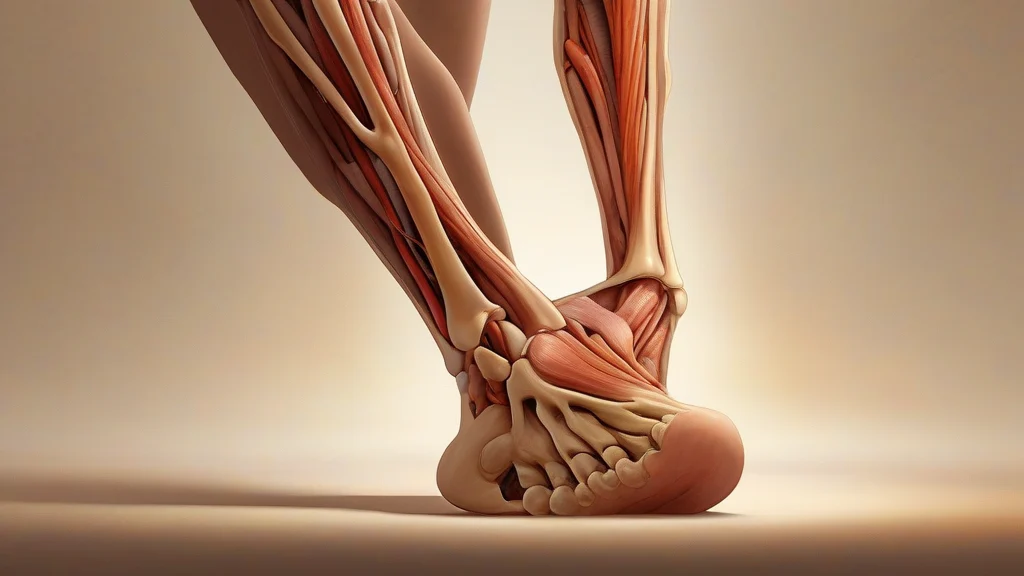
An aponeurosis is a broad, flat sheet of dense fibrous connective tissue that performs the work of a tendon. Where an ordinary tendon is a narrow cord linking muscle to bone, an aponeurosis spreads that force over a wide area, anchoring broad muscles to the skeleton or to one another. Well-known examples include the palmar aponeurosis of the hand, the plantar aponeurosis supporting the arch of the foot, and the layered abdominal aponeuroses that sheathe the trunk muscles. The word belongs almost entirely to anatomy, medicine, and physical therapy, appearing in textbooks, surgical reports, and clinical discussion rather than casual speech. It carries no emotional connotation; its value lies in precision. Knowing the term helps readers follow descriptions of injuries such as Dupuytren's contracture or hernias, where these fibrous sheets play a central role. The plural is aponeuroses.
nounA flat, sheet-like tendon of dense fibrous tissue that attaches a muscle to the bones or other structures it moves, serving the same role as a cord-like tendon but spread over a broader area.
- A broad, flat sheet of fibrous tissue that functions as a tendon, attaching a muscle to bones or to other muscles.
"The surgeon carefully sutured the torn aponeurosis of the external oblique muscle."
"During the dissection, students identified the glistening aponeurosis covering the abdominal muscles."
"Dupuytren's contracture involves abnormal thickening of the palmar aponeurosis in the hand."
Standard English plural following the Greek-style '-is' → '-es' pattern, like 'analysis' → 'analyses'.
"The abdominal wall contains several distinct aponeuroses that interweave at the linea alba."
Your abs are held together by a built-in corset — a sheet of white tissue called an aponeurosis that's stronger than the muscle fibers it serves.
Reviewed by Deb Chak, Editor. AI-assisted content curated by RJS Tech Solutions LLP.
Etymology of aponeurosis
Aponeurosis comes from ancient Greek 'aponeurōsis', meaning 'the end of a muscle', formed from 'apo-' ('away from') and 'neuron' ('nerve', but in early usage also sinew or tendon). Greek anatomists applied it to the fibrous endings of muscles, reflecting the ancient view that nerves and tendons were related structures. The term entered Latin medical writing and then modern European languages, becoming established in English anatomical terminology by the seventeenth century. It shares its root with 'neurosis' and other words derived from Greek 'neuron'.
Related word forms
How aponeurosis is actually used
A technical term used almost exclusively in anatomy, medicine, and related sciences; rarely encountered in everyday conversation. Plural: aponeuroses.
Easily confused with aponeurosis
Fascia is a general sheet of connective tissue surrounding muscles and organs, whereas an aponeurosis is specifically a flattened tendon that anchors muscle to bone.
A tendon is typically a cord or band connecting muscle to bone, while an aponeurosis is a broad, sheet-like structure performing the same function.