What does apparition mean?
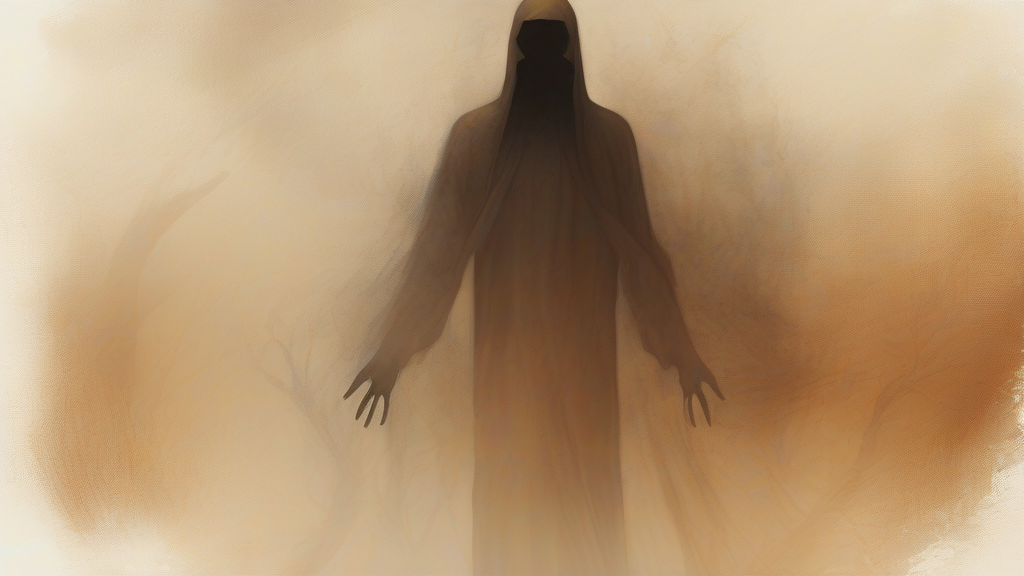
An apparition is a ghostly or spectral figure — typically the visible form of a person who has died — or, more broadly, anything that appears suddenly and strikingly. The word carries strong supernatural overtones: to witness an apparition is usually to see something unexplained and unsettling, whether a phantom in a haunted house, a vision in a dream, or, in religious tradition, a manifestation such as the Marian apparitions witnessed at Lourdes and Fátima. Yet the term need not always imply the paranormal; writers also use it for any fleeting, unexpected sight, such as a ship looming out of fog. Derived from Latin roots meaning 'to appear', the word entered English in the fifteenth century and remains a staple of Gothic literature, from Shakespeare's ghosts to Victorian ghost stories. Its blend of eeriness and elegance makes it a favourite for describing encounters with the unseen.
nounA ghostly or spectral figure; the act of appearing, especially something remarkable or unexpected that suddenly comes into view.
- A ghost or phantom; the spirit of a dead person seen as a visible figure.
- A sudden or remarkable appearance of someone or something, not necessarily supernatural.
"The sailors reported an apparition gliding across the misty deck at midnight."
"Hamlet confronts the apparition of his murdered father on the castle battlements."
"To the exhausted travellers, the distant oasis proved to be no more than an apparition shimmering on the horizon."
Standard plural; used when referring to multiple sightings or manifestations.
"The village's chronicles record several apparitions said to haunt the moor."
The word 'apparition' once meant any striking appearance — it was only later that it became the word we reach for when a ghost shows up.
Reviewed by Deb Chak, Editor. AI-assisted content curated by RJS Tech Solutions LLP.
Etymology of apparition
Apparition derives from the Latin 'apparitio', meaning 'an appearance' or 'the act of appearing', formed from 'apparere', 'to come into view'. It passed into English via Old French in the late Middle Ages, initially denoting any notable appearance before narrowing toward its ghostly sense. It shares its Latin root with words such as 'apparent', 'appear', and 'transparent', all built on the notion of becoming visible.
How apparition is actually used
Carries a distinctly eerie or supernatural connotation in most modern usage, though it can neutrally describe any sudden, striking appearance. Common in literary and religious contexts (notably Marian apparitions in Catholic tradition). Slightly formal register.
Easily confused with apparition
An appearance is simply the way someone or something looks or comes into view, while an apparition specifically suggests a ghostly, supernatural, or startlingly sudden manifestation.