
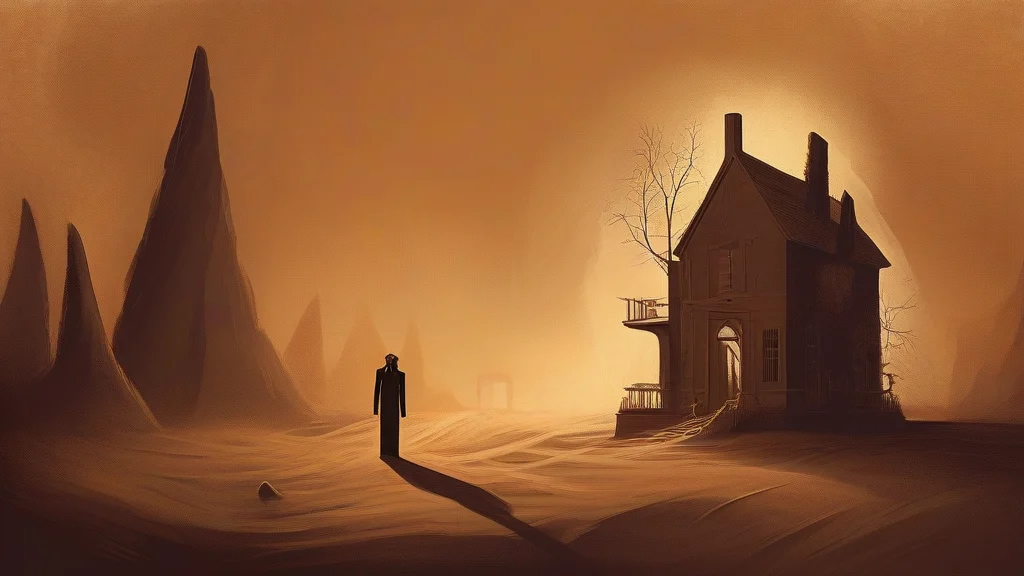
What does phantasm mean?
A phantasm is an image, vision, or apparition that appears vivid or almost tangible, even though it is unreal. The term can describe a strange mental experience, such as a ghostly figure seen in a dream or a fleeting impression of something that was never there. It can also refer more generally to an illusion or deceptive appearance, especially one that promises reality but ultimately has no substance. The word has a literary and dreamlike quality, making it useful in discussions of dreams, hallucinations, literature, and the boundary between perception and reality. Unlike the more everyday word imagination, a phantasm often feels involuntary, elusive, or unsettling. Its associations with ghosts and visions also give it a metaphorical sense: a supposed source of meaning or hope can be dismissed as a mere phantasm.
nounA mental image or apparition, especially one that seems vivid or lifelike. The word can also refer to an illusory or deceptive appearance.
- A mental image or vision, especially one that is vivid, strange, or difficult to distinguish from reality.
- An apparition or ghostly presence.
- An illusory, deceptive, or insubstantial appearance.
"The abandoned house was surrounded by phantasms of light in the evening mist."
"The strange light created a phantasm of a figure standing among the trees."
"In the novel, the promise of wealth gradually proves to be a phantasm."
The plural is used when referring to multiple mental images, apparitions, or illusions.
"The ruins seemed to be haunted by phantasms of former inhabitants."
A phantasm begins as something seen in the mind, but its ghostly associations make it feel almost alive.
Reviewed by Deb Chak, Editor. AI-assisted content curated by RJS Tech Solutions LLP.
Where does phantasm come from?
The word comes from Latin phantasma, a borrowing of the Greek phántasma, meaning “an image” or “phantom.” Greek phantasma is related to phantazein, “to make visible,” and ultimately to phaínein, “to show” or “appear.” The word entered English in the late 16th century, initially in medical and philosophical contexts, and later acquired its familiar ghostly and illusory associations.
Related word forms
How phantasm is actually used
The word is literary and somewhat uncommon in modern everyday speech. It is more likely to convey an elusive mental image or an apparently real but deceptive phenomenon than a simple hallucination.
Easily confused with phantasm
A phantasm is primarily a mental image or illusion, whereas a phantom is often an apparition or something that appears tangible but is not.