
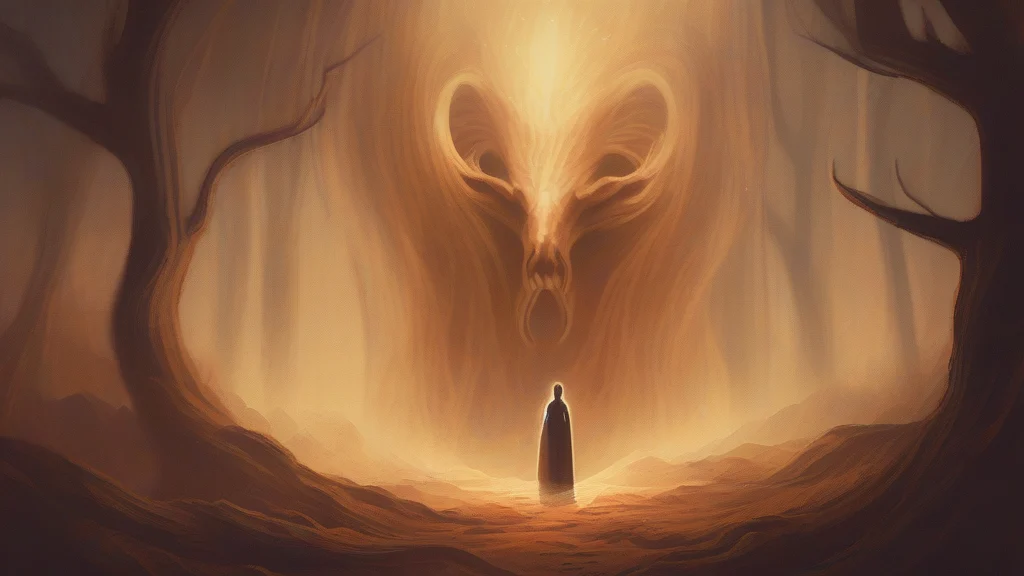
What does phantasmagoric mean?
Phantasmagoric describes an unstable, dreamlike world in which images, scenes, or experiences follow one another in rapid and surprising succession. The word is especially appropriate for visions associated with dreams, fever, delirium, fantasy, or surreal art. It suggests not merely that something is imaginary, but that reality appears fluid and uncontrollable, constantly changing shape. A phantasmagoric performance might combine projected landscapes, distorted music, and figures who shift between human and unnatural forms. In ordinary criticism, the term can describe any bewildering sequence of events, though it generally carries a more elevated, literary tone than words such as chaotic or confusing. Its unusual sound and Greek-derived history reinforce its sense of mystery and spectacle, making it especially effective for describing art that blurs the boundary between vision, dream, and reality.
adjectiveCharacterized by a rapidly changing, dreamlike sequence of images or scenes, especially as experienced in delirium, fever, fantasy, or a visionary spectacle.
- Relating to or characterized by a rapidly changing, dreamlike sequence of images or scenes.
"The film unfolds as a phantasmagoric procession of decaying mansions, masked dancers, and impossible landscapes."
"His fever produced a phantasmagoric mixture of childhood memories and invented creatures."
"The exhibition presented a phantasmagoric world of projected flowers, drifting clouds, and distorted faces."
From a Greek word for an image to a feverish vision of images that blur, multiply, and transform: phantasmagoric captures reality at its most hallucinatory.
Reviewed by Deb Chak, Editor. AI-assisted content curated by RJS Tech Solutions LLP.
Where does phantasmagoric come from?
Phantasmagoric was formed from phantasmagory with the adjectival suffix -ic. Phantasmagory belongs to a word family based ultimately on Greek phantasma, meaning an image or apparition; related cognates include phantasm and phantom. The modern sense of a rapidly changing visionary spectacle developed through traditions of magic-lantern shows, dreams, delirium, and other spectacles in which images seemed to move and transform.
Related word forms
How phantasmagoric is actually used
Primarily literary and evocative rather than everyday. It often conveys wonder, confusion, feverish intensity, or the instability of a dreamlike vision, and may sound deliberately grand or old-fashioned.
Easily confused with phantasmagoric
Phantasmagoric is the adjective describing a dreamlike succession of images, while phantasmagoria is the noun for the vision or spectacle itself.