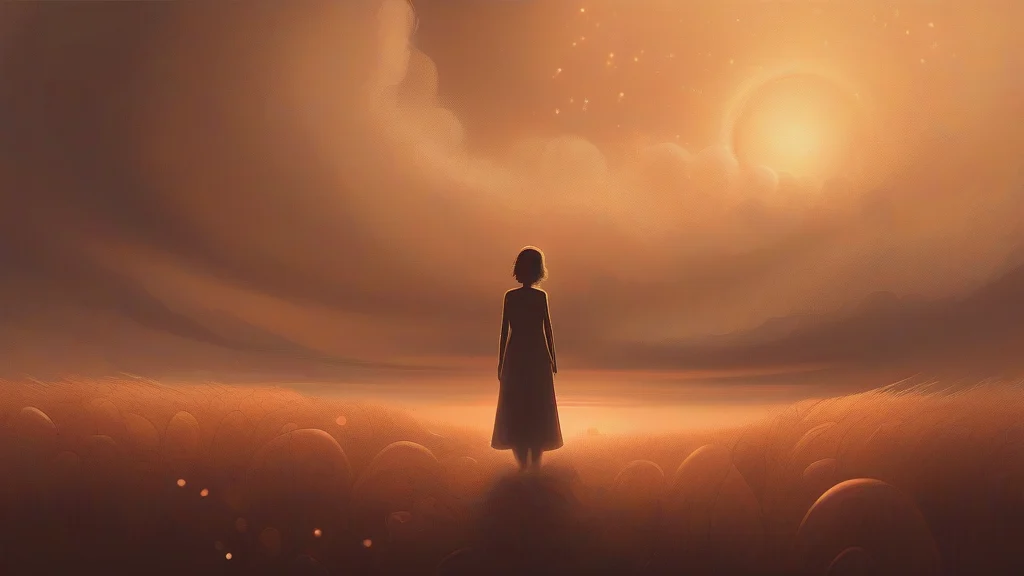
What does dreamlike mean?
"Dreamlike" is an adjective used to describe things that resemble or evoke the qualities of a dream — haziness, unreality, strangeness, or surreal beauty. It is commonly applied to landscapes, art, music, film, memories, and experiences that feel blurred, ethereal, or somehow detached from ordinary reality. A fog-shrouded forest might be called dreamlike, as might a film's slow-motion cinematography or the disoriented hours following anesthesia. The word carries a generally positive or wondrous connotation, suggesting enchantment rather than mere confusion, although it can also describe unsettling or eerie states. Formed simply by combining "dream" with the suffix "-like," it is transparent in origin yet richly useful in descriptive writing, offering writers a compact way to convey that boundary-blurring quality between the real and the imagined. Its closest formal synonym, "oneiric," is far more academic, making "dreamlike" the natural everyday choice.
adjectiveResembling or suggestive of a dream; having the hazy, surreal, or unreal quality characteristic of dreams.
- Having the hazy, unreal, or surreal quality of a dream.
- (Of experiences or states) so strange or beautiful as to feel unreal, like something from a dream.
"The fog drifting across the lake gave the landscape a dreamlike stillness."
"The ballet's slow motion and shifting lights created a dreamlike effect."
"After the surgery, the days spent recovering passed in a dreamlike haze."
Writers reach for "dreamlike" when reality feels slightly wrong — it's the word for the uncanny moment when the waking world starts behaving like a dream.
Reviewed by Deb Chak, Editor. AI-assisted content curated by RJS Tech Solutions LLP.
Etymology of dreamlike
"Dreamlike" is formed within English by combining the noun "dream" with the adjectival suffix "-like," meaning "resembling." The underlying noun "dream" derives from Old English "drēam," which originally meant "joy, merriment, or music" before shifting in Middle English to mean a vision experienced during sleep — one of the more striking semantic shifts in the language's history. The compound "dreamlike" emerged in English writing to describe anything sharing a dream's hazy or unreal character. Related forms include "dreamy," "dreamer," and "dreamland," all built on the same root.
How dreamlike is actually used
"Dreamlike" is neutral to literary in register and carries a broadly positive or wondrous connotation, though it can also describe disorienting or eerie experiences. It typically functions attributively before a noun (a dreamlike scene) but also appears predicatively (the scene felt dreamlike).
Easily confused with dreamlike
"Dreamy" suggests a vague, wistful, or pleasantly dazed state (or an attractively handsome person), while "dreamlike" describes something that actually resembles a dream in its surreal, unreal quality.