What does araba mean?
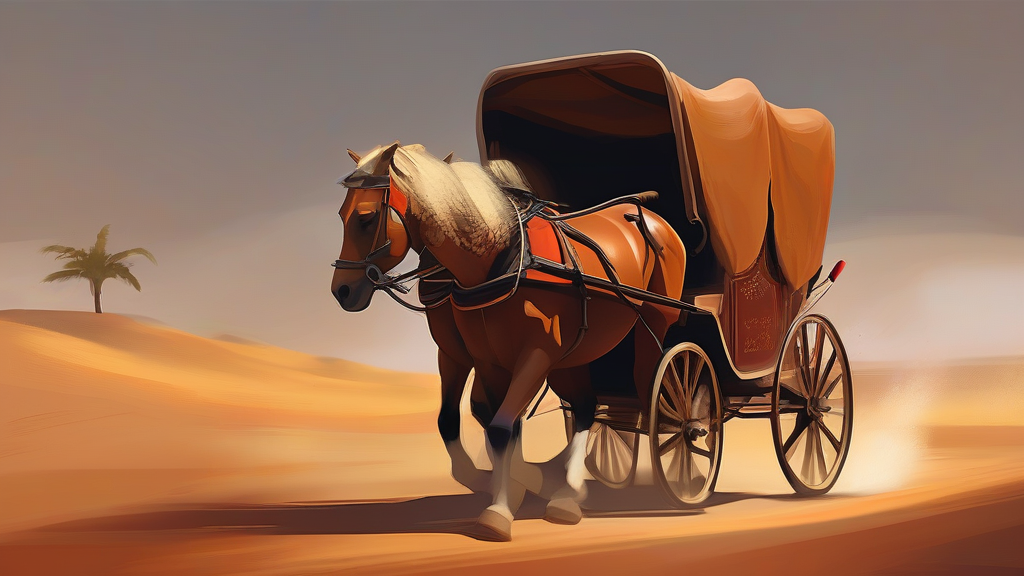
An araba is a horse-drawn cart or wagon traditionally used across Turkey, the Middle East, and the Balkans. Typically open-sided and sometimes covered with a canopy or awning, it served as both a goods vehicle and a passenger conveyance, carrying farmers, merchants, families, and brides to their destinations long before motorized transport reached the region. The word entered European languages through Turkish, ultimately deriving from the Arabic term for a carriage, and it appears most often today in historical accounts, travel writing, and ethnographic descriptions of the Ottoman world. Because it names a specific regional vehicle rather than a generic cart, the word conveys local color and period detail: a writer mentioning an araba evokes dusty roads, village markets, and the rhythms of pre-industrial life in western Asia and southeastern Europe. Though now uncommon in everyday English, it remains a useful term for anyone reading literature or history set in these regions.
nounAn araba is a horse-drawn cart or wagon, typically open-sided and often covered with a canopy or awning, used especially in Turkey, the Middle East, and the Balkans.
- A horse-drawn cart or wagon used in Turkey, the Middle East, and the Balkans, sometimes fitted with a canopy for carrying passengers.
"The farmer loaded sacks of grain onto the araba and set off along the dusty road toward the market."
"The bride arrived at the village wedding in an araba draped with colorful rugs."
"Oxen pulled the heavy araba laden with timber down the mountain track."
In English contexts the plural is usually formed simply by adding -s; Turkish retains its own plural forms.
"A line of arabas waited outside the city gates at dawn."
Long before the automobile, travelers across the Ottoman world rode in an "araba" — a word that rolled straight from Arabic into Turkish and then into English dictionaries.
Reviewed by Deb Chak, Editor. AI-assisted content curated by RJS Tech Solutions LLP.
Etymology of araba
The word "araba" comes from Turkish "araba," meaning a cart or carriage, which itself derives from the Arabic "ʿarabāʾ," a wheeled vehicle. It was adopted into several European languages during the nineteenth century as travelers and writers described transport in the Ottoman Empire and neighboring lands. The Arabic root also gives us the ethnonym "Arab," reflecting the shared Semitic root ʿ-r-b.
How araba is actually used
The word appears mainly in historical, travel, or ethnographic writing about the Ottoman Empire, Anatolia, the Levant, and southeastern Europe. In modern English it is rare and largely confined to descriptions of traditional transport; it carries no figurative or idiomatic usage.
Easily confused with araba
"Arable" is an adjective describing land suitable for growing crops, while an "araba" is a noun denoting a horse-drawn cart.