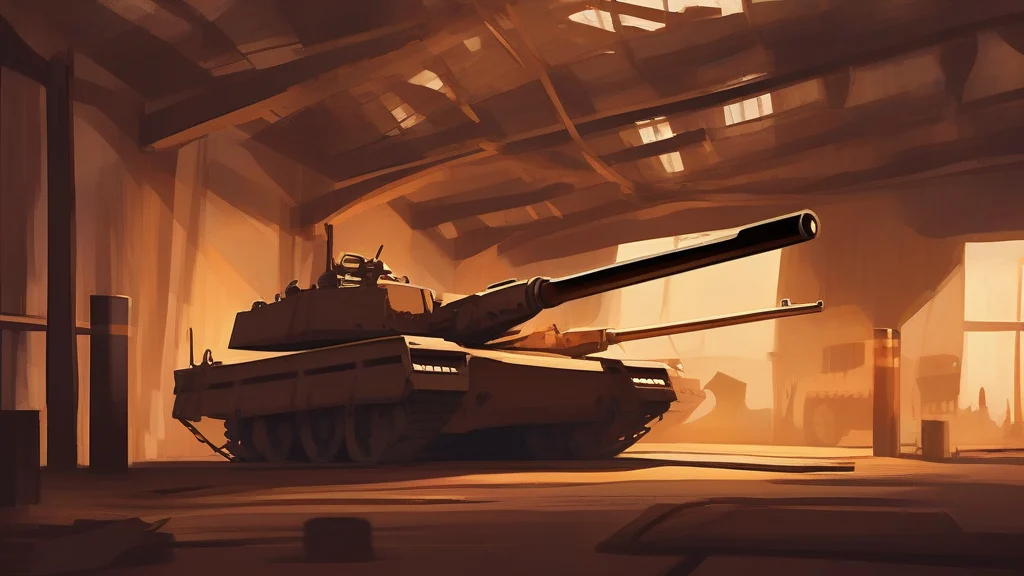
What does armoury mean?
An armoury is, at its most literal, a place where arms and military equipment are stored — a secure storehouse of weapons, ammunition, and kit belonging to a regiment, garrison, or state. In the United States, the word (usually spelled armory) also commonly refers to a drill hall: a building where National Guard or militia units train, muster, and hold public events. Beyond its martial origins, armoury has developed a productive figurative life, describing the entire repertoire of resources, skills, arguments, or techniques available to someone. A negotiator might be praised for bringing a formidable armoury of persuasive tactics; a chef's armoury might include rare spices and classical techniques. This metaphorical use lends the word a sense of preparedness and strategic depth. Spelled "armoury" in Britain and most Commonwealth countries but "armory" in America, it derives from Old French "armure" (armour), ultimately from Latin "arma", meaning weapons.
nounA place where weapons and military equipment are stored, or a building used for military training and drill. Figuratively, it refers to the complete range of resources, skills, or tools available to a person.
- A storehouse or depot where weapons, ammunition, and military equipment are kept.
- A building used for the training and assembly of military units, especially National Guard or militia units in the United States.
- The full set of skills, resources, techniques, or options available to a person or group (figurative).
"The general inspected the armoury before authorising the distribution of rifles to the recruits."
"Security at the armoury was tightened after the inventory revealed several missing sidearms."
"With three languages and a background in design, she brought a formidable armoury of skills to the team."
Standard pluralisation; in American English spelled "armories".
"The army maintained armouries in every major garrison town."
Shakespeare's armoury wasn't just weapons — the word has been quietly arming writers with metaphors since the days when a nation's strength was measured by what lay behind its locked doors.
Reviewed by Deb Chak, Editor. AI-assisted content curated by RJS Tech Solutions LLP.
Etymology of armoury
The word armoury entered English in the late Middle Ages, around the fourteenth to fifteenth century, borrowed through Anglo-Norman and Old French from "armure", meaning armour or defensive equipment. That French term traces back to the Latin "arma", meaning weapons and implements of war, which also gives us related borrowings such as "armament" and "armada". Over time the meaning broadened from a store of armour specifically to include all kinds of weaponry and military equipment, and later extended figuratively to collections of non-military resources.
How armoury is actually used
In American English the spelling "armory" predominates. The figurative sense — an armoury of arguments, techniques, or talents — is common in British journalism and formal writing. In the US, "armory" often specifically denotes a National Guard drill hall, which can surprise British readers expecting only the weapons-store meaning.
Easily confused with armoury
An arsenal is a storage place or stockpile of weapons, while an armoury can also mean a building for military training and is more broadly used figuratively for any collection of resources.
"Armory" is simply the American spelling of the same word; there is no difference in meaning.