What does arsenopyrite mean?
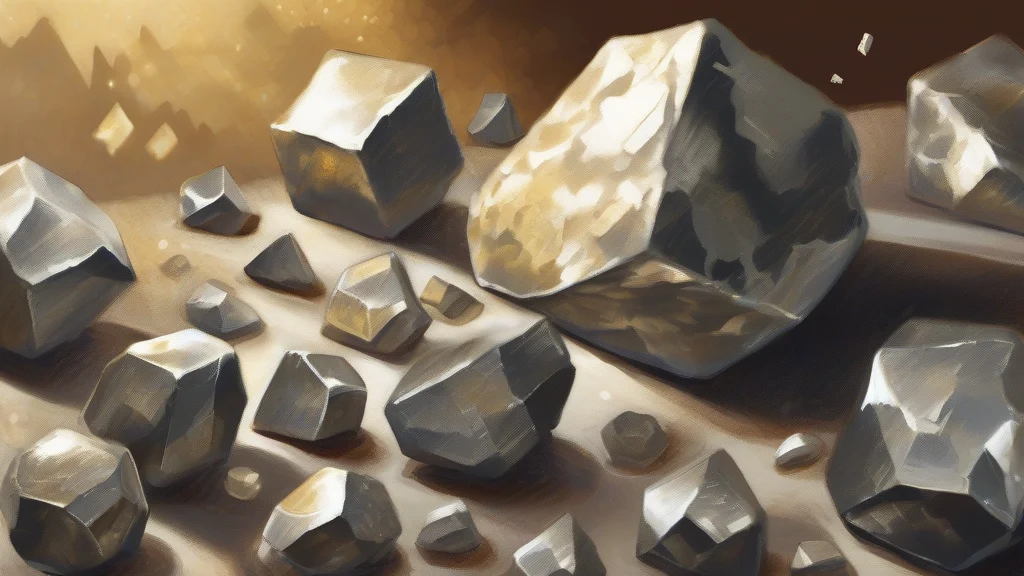
Arsenopyrite is a hard, metallic mineral with a silvery-white to steel-grey appearance, chemically an iron arsenic sulfide (FeAsS). It crystallises in the monoclinic system, often forming distinctive wedge-shaped or prismatic crystals, and occurs widely in hydrothermal veins and metamorphic rocks such as schists. As the most abundant arsenic-bearing mineral in the Earth's crust, it serves as the principal commercial source of arsenic, and it is also economically significant as a common host for gold, particularly in so-called refractory ores where the precious metal is trapped within its crystal structure. Miners historically referred to it as mispickel. The name combines 'arsenic' with 'pyrite', reflecting its resemblance to fool's gold. Beyond mining, arsenopyrite matters environmentally: when exposed to air and water, or during ore processing, it can release toxic arsenic into soils and waterways, making it a subject of concern in mine remediation and groundwater studies.
nounA hard, silvery-white metallic mineral, an iron arsenic sulfide (FeAsS), that is the most common ore of arsenic and often occurs in gold-bearing deposits.
- A hard silvery-white mineral, FeAsS (iron arsenic sulfide), occurring in high-temperature veins and metamorphic rocks; the principal ore of arsenic and a common host of gold.
"The prospectors panned the stream gravel hoping to find gold locked within grains of arsenopyrite."
"Veins of quartz cut through the schist, studded with gleaming crystals of arsenopyrite."
"Because the gold was locked inside arsenopyrite, the ore had to be roasted before cyanidation could extract it."
Rarely pluralised; the word usually functions as a mass noun referring to the mineral substance. A plural appears only when distinguishing occurrences or varieties.
"The two deposits yielded arsenopyrites of markedly different crystal habit."
Often called 'mispickel' by old miners, arsenopyrite looks like fool's gold but carries a nastier secret — it's the world's chief source of arsenic.
Reviewed by Deb Chak, Editor. AI-assisted content curated by RJS Tech Solutions LLP.
Etymology of arsenopyrite
The word arsenopyrite derives from 'arsenic' combined with 'pyrite', coined in the nineteenth century as mineralogical nomenclature became systematic. 'Arsenic' itself traces back through Latin and Arabic to the Greek 'arsenikon' (yellow orpiment), which may ultimately relate to the Greek 'arsen', meaning male or strong. 'Pyrite' comes from Greek 'pyr' (fire), alluding to the sparks the mineral yields when struck. An older synonym, mispickel, entered English from German miners' usage.
How arsenopyrite is actually used
Arsenopyrite is a technical term used chiefly in geology, mineralogy, and mining contexts; it rarely appears in everyday speech. The older miner's name 'mispickel' (from German) survives in older literature. Because the mineral releases toxic arsenic when heated or weathered, mentions of it often carry environmental or safety connotations in discussions of mine tailings and water contamination.
Easily confused with arsenopyrite
Pyrite is iron disulfide (FeS2) without arsenic, whereas arsenopyrite is an iron arsenic sulfide (FeAsS) and is a principal source of toxic arsenic.