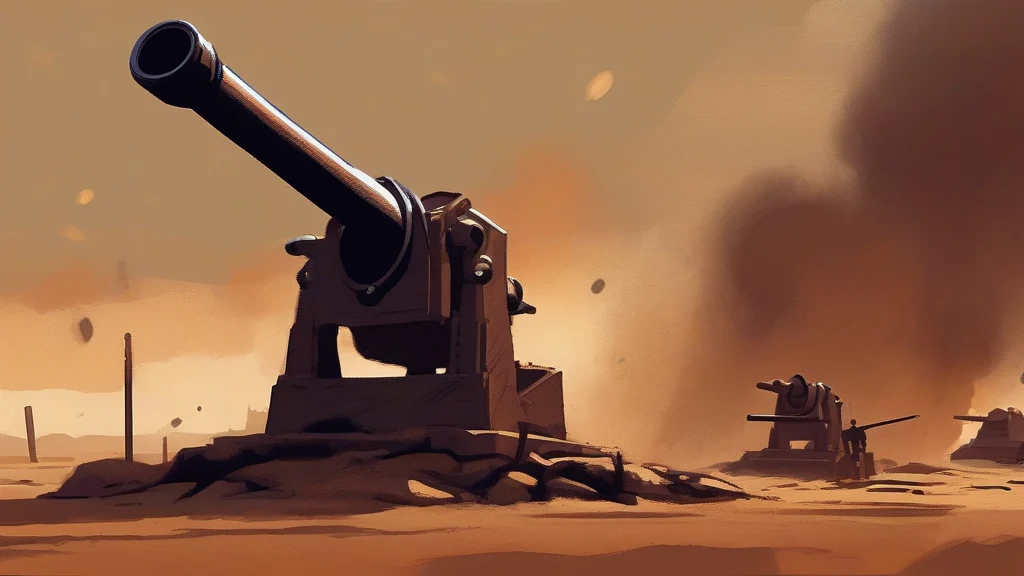
What does artillerist mean?
An artillerist is a person trained in the operation and handling of artillery — the large, heavy guns used in warfare, from cannon and howitzers to modern field artillery. The term typically refers to a soldier serving in an artillery unit, but it can also describe anyone with expert knowledge of the science of gunnery, including ballistics, range-finding, and the aiming and loading of heavy weapons. Artillerists played a decisive role in battles from the early modern period onward, when gunpowder weaponry transformed siegecraft and battlefield tactics alike. The word carries a formal, often historical tone and appears chiefly in military histories, memoirs, and technical writing rather than everyday conversation. Related and more colloquial terms include 'gunner' and 'artilleryman.' For readers interested in military history, the word evokes figures such as Napoleon Bonaparte, himself a trained artillerist whose mastery of guns helped define an era of warfare.
nounA person skilled in or responsible for operating artillery, such as large-caliber guns and cannons, especially as a member of a military artillery unit.
- A soldier or military specialist who operates or has charge of artillery guns.
- A person expert in the science or practice of artillery.
"The veteran artillerist calculated the range and elevation with practiced precision before giving the order to fire."
"As a young artillerist, he learned to read wind and distance before he ever saw combat."
"The museum's guide, a former artillerist, explained how the crews loaded the massive coastal defense guns."
Regular plural formed by adding -s; standard in both British and American English.
"Napoleon's artillerists were among the most disciplined units in his army."
The word 'artillerist' looks like it should mean someone who makes fine art — and in a sense it does: both come from the Latin ars, meaning skill.
Reviewed by Deb Chak, Editor. AI-assisted content curated by RJS Tech Solutions LLP.
Etymology of artillerist
'Artillerist' derives from 'artillery,' which entered English via Old French 'artillerie,' originally denoting munitions and engines of war before narrowing to mean mounted guns. The French word traces back ultimately to Latin 'ars' (stem 'art-'), meaning art or skill, reflecting the specialized craftsmanship involved in building and firing war machines. The agentive suffix '-ist' was added to form a noun for one who practices or commands that skill, following the same pattern seen in words like 'artist' and 'specialist.'
How artillerist is actually used
The word carries a somewhat formal or historical register and appears most often in military history writing, memoirs, and accounts of warfare from the age of cannons through modern conflicts. In everyday military speech, terms like 'gunner' or 'artilleryman' are more common.
Easily confused with artillerist
An 'artist' is a creator of works of imagination or beauty, while an 'artillerist' is a soldier or specialist who operates heavy military guns.
An 'artilleryman' is a soldier serving in an artillery unit, whereas an 'artillerist' more broadly denotes anyone expert in the use or science of artillery.