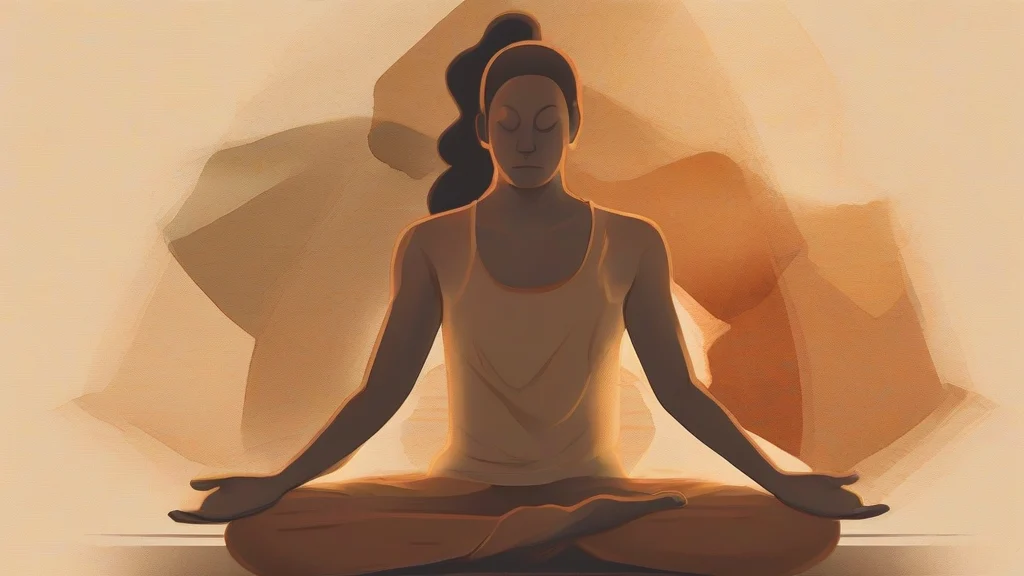
What does ashtanga mean?
Ashtanga is a Sanskrit-derived English noun meaning 'eight limbs', used in two closely related senses. In its original sense it names the classical eight-part system of yoga codified by the sage Patanjali in the Yoga Sutras, encompassing ethical principles, personal observances, posture, breath control, sense withdrawal, concentration, meditation, and absorbed contemplation. In its more familiar modern sense, ashtanga (often styled Ashtanga vinyasa) refers to an athletic, physically demanding school of yoga popularized in the twentieth century by K. Pattabhi Jois of Mysore, India, in which practitioners move through prescribed sequences of postures linked by continuous breath. The word carries connotations of rigour, tradition, and disciplined daily practice, and it appears most often in fitness, wellness, and spiritual contexts. Its Sanskrit root — 'eight' joined to 'limb' — reminds us that the familiar physical postures were historically only one branch of a much larger philosophical system.
nounA system of classical yoga set out by the sage Patanjali, consisting of eight limbs or stages of practice ranging from ethical restraints to meditative absorption; also, a vigorous modern style of flowing posture practice based on fixed sequences of poses linked by breath.
- Patanjali's eight-limbed system of yoga described in the Yoga Sutras.
- The dynamic modern style of yoga (often called Ashtanga vinyasa) popularized by K. Pattabhi Jois of Mysore, performed as set sequences of postures synchronized with breath.
"She practises ashtanga six mornings a week, moving through the primary series before sunrise."
"In the Yoga Sutras, Patanjali presents ashtanga as a path from ethical discipline to deep meditation."
"He travelled to Mysore to study ashtanga at Jois's shala."
Rarely pluralized; ashtanga typically functions as a mass noun referring to a system or style of practice rather than a countable object.
"The studio offers several styles of yoga, but few teachers trained in different ashtangas."
The word literally means 'eight limbs' — and one of those limbs, the postures we call yoga class, was originally just one-eighth of the whole practice.
Reviewed by Deb Chak, Editor. AI-assisted content curated by RJS Tech Solutions LLP.
Etymology of ashtanga
Ashtanga derives from the Sanskrit aṣṭāṅga, meaning 'eight limbs' or 'eight parts', formed from aṣṭa ('eight') plus aṅga ('limb' or 'member'). The Sanskrit numeral aṣṭa descends from the same ancient Indo-European root that produced Latin octo, giving English cognates such as 'octave' and 'October'. The term entered English usage through translations of Indian yogic texts and became widespread in the West during the twentieth century, when K. Pattabhi Jois applied the name to his dynamic vinyasa-based method.
How ashtanga is actually used
When referring to Patanjali's system, the term is often capitalized and treated as a proper noun; when naming the modern postural style, it is usually written lowercase and frequently paired with 'yoga' or 'vinyasa'. Practitioners sometimes distinguish traditional teacher-led 'led' classes from self-directed 'Mysore-style' sessions.
Easily confused with ashtanga
Hatha yoga is a slower, general category of physical yoga, whereas ashtanga specifically denotes either Patanjali's eight-limbed system or the fast-paced fixed-sequence style developed by K. Pattabhi Jois.