What does aviary mean?
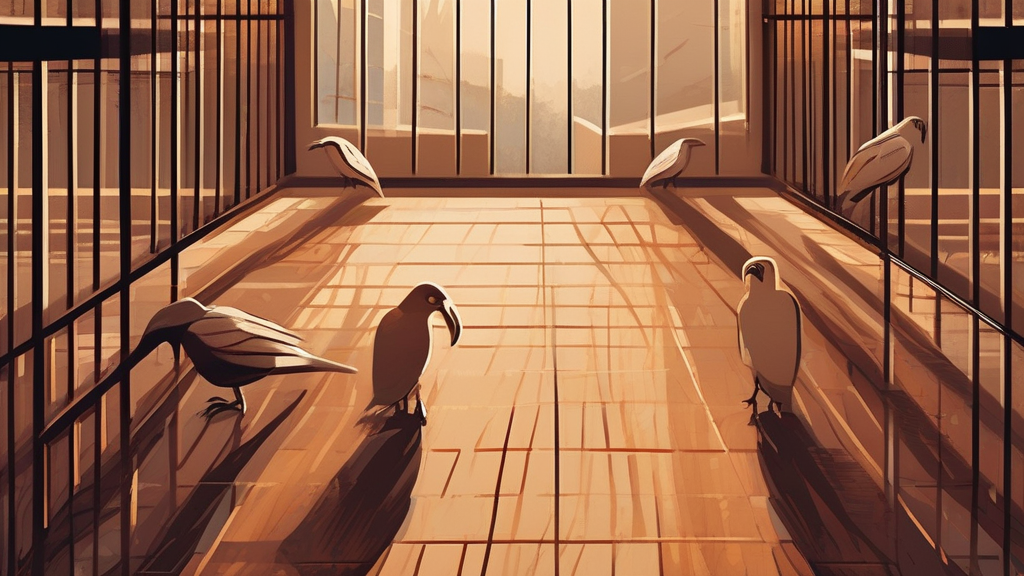
An aviary is a large enclosure, cage, or building designed for keeping birds in conditions where they can fly rather than being confined to small cages. Aviaries range from modest backyard structures housing finches or parakeets to vast public installations at zoos and wildlife parks, some of which are 'walk-through' aviaries that visitors enter directly. The word suggests generous space relative to a typical birdcage, and it is used neutrally across both formal ornithological writing and everyday conversation. Common contexts include zoos, sanctuaries, conservation programmes rehabilitating wild birds, and hobbyist breeders. The term derives from the Latin 'avis' meaning bird — the same root behind 'aviation' and 'avian' — and entered English in the sixteenth century. Because it denotes a place rather than an action or quality, it has essentially one sense, but its association with freedom of flight within captivity gives it a quietly evocative quality.
nounA large enclosure, cage, or building in which birds are kept and allowed to fly freely; often part of a zoo or private collection.
- A large enclosure, cage, or structure in which birds are kept with room to fly.
"The zoo's new walk-through aviary lets visitors stand among dozens of free-flying lorikeets."
"The conservation centre built a spacious aviary to rehabilitate injured birds of prey."
"In the Victorian era, wealthy estates often featured an ornamental aviary stocked with exotic songbirds."
Standard plural, following the regular -y → -ies pattern.
"Several of London's historic gardens once maintained elaborate aviaries."
The word 'aviary' traces back to the Latin 'avis' — the same root that gives us 'aviation', so every time you board a plane you're borrowing vocabulary from the birdcage.
Reviewed by Deb Chak, Editor. AI-assisted content curated by RJS Tech Solutions LLP.
Etymology of aviary
Aviary derives from the Latin 'avarium', meaning a place where birds are kept, formed on 'avis', the Latin word for bird. It entered English in the sixteenth century, initially sometimes referring to egg-laying hens kept for food before settling into its modern sense of an enclosure for flying birds. It shares its root with other English words such as 'avian', 'aviate', and 'aviation'.
How aviary is actually used
The word carries no strong register — it appears comfortably in both scientific and casual contexts. It implies space for birds to fly, distinguishing it from the smaller 'birdcage'; a walk-through aviary is one large enough for visitors to enter.
Easily confused with aviary
An aviary houses birds, while an apiary is a place where beehives are kept for bees.