
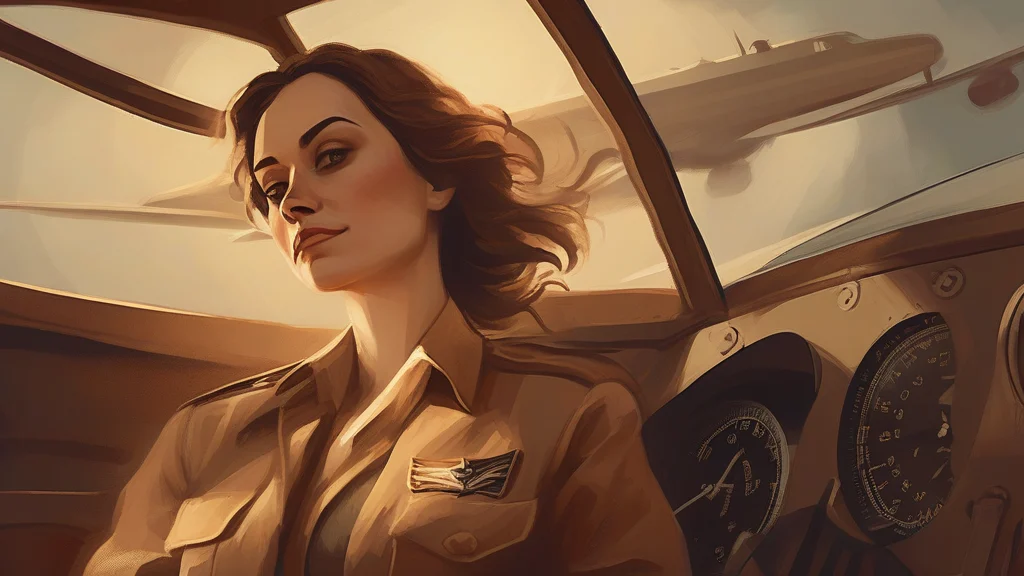
What does aviatress mean?
An aviatress is a woman who flies aircraft — essentially a female pilot or aviator. The word was coined in English during the early twentieth century, when aviation itself was new and writers routinely created feminine forms of masculine occupational titles by adding suffixes such as -ess or -tress (compare actress, sculptress, and aviatrix). In its heyday, the term appeared constantly in newspapers celebrating record-setting women flyers like Amelia Earhart and Amy Johnson. Today it sounds distinctly dated: modern English treats pilot, captain, and aviator as gender-neutral, so calling a woman an aviatress now reads as archaic, nostalgic, or self-consciously retro, much like authoress or poetess. The word remains useful when writing about aviation history or evoking the glamour of the interwar years, when aviatresses were celebrities who captured the public imagination with their daring flights across oceans and continents.
nounA female aviator; a woman who flies aircraft, especially one who flies as a profession or sport. The term is largely historical or deliberately archaic today, having been superseded by the gender-neutral "pilot" and "aviator".
- A woman who operates or flies an aircraft; a female pilot, especially one of the early decades of aviation.
"Amelia Earhart, the most celebrated aviatress of her era, vanished over the Pacific in 1937."
"The young aviatress completed her solo crossing to widespread acclaim."
"Museum curators restored the biplane once flown by the daring aviatress in the 1920s air races."
Standard plural, formed by adding -es.
"The exhibit honored the pioneering aviatresses who competed in the 1929 Women's Air Derby."
Before "pilot" became everyone's word, newspapers couldn't resist calling women like Amelia Earhart an "aviatress" — one of a whole flock of feminized coinages, alongside its sister form "aviatrix".
Reviewed by Deb Chak, Editor. AI-assisted content curated by RJS Tech Solutions LLP.
Etymology of aviatress
Aviatress combines "aviate" (itself from Latin avis, meaning "bird", via French avion and words like aviation) with the feminine suffix "-tress", as in actress and seamstress. It emerged in English in the early twentieth century alongside its rival form "aviatrix", which uses the Latinate suffix "-trix". Both were coined at a time when English freely formed feminine counterparts to male occupational titles. As such gendered forms fell out of favor later in the century, aviatress and aviatrix alike receded into historical vocabulary, leaving the neutral "pilot" and "aviator" in general use.
Related word forms
How aviatress is actually used
The word carries a distinctly vintage, early-20th-century flavor and can sound quaint or even mildly patronizing in modern usage; contemporary writing overwhelmingly prefers the neutral terms "pilot" or "aviator" for both sexes. It survives mainly in historical writing, period fiction, and deliberate stylistic choices.
Easily confused with aviatress
"Aviatrix" is simply an alternative feminine form of aviator, identical in meaning to "aviatress" but formed with the Latin-style suffix -trix rather than -tress.