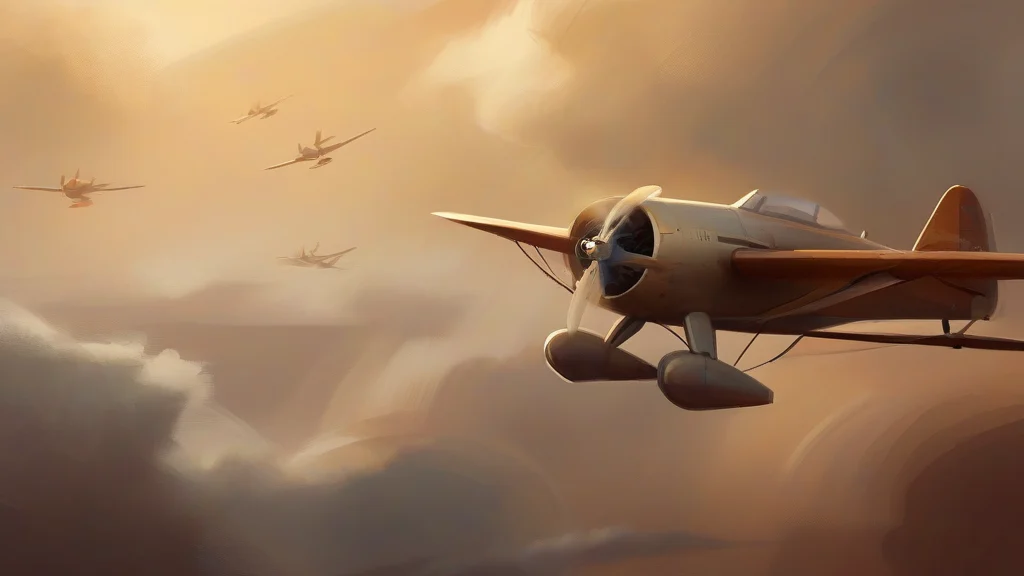
What does aviator mean?
An aviator is a person who flies an aircraft — in modern usage, essentially a synonym for pilot, though it carries a somewhat more formal and historical flavor. The word evokes the pioneering era of aviation, when early flyers risked their lives in open-cockpit machines, and figures such as Amelia Earhart and Charles Lindbergh were universally described as aviators rather than pilots. It remains standard in certain military contexts, notably the United States Navy and Marine Corps, where qualified flight officers are formally designated naval aviators. The term derives from Latin avis, meaning bird, via French aviation, linking the flyer metaphorically to flight itself. Beyond its literal sense, 'aviators' has entered everyday speech as shorthand for aviator sunglasses, the teardrop-lensed style originally developed for pilots. Whether describing a decorated test pilot or a weekend hobbyist with a private license, aviator conveys both technical skill and a touch of romance inherited from aviation's heroic age.
nounA person who flies an aircraft; a pilot.
- A person who operates or flies an aircraft; a pilot.
"The aviator logged over ten thousand hours before retiring from commercial flight."
"Amelia Earhart was one of the most celebrated aviators of her generation."
"The naval aviator guided the jet onto the carrier deck in near-total darkness."
Regular plural; note that 'aviators' can also refer informally to aviator-style sunglasses.
"Early aviators faced dangers that modern pilots can scarcely imagine."
Before Ray-Ban sold them to everyone else, 'aviators' were literally sunglasses made for pilots flying at high altitudes — named after the people who wore them first.
Reviewed by Deb Chak, Editor. AI-assisted content curated by RJS Tech Solutions LLP.
Etymology of aviator
Aviator comes from French aviation, which was formed from Latin avis, meaning bird, combined with the agentive suffix -ator, giving literally 'one who flies.' The French term aviation was popularized in the late 19th century by aviation pioneer Clément Ader, and English borrowed aviator alongside it around the time of the first powered flights. The word thus shares its root with related terms such as aviary (an enclosure for birds), avian (relating to birds), and augur, whose connection to birds reflects Roman divination practices.
Related word forms
How aviator is actually used
Slightly more formal or literary than 'pilot'; common in military contexts (e.g., 'naval aviator') and in historical writing about early flight. The feminine form 'aviatrix' is dated and rarely used today. The plural 'aviators' also refers colloquially to aviator sunglasses.
Easily confused with aviator
Aviator is the general term for an aircraft pilot, while aviatrix is an older, specifically feminine form now largely historical.