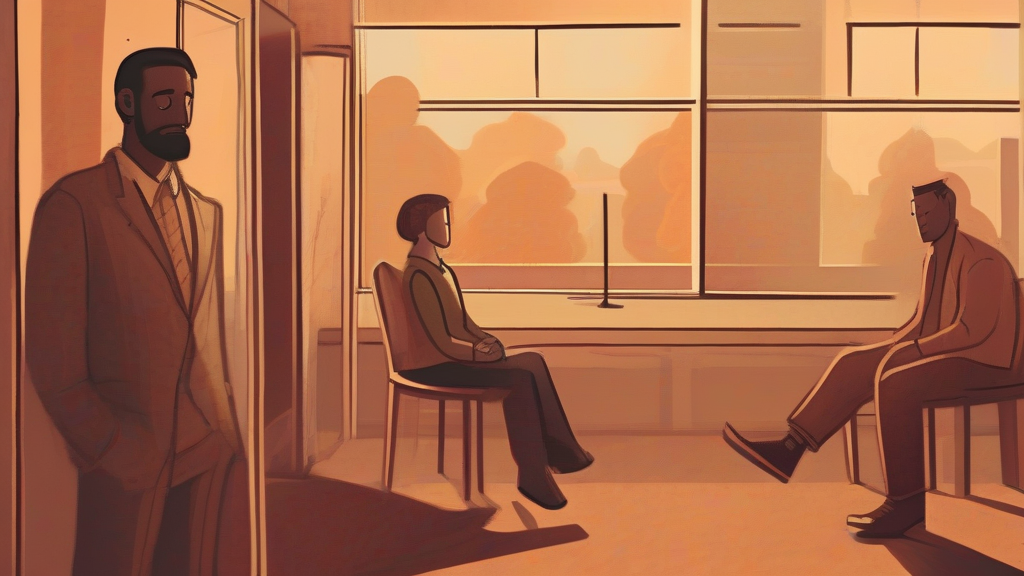
What does awkwardness mean?
Awkwardness is the quality of being difficult, clumsy, or uncomfortable — whether in physical movement, social interaction, or design. A person's awkwardness may show up as fumbling hands or hesitant speech; a situation's awkwardness as tension, embarrassment, or strained silence among people who don't know how to act. The word is widely used across both everyday and formal English, and while it denotes something negative, it frequently carries a sympathetic or even endearing tone: we often describe someone's awkwardness fondly, recognising it as human rather than shameful. Awkwardness derives from the adjective "awkward," whose roots trace to Old Norse — originally meaning something turned or facing the wrong way. The noun is usually uncountable, though phrases like "a certain awkwardness" treat it as countable. It remains one of the most useful words for describing those uncomfortable moments everyone recognises but few can easily name.
nounThe quality or state of being awkward; difficulty, clumsiness, or discomfort in movement, manner, or situation.
- The quality of being physically clumsy or uncoordinated in movement.
- Social discomfort or embarrassment arising from a difficult or delicate situation.
- Difficulty or inconvenience in design, arrangement, or use (e.g. of an object or layout).
"There was an awkwardness in the room after his remark that no one knew how to break."
"His awkwardness on the dance floor was endearing rather than embarrassing."
"She broke the awkwardness with a light joke and a change of subject."
Rarely used; the plural appears mainly in academic or literary contexts referring to multiple distinct instances or types of awkwardness.
"The novel captures the small awkwardnesses of adolescence with remarkable precision."
The word "awkward" itself comes from Old Norse — it literally meant "turned the wrong way," which is fitting for a word about everything going slightly wrong.
Reviewed by Deb Chak, Editor. AI-assisted content curated by RJS Tech Solutions LLP.
Etymology of awkwardness
Awkwardness comes from the adjective "awkward," formed in Middle English from "awk" (meaning "turned the wrong way" or "backhanded") plus "-ward." The element "awk" derives ultimately from Old Norse "afugr" (or related forms), meaning "turned backwards" or "contrary." The suffix "-ness" turns the adjective into an abstract noun denoting the state or quality of being awkward. Related Norse-derived vocabulary includes "awry" and "awe," though these are only distant cousins within the Germanic family.
How awkwardness is actually used
"Awkwardness" is a common noun in both formal and informal registers. It carries a mildly negative connotation but is often used sympathetically or even affectionately when describing shyness or social unease. It is typically uncountable, though it can take an indefinite article in phrases like "an awkwardness between them."
Easily confused with awkwardness
"Backwardness" refers to a lack of progress or development, while "awkwardness" refers to difficulty or discomfort in action or social situations.