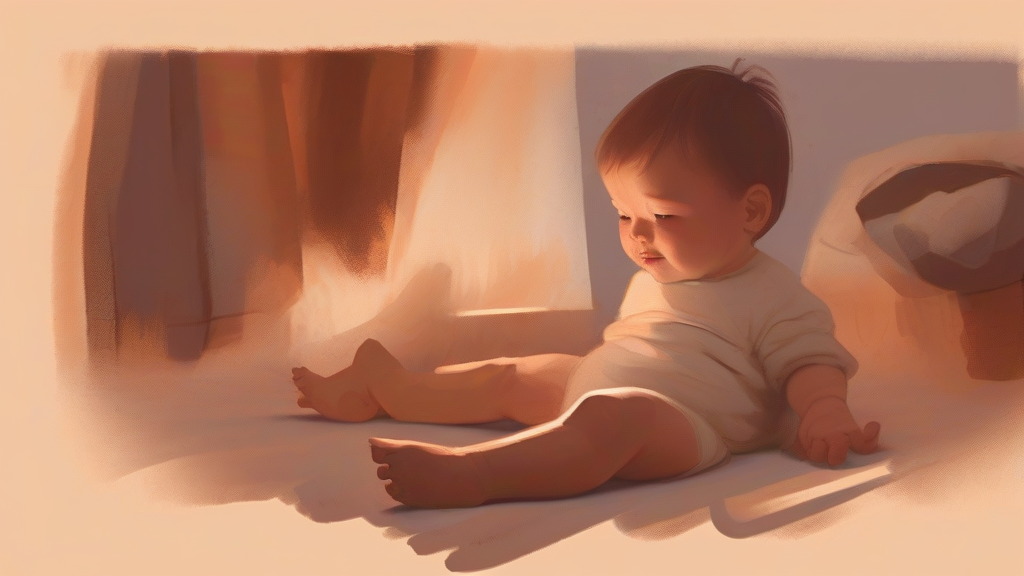
What does babylike mean?
"Babylike" is an adjective describing something that resembles a baby, whether in physical appearance or in manner. A person's face may be called babylike if it has the soft contours, large eyes, and smooth skin typical of infancy, while behavior can be babylike if it suggests innocence, dependence, or unguarded emotion. The word is built transparently from "baby" plus the suffix "-like," which forms adjectives meaning "resembling." It carries a generally affectionate or neutral connotation, distinguishing it from the more critical "babyish," which implies unwelcome immaturity. Writers reach for "babylike" when they want to evoke tenderness, vulnerability, or charm — the qualities that make infants appealing. Though informal in register, it appears regularly in descriptive prose about faces, expressions, gestures, and even design, where rounded, infant-adjacent features are deliberately cultivated.
adjectiveResembling a baby, especially in appearance, behavior, or manner; characteristic of an infant.
- Resembling a baby in appearance, especially having soft rounded features, large eyes, or smooth skin.
- Resembling a baby in behavior or manner, such as innocence, helplessness, or simple emotional expression.
"She tilted her head with a babylike expression of wide-eyed wonder."
"The doll's oversized head and babylike features made it irresistible to children."
"He clung to his mother's sleeve with a babylike grip he couldn't quite explain."
There's no single English word more likely to make a grown adult's face look instantly younger than "babylike" — scientists call it neoteny, and we're hardwired to respond to it.
Reviewed by Deb Chak, Editor. AI-assisted content curated by RJS Tech Solutions LLP.
Etymology of babylike
The word "babylike" is a straightforward English compound formation combining the noun "baby" with the adjectival suffix "-like." The word "baby" itself has an uncertain ultimate origin; it may derive from an imitative babbling sound (as in "baba") or possibly relate to Latin "babare," meaning to babble, though this connection is debated among etymologists. Compounds ending in "-like" have been productive in English since Middle English, producing familiar formations such as "childlike" and "lifelike."
How babylike is actually used
"Babylike" is typically neutral to affectionate in tone; when describing an adult's behavior negatively, writers often prefer "babyish" instead. It is formed transparently from "baby" + the suffix "-like" and is used attributively (a babylike face) and predicatively (her expression was babylike). It is a relatively informal literary term rather than a technical one.
Easily confused with babylike
Both mean resembling a baby, but "babyish" more often carries a negative connotation of immaturity in an older person, while "babylike" is usually neutral or endearing.
"Childlike" refers to the positive qualities of a child such as innocence and wonder, whereas "babylike" specifically evokes an infant.