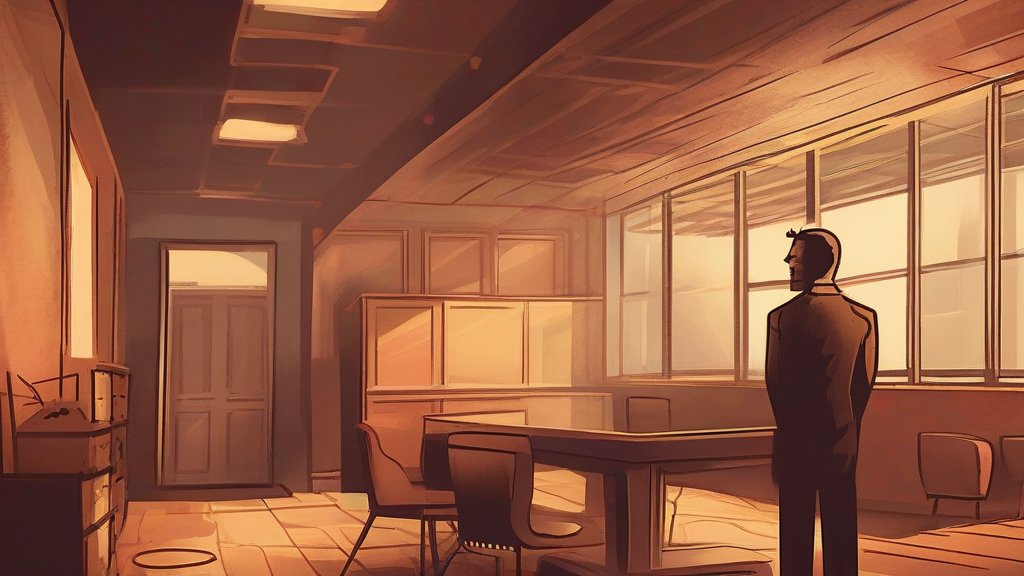
What does backroom mean?
A backroom is literally a room located toward the rear of a building — typically one where unglamorous, practical, or confidential work takes place, out of sight of customers or the public. Over time the word has taken on a powerful figurative meaning as well: it now evokes the hidden spaces where deals are struck and decisions made beyond official view, as in a 'backroom deal' in politics or business. Depending on context, this can carry negative connotations of secrecy and manipulation, or a positive glow of quiet competence, as when 'the backroom staff' of a sports team are credited with its success. The term became especially prominent in twentieth-century Britain, where 'the backroom boys' honored the scientists and engineers whose unseen labors produced major achievements. Whether describing an actual storage space or the shadowy machinery of power, backroom always points to what happens behind the scenes.
nounA room situated at the back of a building, especially one where practical, private, or confidential work is carried out away from public view; by extension, the sphere of secret or unofficial decision-making.
- A room at the rear of a building used for practical or non-public work (storage, preparation, administration).
- Figuratively: the hidden, often secretive arena in which important deals or political decisions are negotiated away from public scrutiny.
"The final terms of the merger were hammered out in a backroom far from the boardroom cameras."
"The chefs worked their magic in the cramped backroom kitchen."
"Critics accused the council of striking a backroom deal without consulting residents."
Standard plural; relatively rare outside descriptions of buildings or institutions with multiple such rooms.
"The theater's backrooms were cluttered with decades-old props and costumes."
The phrase 'smoke-filled room' gave us 'backroom' as shorthand for decisions made in secret — and 'the backroom boys' was once a celebrated British term for the unsung scientists behind wartime victories.
Reviewed by Deb Chak, Editor. AI-assisted content curated by RJS Tech Solutions LLP.
Etymology of backroom
Backroom is a straightforward English compound formed from 'back' (Old English 'bæc') and 'room'/'rum' (Old English 'rūm', meaning space), first appearing in ordinary use in the eighteenth and nineteenth centuries to denote rear working quarters in shops and houses. Its figurative rise came in the twentieth century, reinforced by the American phrase 'smoke-filled room,' which described covert political bargaining, and by the British expression 'the backroom boys,' popularized during the Second World War for anonymous technical experts. Related formations using the same element 'back' include backdrop, backlash, and backstage.
Related word forms
How backroom is actually used
Commonly used attributively as an adjective before another noun ('a backroom deal', 'backroom staff'). The figurative sense carries connotations of secrecy and lack of transparency, sometimes disreputable but sometimes neutrally praising unglamorous behind-the-scenes competence.
Easily confused with backroom
A 'back office' refers specifically to the administrative and support functions of a business, while 'backroom' more broadly denotes any rear room or the shadowy arena of informal decision-making.