What does backsaw mean?
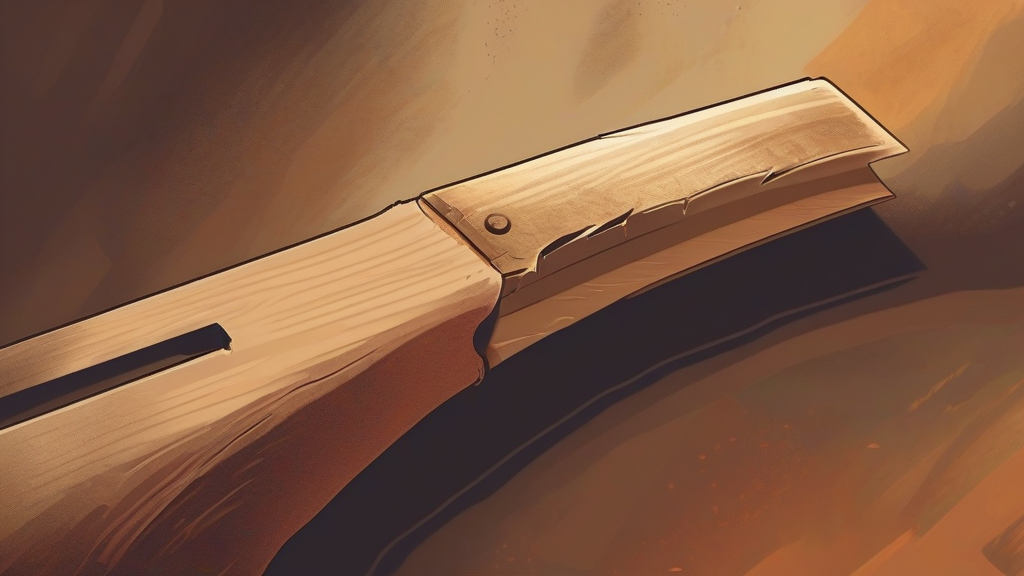
A backsaw is a specialised hand saw used primarily in woodworking and joinery, distinguished by a stiffening rib — usually made of brass or steel — running along the back of the blade opposite the teeth. This spine restricts how deep the saw can cut but keeps the thin blade perfectly rigid, allowing remarkably straight, controlled cuts. Backsaws have fine teeth set for smooth finishes, making them the tool of choice for precision tasks such as cutting tenons, mitres, and dovetails. Well-known variants include the tenon saw and the dovetail saw, which differ mainly in size and tooth count. The term belongs mostly to the vocabulary of carpenters, cabinetmakers, and tool collectors rather than everyday conversation, though anyone browsing a hardware shop or reading about traditional woodworking will encounter it. Its defining feature — that reinforced back — is also the source of its name and makes it instantly recognisable on any workbench.
nounA hand saw with a stiffening rib of brass or steel along the back edge that limits cutting depth, giving the blade rigidity for precise, straight cuts. It is typically used in woodworking and joinery for fine work such as tenons, mitres, and dovetails.
- A hand saw with a reinforcing spine along the back of the blade, used in joinery for accurate straight cuts (the standard and dominant sense).
"He reached for his backsaw to cut a clean tenon on the table leg."
"The apprentice learned to square off the end grain using nothing but a backsaw and a marking gauge."
"A quality brass-backed backsaw is still prized by traditional woodworkers who cut dovetails by hand."
Regular plural formation, used when referring to multiple tools or a collection.
"The workshop had a rack of backsaws in several sizes, from fine dovetail saws to larger tenon saws."
That rigid strip of brass along the back isn't decoration — it's what keeps a backsaw's thin blade from buckling, letting carpenters cut joints accurate to a fraction of a millimetre.
Reviewed by Deb Chak, Editor. AI-assisted content curated by RJS Tech Solutions LLP.
Etymology of backsaw
The word backsaw is a straightforward English compound formed from 'back' (referring to the stiffening rib along the rear of the blade) and 'saw', coined during the development of precision woodworking tools. Such compound names for tools defined by a structural feature were common as specialist trades vocabulary expanded in the 18th and 19th centuries. The word shares its first element with countless other English compounds built on 'back', such as backbone, backboard, and backrest.
How backsaw is actually used
Primarily a technical/trade term used among woodworkers, carpenters, and tool enthusiasts; rarely encountered in casual conversation. In British English the specific variants 'tenon saw' and 'dovetail saw' are often named directly rather than referred to generically as backsaws. The word is uncountable only in the sense of referring to the tool category; it takes a regular plural when referring to multiple tools.
Easily confused with backsaw
A hacksaw is a fine-toothed saw designed for cutting metal, whereas a backsaw has a stiffening spine along its back and is used for precise cuts in wood.
A tenon saw is actually a type of backsaw — the terms overlap, but 'backsaw' is the broader category name while 'tenon saw' refers to one specific size used for cutting tenons.