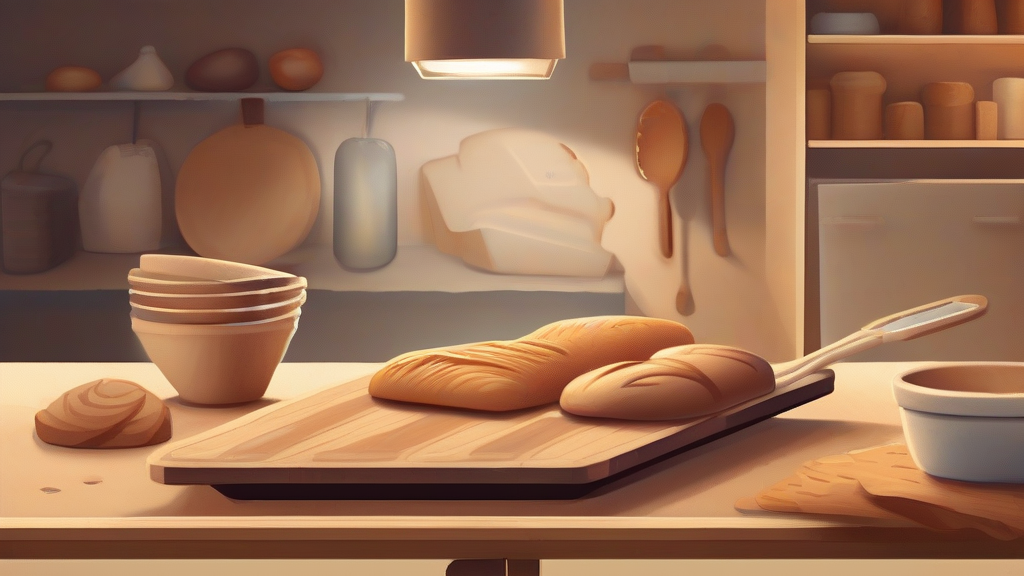
What does bakeboard mean?
A bakeboard is a flat board, traditionally made of wood, on which dough is kneaded and pastry is rolled out during baking. It served as the essential work surface of the home bakery long before modern countertops, with bakers dusting it with flour to keep dough from sticking. The term is now chiefly regional, surviving most strongly in Scottish and Northern English dialect, where it evokes the traditions of domestic bread-making. In everyday speech it overlaps with similar terms such as kneading board, pastry board, and breadboard, though a breadboard is generally used for slicing or cooling finished loaves rather than preparing dough. Old bakeboards are often treasured as heirlooms, their surfaces worn smooth and concave by years of use. For anyone interested in traditional cookery or regional vocabulary, the word offers a charming glimpse into the material culture of the historical kitchen.
nounA flat board, typically wooden, on which dough is kneaded or pastry is rolled out in baking.
- A flat wooden board on which dough is kneaded or pastry is rolled out.
"She dusted the bakeboard with flour before turning out the dough."
"The baker turned the soft dough onto the well-floured bakeboard and began to knead."
"Her grandmother's old bakeboard, worn smooth by decades of pastry-making, still hung on the kitchen wall."
Standard regular plural formation.
"The museum's collection includes several antique bakeboards from Victorian kitchens."
Before marble countertops, every serious baker's kitchen revolved around one humble slab of wood — the bakeboard — where generations of bread were kneaded by hand.
Reviewed by Deb Chak, Editor. AI-assisted content curated by RJS Tech Solutions LLP.
Etymology of bakeboard
Bakeboard derives from the combination of 'bake', from Old Norse 'baka' meaning to bake, and 'board', from Old English 'bord', a plank or flat surface. The compound arose in regional British English, particularly in Scotland and northern England, as a practical name for the baker's work surface. It belongs to the same family of baking terms as bakehouse and bakestone, reflecting the vocabulary of traditional domestic bread-making.
How bakeboard is actually used
The word is largely regional and somewhat old-fashioned, surviving mainly in Scottish and Northern English usage and in descriptions of traditional baking. It carries warm, domestic connotations of home baking heritage.
Easily confused with bakeboard
A breadboard is primarily for cooling or slicing baked bread after baking, whereas a bakeboard is used earlier in the process for kneading dough and rolling out pastry.