What does bakehouse mean?
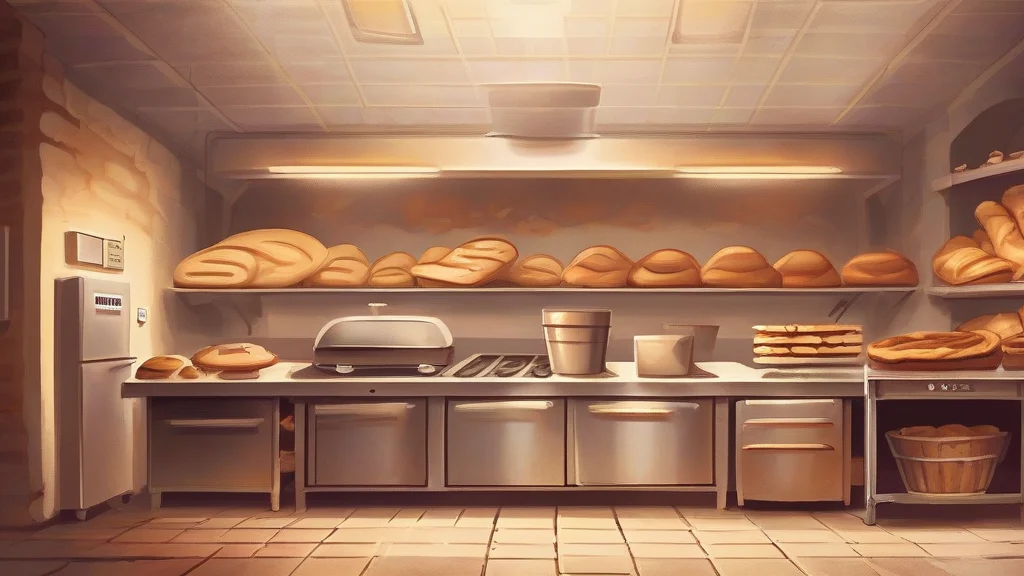
A bakehouse is a building or dedicated room fitted with ovens for producing bread and other baked goods, most often on a commercial scale. While closely related to the everyday word bakery — which usually denotes the whole retail business — a bakehouse refers specifically to the place where the actual baking happens: the ovens, the worktables, the heat. Historically, bakehouses held special importance in villages across Britain and Ireland, where many households lacked their own ovens and relied on a communal bakehouse, carrying prepared dough to be baked in shared, wood-fired ovens. Today the word survives most naturally in heritage, industrial-archaeology, and craft-baking contexts, describing restored village ovens, listed mill buildings, or artisan production spaces. Its slightly old-fashioned ring gives it charm: to call something a bakehouse is to evoke flour dust, brick hearths, and the long tradition of communal bread-making.
nounA bakehouse is a building or room equipped with ovens in which bread, pastries, or other baked goods are made, especially on a commercial scale. The term traditionally refers to the baking premises of a bakery, whether attached to a shop or operating as a standalone structure.
- A commercial or institutional building or room where bread and baked goods are produced.
- A historic communal village building where households once brought dough to be baked in shared ovens.
"The village bakehouse still stands at the end of Mill Lane, its brick ovens cold for decades."
"The new artisan bakery converted the old railway bakehouse into its production space."
"In many Scottish and Irish villages, the communal bakehouse was where families queued each week to bake their loaves."
The plural simply adds -s, following standard noun formation.
"Several disused bakehouses along the canal have been converted into studios."
Before every household owned an oven, villagers carried their dough to a shared communal bakehouse — one hot building fed an entire town.
Reviewed by Deb Chak, Editor. AI-assisted content curated by RJS Tech Solutions LLP.
Etymology of bakehouse
Bakehouse is a straightforward English compound formed from the verb bake plus house, denoting a building used for baking. Both elements are of ancient Germanic origin: 'bake' descends from Old English bacan, and 'house' from Old English hūs. Similar compounds such as brewhouse and slaughterhouse follow the same productive pattern of combining an activity word with 'house'. The compound has existed in English for many centuries, appearing regularly in medieval and early modern records describing monastic, manorial, and municipal baking premises.
How bakehouse is actually used
Bakehouse carries a somewhat traditional, even historical flavour; in modern commercial usage 'bakery' is far more common, so 'bakehouse' often appears when referring to older, heritage, or craft-baking contexts. It remains current in British English and in heritage-industry terminology.
Easily confused with bakehouse
A bakery typically refers to the business or retail establishment selling baked goods, whereas a bakehouse more specifically denotes the physical building or room where the baking itself takes place.