
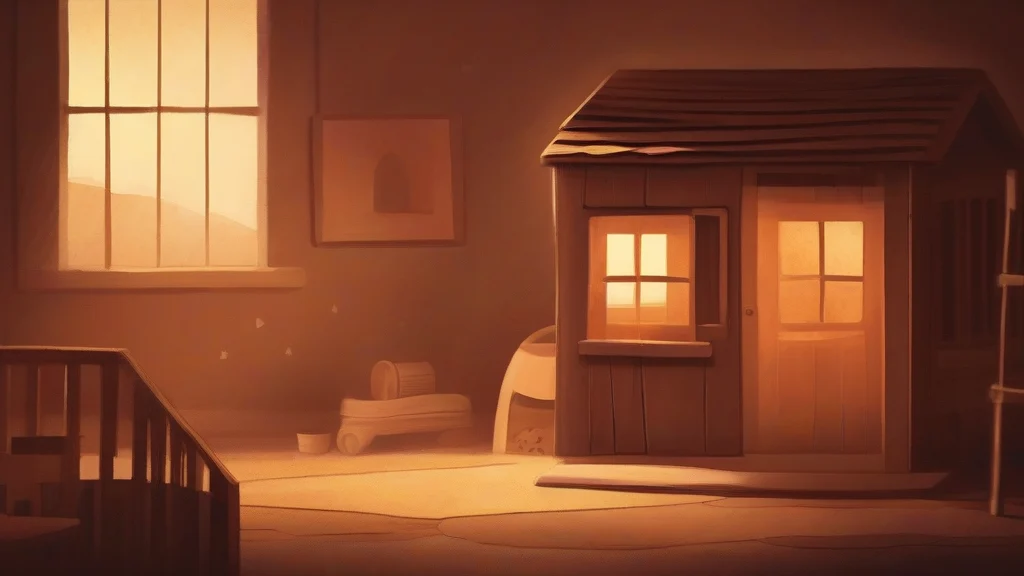
What does playhouse mean?
Playhouse most commonly denotes a child-sized structure designed for play, especially a wooden frame or small house installed in a garden, yard, or playground. Unlike a playground, which is an area, a playhouse is a physical structure that children may enter, climb into, or use for imaginative play. The word is neutral in modern British and American English and commonly appears in combinations such as "children's playhouse" and "wooden playhouse." Historically, however, playhouse could refer to a theater or public performance venue, so the expression has an older theatrical resonance even though that sense is now uncommon. The compact compound reflects the word's long-standing English structure: "play" supplies the activity and "house" supplies the building or enclosed place. Today "playhouse" is especially associated with children's outdoor recreation, but its history makes it a useful example of how a familiar modern label can preserve an earlier social meaning.
nounA small structure, often wooden, in which children can play. Historically, the word also denoted a theater or place of public performance.
- A small, often freestanding structure where children can play, typically in a garden, yard, or playground.
- Historically, a theater or other venue intended for dramatic performances.
"The children turned the old wooden playhouse into a pirate ship's quarters."
"They built a little playhouse beneath the old oak tree."
"In Elizabethan London, the Globe was a prominent public playhouse."
The standard plural of the noun playhouse.
"The playground has several wooden playhouses for different age groups."
In Shakespeare's London, the Globe was a playhouse: 'playhouse' once meant what we would now call a theater.
Reviewed by Deb Chak, Editor. AI-assisted content curated by RJS Tech Solutions LLP.
Where does playhouse come from?
Playhouse is an English compound formed from the Old English verb pleġan, meaning "to play or amuse oneself," and the Old English noun hūs, meaning "dwelling" or "house." The compound was historically used for a theater or another venue where plays were performed. Its modern sense as a small structure for children's play developed later and is now the dominant meaning.
Related word forms
How playhouse is actually used
The modern sense is neutral and familiar in British and American English. The older theatrical sense is uncommon but remains recognizable in historical writing.
Easily confused with playhouse
A playhouse is a physical structure for children to play in, whereas a playground is the outdoor area or site containing play equipment.