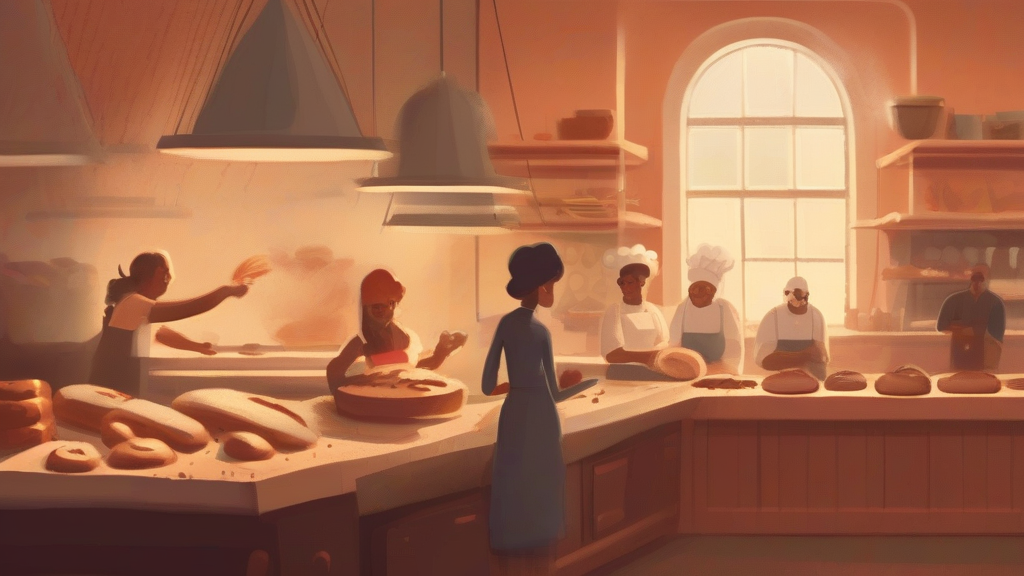
What does bakeoff mean?
A bakeoff is a competition centered on baking, in which contestants present cakes, breads, pies, or other baked goods to judges who award prizes based on taste, technique, and originality. The term entered wide use through the Pillsbury Bake-Off, an American contest launched in 1949 that became a cultural touchstone and inspired countless local, school, and charity versions. In modern usage the word has also developed a figurative second life in business and technology, where a 'bakeoff' describes an informal head-to-head trial in which competing products, tools, or vendors are tested against one another before a decision is made. Though spelled in several ways — bakeoff, bake-off, bake off — the word always carries a friendly, communal connotation, evoking county fairs, kitchen rivalry, and good-natured competition rather than cutthroat contest.
nounA competition in which contestants prepare and present baked dishes to be judged, often for a prize. By extension, an informal comparison or contest between rival products, technologies, or vendors.
- A competitive event, often charitable or promotional, in which contestants bake goods that are judged for prizes; famously associated with America's Pillsbury Bake-Off.
- An informal comparison test between competing products, technologies, or vendors to determine which performs best (common in business and software contexts).
"Her sourdough won first prize at the community bakeoff."
"Twelve amateur bakers faced off at the charity bakeoff, each hoping their signature pie would take home the ribbon."
"The engineering team ran a bakeoff between three cloud providers before committing to a vendor."
Regular plural formation; the plural applies equally whether the word is styled 'bakeoff' or 'bake-off'.
"Regional bakeoffs are held across the state every summer."
The most famous bakeoff of all began in 1949 as a publicity stunt to sell flour — and turned into an American institution that launched countless careers.
Reviewed by Deb Chak, Editor. AI-assisted content curated by RJS Tech Solutions LLP.
Etymology of bakeoff
Bakeoff is a compound of the verb 'bake' (from Old English 'bacan') and the adverb/particle 'off', formed on the pattern of other '-off' competition words like 'cook-off' and 'playoff'. It arose in mid-twentieth-century American English, gaining prominence after the first Pillsbury Bake-Off was held in 1949. The extended technology sense developed later, borrowing the idea of a judged comparison from the culinary original.
How bakeoff is actually used
The word is written variously as 'bake-off', 'bakeoff', and 'bake off'; the hyphenated form is the traditional and still most common style. The technology sense is informal but well established in American business jargon. The capitalized Pillsbury Bake-Off, first held in 1949, popularized the term in the United States.
Easily confused with bakeoff
A cook-off is any cooking competition in general, while a bakeoff is restricted to baked goods such as breads, cakes, and pies.