
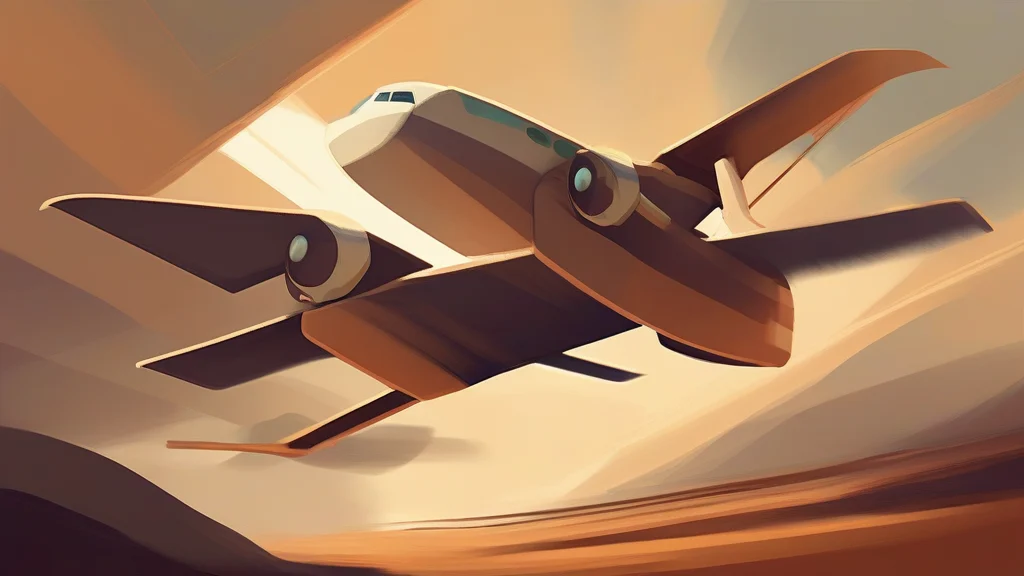
What does takeoff mean?
A takeoff is the process by which an aircraft or other vehicle becomes airborne, typically after accelerating along a runway. In business and economic contexts, a takeoff describes rapid expansion, as when a company gains customers, investment, and public attention in a short period. The word can also refer to removing clothes or, less formally, making a quick departure. These senses share an underlying image of sudden upward movement or departure. The aviation sense is the most established, while “economic takeoff” is widely understood in reporting on markets and industry. In modern English, the noun is usually written as one word, whereas the related verb is written as two words: take off. Although the compound is now strongly associated with aviation, it was formed from an older phrasal verb and was later extended to figurative uses.
nounThe act or process of becoming airborne, as when an aircraft leaves the ground. The word can also refer to rapid expansion in a business, industry, or economy, or to the removal of clothing.
- The act or process of becoming airborne.
- Rapid expansion in business, industry, or economic activity.
- The act or process of removing clothing.
- A quick or sudden departure.
"The plane cleared the runway smoothly before beginning its takeoff into the cloud-covered sky."
"Visibility was poor, so the pilot delayed takeoff until the fog had lifted."
"The company entered a period of rapid takeoff after introducing its new service."
The standard plural is takeoffs, with the suffix -s added to the complete compound.
"The airport handles more than fifty takeoffs before noon."
From lifting off a runway to lighting up an economy, one compound captures two spectacular leaps.
Reviewed by Deb Chak, Editor. AI-assisted content curated by RJS Tech Solutions LLP.
Where does takeoff come from?
Takeoff was formed in the 19th century from the verb phrase take off. Its early use was associated with the ascent of aircraft, while the economic sense developed later by analogy with rapid upward movement. The component take belongs to the same English verbal family found in undertake, overtake, and mistake.
How takeoff is actually used
In contemporary usage, the noun is normally written as one word, while the verb is written as two words: take off. The aviation sense is standard and technical; the economic sense is common in journalism and business writing. The clothing-removal and quick-departure senses are less frequent and may sound informal.