
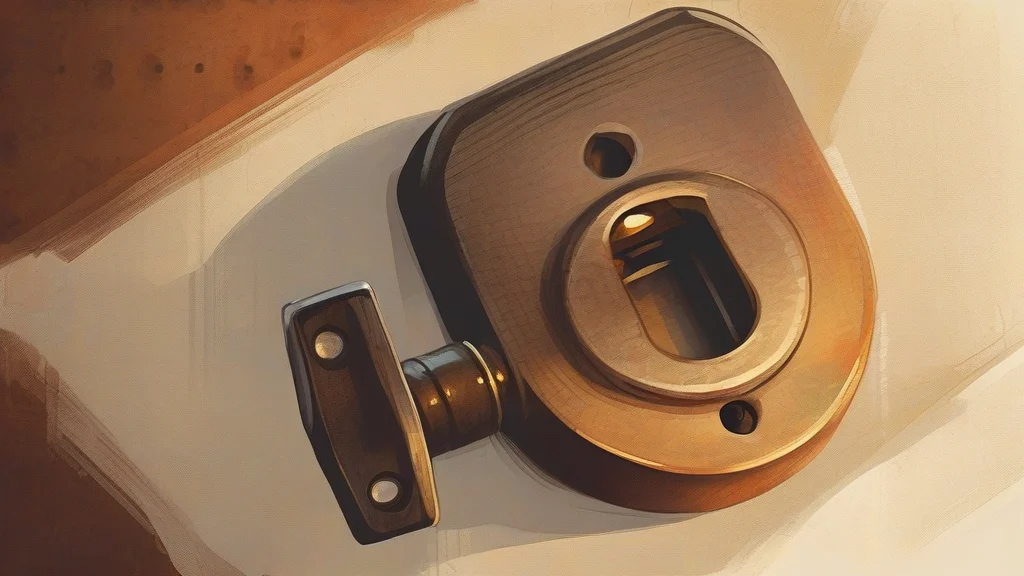
What does lock mean?
Lock is a common English word with two closely related roles. As a noun, it names a mechanical or electronic fastening device that secures a door, container, vehicle, or other object and may require a key, combination, or other code to open. By extension, it can mean the act of securing something or a mechanism that limits access to a computer, system, or financial instrument. As a verb, lock means to fasten securely, prevent entry or use, fix something in place, or formally commit to an arrangement. Familiar special senses include a curl or tuft of hair, a chamber for raising or lowering a boat in a canal, and a sports prospect considered virtually certain. The word is versatile rather than obscure: it can describe both physical security and metaphorical restriction. Expressions such as “under lock and key” underscore its association with confinement and control, while contemporary usage extends comfortably to digital privacy and informal commitments.
A mechanical or electronic device that secures a door, container, vehicle, or other object until released by a key, code, or mechanism; by extension, a restriction or control on access to a system.
"The cabin has a sturdy lock on its only door."
Beyond its principal meaning, a lock can denote a lock of hair, a canal chamber, or a virtually certain sports outcome.
To fasten or secure something, prevent access or use, fix it firmly in place, or formally commit to an arrangement.
"They locked the equipment away before the holiday."
The verb combines literal security with figurative restriction, commitment, and concentration; “lock onto” is commonly used for identifying or focusing intently on a target.
The plural is used for fastening devices, instances of securing something, and separate locks or tufts of hair.
"The old wooden gates had heavy iron locks."
From canal chambers to phone screens, a lock is a promise that something stays closed until the right mechanism—or the right code—releases it.
Reviewed by Deb Chak, Editor. AI-assisted content curated by RJS Tech Solutions LLP.
Where does lock come from?
Middle English borrowed the noun from Old French loc, a word for a lock or fastening, and developed the verb from it during the Middle English period. The related word locket comes through Old French loquet, a diminutive of loc. English later formed transparent derivatives such as unlock and lockout by combining the word with other elements.
Related word forms
How lock is actually used
The word is neutral in register and common in formal, informal, and professional contexts. Phrases such as “lock in” can mean either a binding commitment or, in financial contexts, fixing a price; “locked” is also widely used informally for a confirmed decision or outcome.
Easily confused with lock
A latch is usually a lightweight fastening that keeps a door or gate closed without necessarily preventing it from being opened.