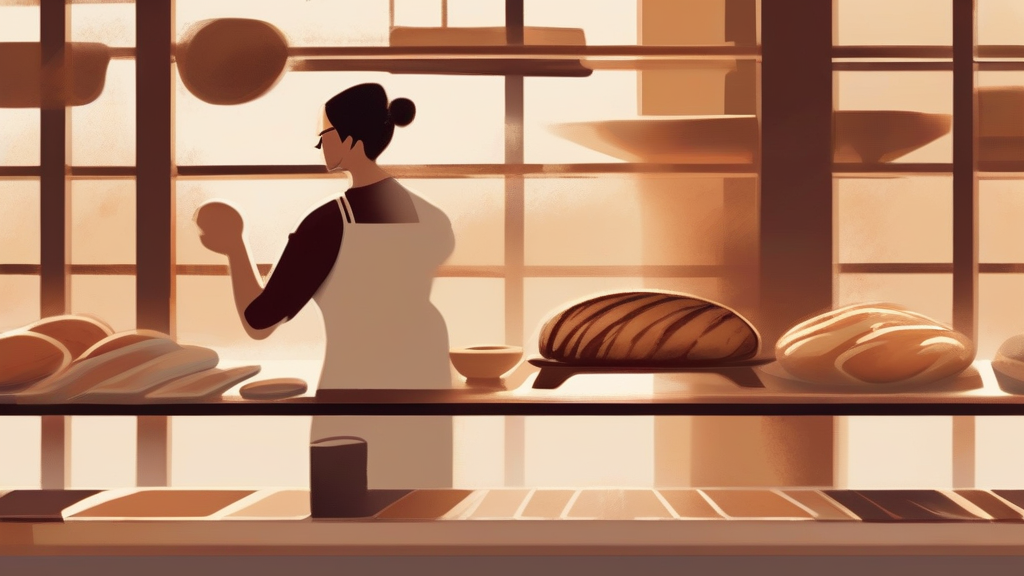
What does baker mean?
A baker is a person whose trade is baking bread, cakes, pastries, and other goods in an oven, usually for sale to the public. It is one of the oldest recorded occupations, appearing wherever communities settled long enough to cultivate grain, and it remains a common and respected craft today. In everyday usage the noun refers both to the individual practitioner — often qualified as a master baker or artisan baker — and, by extension, to someone who runs a bakery business. The word appears in familiar phrases such as a baker's dozen, meaning thirteen rather than twelve, a custom rooted in medieval trade protections. Connotations are warm and traditional: bakers are associated with early mornings, fresh bread, and neighborhood life. Related forms include the verbs bake and the nouns bakery and bakehouse, which describe the products and premises rather than the person. Simple, concrete, and universally understood, baker is a useful example of an occupational noun in English.
nounA person whose trade or occupation is baking bread, cakes, pastries, and other baked goods, typically for sale. The word also denotes a shop or establishment where such goods are made and sold.
- A person whose occupation is baking bread, cakes, and other baked goods.
- A shopkeeper or owner of a bakery business.
"The baker was up before dawn, sliding trays of sourdough into the oven."
"She apprenticed with a master baker in Lyon before opening her own patisserie."
"The village baker delivered fresh loaves to every doorstep each morning."
The standard plural adds -s; used when referring to multiple practitioners of the trade collectively.
"Three local bakers supplied bread to the market that week."
Ask for a baker's dozen and you'll get thirteen — a medieval safeguard against being punished for short-weighting customers.
Reviewed by Deb Chak, Editor. AI-assisted content curated by RJS Tech Solutions LLP.
Etymology of baker
Baker comes from Old English bæcere, derived from the verb bacan, meaning to bake, which traces back to the Proto-Germanic root *bakan and ultimately the Indo-European root *bhōg- connected with heating and cooking. Cognate forms appear across the Germanic languages, including Dutch bakker and German Bäcker. The occupation itself predates the English word by millennia, with professional bakers attested in ancient Egypt, Greece, and Rome, but the English term developed directly from the native craft vocabulary of baking.
Related word forms
How baker is actually used
Baker is an ordinary, neutral occupational noun with no strong register constraints. It carries wholesome, traditional connotations of craft and daily bread. The feminine form bakers' work is simply 'baker'; there is no widely established separate feminine form.
Easily confused with baker
A bakery is the shop or place where baked goods are made and sold, while a baker is the person who makes them.