What does balalaika mean?
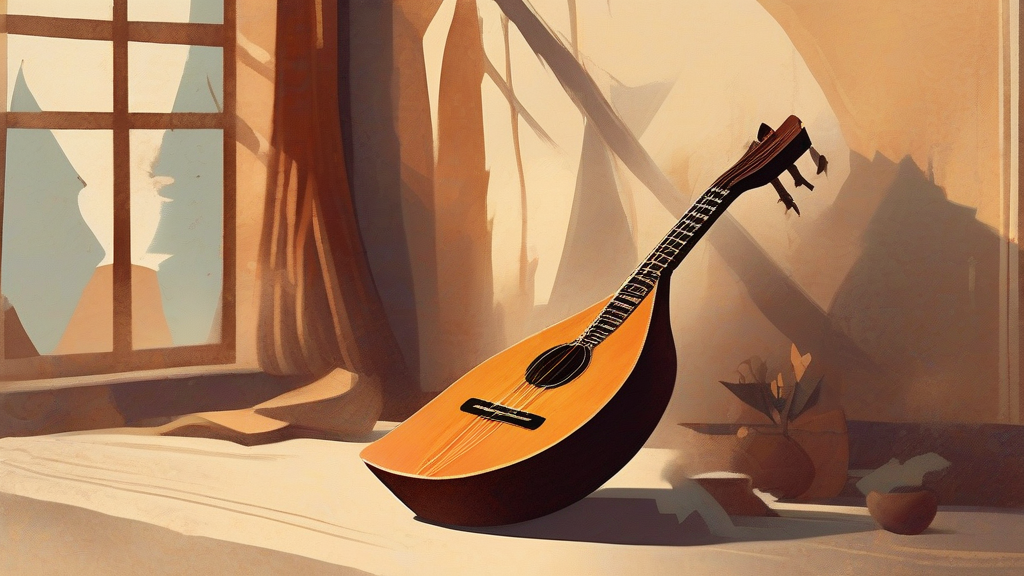
A balalaika is a Russian stringed musical instrument distinguished by its triangular wooden body, long fretted neck, and three strings. Played by plucking or strumming with the fingers or sometimes a plectrum, it comes in several sizes, from the small, high-pitched prima to larger bass variants. The balalaika occupies a central place in Russian folk music and became especially prominent in the nineteenth century, when Vasily Andreyev standardized the instrument and founded the first balalaika orchestra. Outside Russia, the word appears chiefly in discussions of music, cultural history, and travel writing about Eastern Europe, where it evokes images of village musicians and folk ensembles. For English speakers, it remains a culturally specific term: it names an instrument rather than a general category, so it is used whenever precision about this particular triangular-bodied instrument matters.
nounA Russian musical instrument with a triangular wooden body and three strings, resembling a guitar, played by plucking or strumming with the fingers.
- A Russian stringed instrument with a triangular body and three strings, played by plucking or strumming.
"The folk ensemble opened the concert with a lively melody on the balalaika."
"He strummed the balalaika while singing a traditional Russian folk song."
"The Moscow balalaika orchestra toured Europe to enthusiastic audiences."
The standard plural follows regular English noun formation; the Russian form балалайки may appear in specialized musicological texts but 'balalaikas' is normal in English.
"The ensemble featured six balalaikas of varying sizes."
Its unmistakable triangular body makes the balalaika one of the most instantly recognizable instruments in the world — and it's been Russia's beloved national instrument for centuries.
Reviewed by Deb Chak, Editor. AI-assisted content curated by RJS Tech Solutions LLP.
Etymology of balalaika
The word 'balalaika' comes from Russian балалайка (balalayka), which entered English during the eighteenth or early nineteenth century as travelers and writers described Russian folk music. The Russian word itself likely derives from a verb meaning 'to chatter' or 'to joke', reflecting the playful character often attributed to the instrument's sound. It is related to other Russian folk instruments such as the domra and gusli within the broader tradition of Slavic stringed instruments, though these are distinct instruments rather than direct cognates of the word.
How balalaika is actually used
The word is used almost exclusively in reference to music and Russian culture; it carries a strong cultural association with Russian folk traditions. The stress falls on the second syllable of the final portion (ba-la-LAI-ka).
Easily confused with balalaika
A mandolin has a rounded or teardrop-shaped body and typically four pairs of strings, whereas a balalaika is Russian with a distinctive triangular body and three strings.