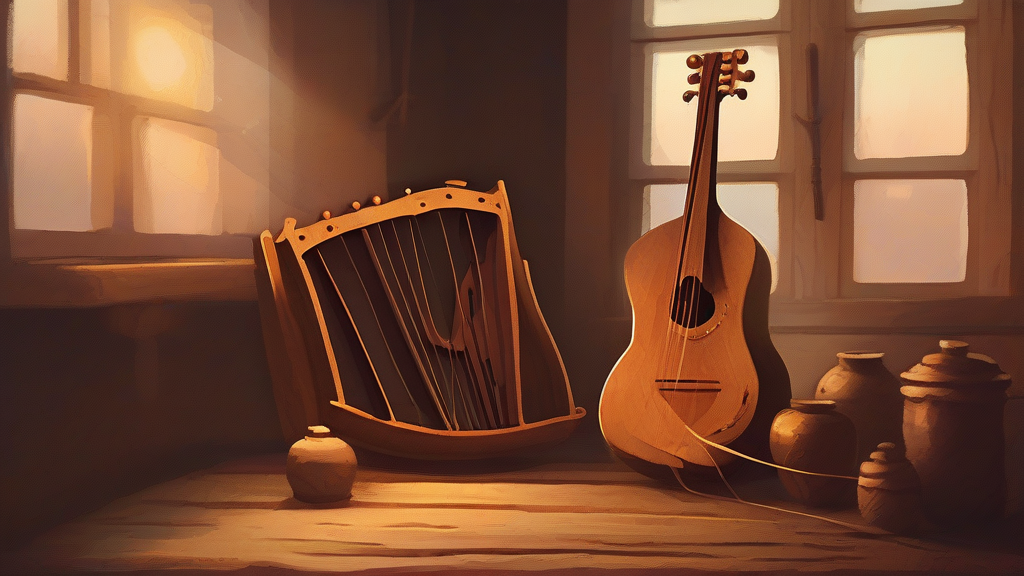
What does gusli mean?
The gusli is an ancient Slavic stringed musical instrument, considered the oldest known Slavic instrument. It typically had 5-36 strings and was played with a plectrum or fingers. The gusli was an integral part of Slavic culture, used in various ceremonies and celebrations. Its significance extends beyond its musical function, representing a connection to the region's rich cultural heritage. The gusli has seen a resurgence in popularity, with modern musicians reconstructing and playing the instrument in various cultural events.
nounAn ancient Slavic stringed musical instrument, often considered the oldest known Slavic instrument.
- An ancient stringed musical instrument.
- A modern reconstruction of the ancient instrument.
"The musician skillfully played a melody on the gusli during the cultural festival."
"The museum showcased an exhibit on ancient Slavic instruments, including the gusli."
"The musician's performance on the reconstructed gusli was met with critical acclaim."
The gusli is often treated as a collective noun, with the same form used for both singular and plural.
"The collection included several ancient gusli."
Reviewed by Deb Chak, Editor. AI-assisted content curated by RJS Tech Solutions LLP.
Etymology of gusli
The gusli originated in ancient Slavic cultures, with its earliest known depictions dating back to the 6th century. The instrument's name is derived from the Proto-Slavic word 'gusla', which referred to a type of lyre. Over time, the gusli evolved and spread throughout Slavic regions, influencing the development of various stringed instruments.
How gusli is actually used
The term 'gusli' is primarily used in the context of ancient Slavic music and culture. Modern usage often refers to reconstructions of the instrument.