What does ballclay mean?
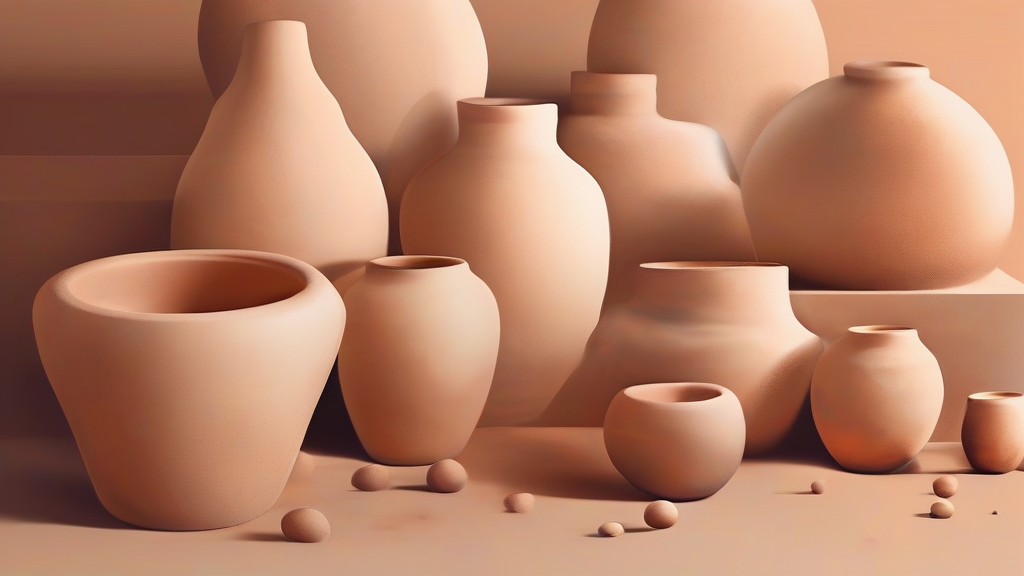
Ballclay is a fine-grained, exceptionally plastic clay used above all in the ceramics industry. Unlike residual clays found where they formed, it is a secondary clay that was transported by water and re-deposited, which gives it extremely small particle size and great workability. Raw ballclay is usually dark grey or brown because of organic matter, yet it fires to a pale buff or white colour, making it valuable in tableware, floor and wall tiles, sanitaryware, and refractory products. Potters add small proportions of it to stoneware and porcelain bodies precisely because pure kaolin alone is too short and crumbly to throw easily. The name arose in England in the eighteenth century, when the clay was extracted in Dorset and Devon, rolled into balls for transport, and sold by weight in that form. Major commercial deposits are worked in Devon and Dorset in Britain and in western Kentucky and Tennessee in the United States. The word belongs mainly to technical and trade vocabulary, written either as one word or as "ball clay".
nounA fine-grained, highly plastic secondary clay used chiefly in ceramics and pottery, valued for its workability and fired strength.
- A fine, very plastic secondary clay, typically grey when moist and light-fired, used in pottery, tiles, and sanitaryware to improve workability and strength.
"The potter blended a little ballclay into her stoneware body to make it easier to throw on the wheel."
"The tile manufacturer sourced its ballclay from deposits in Devon and Tennessee."
"Adding just ten percent ballclay gave the porcelain enough plasticity to be thrown without cracking."
The plural appears mainly in geological and industrial contexts when distinguishing different deposits or grades of ball clay.
"The region's ballclays vary widely in carbon content and firing colour."
It got its name because in 18th-century England the clay was dug up, rolled into balls, and carted off that way — the shape of the shipment became the name of the material.
Reviewed by Deb Chak, Editor. AI-assisted content curated by RJS Tech Solutions LLP.
Etymology of ballclay
The word ballclay derives from the English noun "ball" joined to "clay," reflecting the historical practice in eighteenth-century Devon and Dorset of digging the clay and rolling it into rough balls for weighing and transport before sale. The underlying element "clay" goes back to Old English clǣg, from a Proto-Germanic root shared with related words in other Germanic languages. The compound arose within English trade vocabulary rather than being borrowed, and it parallels other industry coinages such as "fireclay" and "china clay."
How ballclay is actually used
Ballclay is primarily a technical term of the ceramics, geology, and mining industries rather than everyday speech; in trade writing the two-word spelling "ball clay" is common, though the compound is frequently written as one word. It carries no emotional connotation and is essentially neutral and formal-technical in register.
Easily confused with ballclay
Boulder clay is an unstratified glacial deposit containing rocks and gravel, whereas ballclay is a fine, smooth sedimentary clay prized for its plasticity.
China clay (kaolin) is a white, relatively non-plastic clay used to whiten ceramic bodies, while ballclay is grey or buff and added mainly for plasticity.