
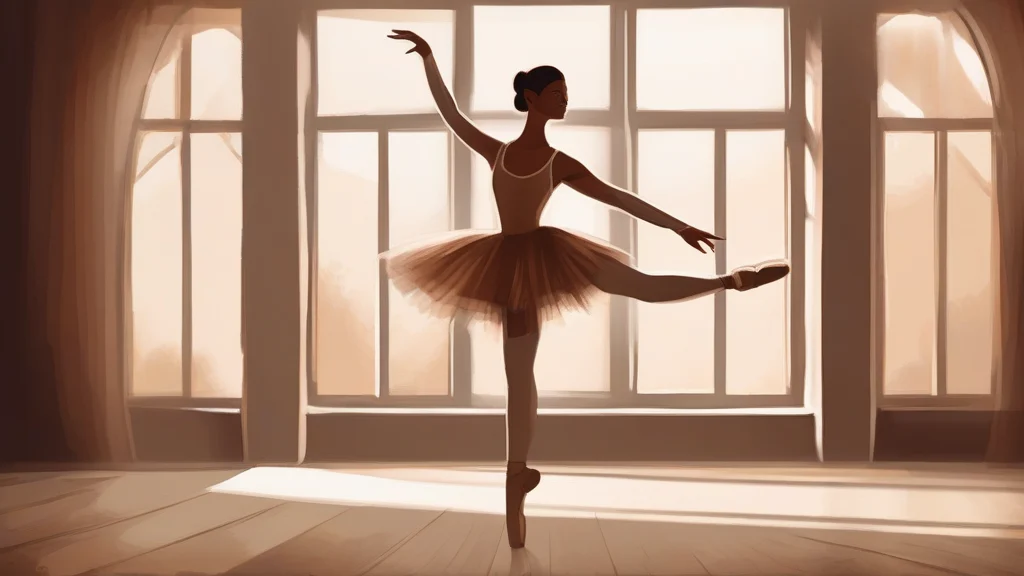
What does ballerina mean?
A ballerina is a female ballet dancer, particularly one who performs leading roles in a ballet company. Borrowed from Italian in the nineteenth century, the word carries connotations of grace, discipline, and artistry, and it has become the popular shorthand in English for women who dance ballet professionally. In its strictest traditional sense, only a dancer of top rank — a prima ballerina or prima ballerina assoluta — was properly called a ballerina, while other dancers were simply ballet dancers; today, however, the term is commonly used for any accomplished female ballet dancer. The word appears frequently in phrases such as "principal ballerina" and "lead ballerina." Its enduring appeal lies in what it evokes: years of rigorous training, poise under pressure, and the seeming effortlessness of movement on stage. The masculine counterparts are usually referred to simply as ballet dancers or danseurs rather than by a parallel term.
nounA female ballet dancer, especially one who performs principal roles in a ballet company; the term is also used more broadly for any skilled female ballet dancer.
- A female ballet dancer, especially one who performs principal or leading roles in a ballet company.
- By extension, any female ballet dancer, particularly one trained to a professional standard.
"The ballerina rose en pointe and held the audience spellbound."
"After years of training, she finally achieved her dream of becoming a principal ballerina with the Royal Ballet."
"The young ballerina rehearsed her variations for hours before opening night."
The plural is regular, formed by adding -s. Note that the Italian plural would be "ballerine," but English consistently uses "ballerinas."
"The corps de ballet included twelve ballerinas in white tutus."
"Ballerina" is actually an Italian diminutive — literally a "little dancer" — yet the word came to describe the most towering figures on the world's great stages.
Reviewed by Deb Chak, Editor. AI-assisted content curated by RJS Tech Solutions LLP.
Etymology of ballerina
The word "ballerina" comes from Italian, where it is the feminine form of "ballerino" (dancer), both derived from "balletto," a diminutive of "ballo," meaning a dance. It entered English in the nineteenth century, a period when Italian ballet dancers dominated European stages and Italian terminology spread through the ballet world alongside terms like "prima ballerina" and "prima ballerina assoluta," which designate ranks of excellence. Related words sharing this lineage include "ballet" itself, borrowed via French from Italian, and "balletomane," meaning an ardent admirer of ballet. In modern Italian usage, "ballerina" can refer to any female dancer, including dancers of styles beyond classical ballet.
Related word forms
How ballerina is actually used
The word is neutral in tone and widely understood. Strictly speaking, "ballerina" historically denoted a dancer of the highest rank (as in "prima ballerina"), and some dance professionals reserve it for that elite status, using "ballet dancer" as the general term. In everyday usage, however, it is applied to female ballet dancers generally. The male equivalent is sometimes called a "ballerino," though "ballet dancer" or "danseur" is more common in English.
Easily confused with ballerina
Ballerino is the male counterpart to ballerina; in Italian, -ina is the feminine diminutive ending while -ino is the masculine one.
A primadonna is the leading female singer in an opera (or, figuratively, a temperamental person), whereas a prima ballerina is the leading female dancer in a ballet company.