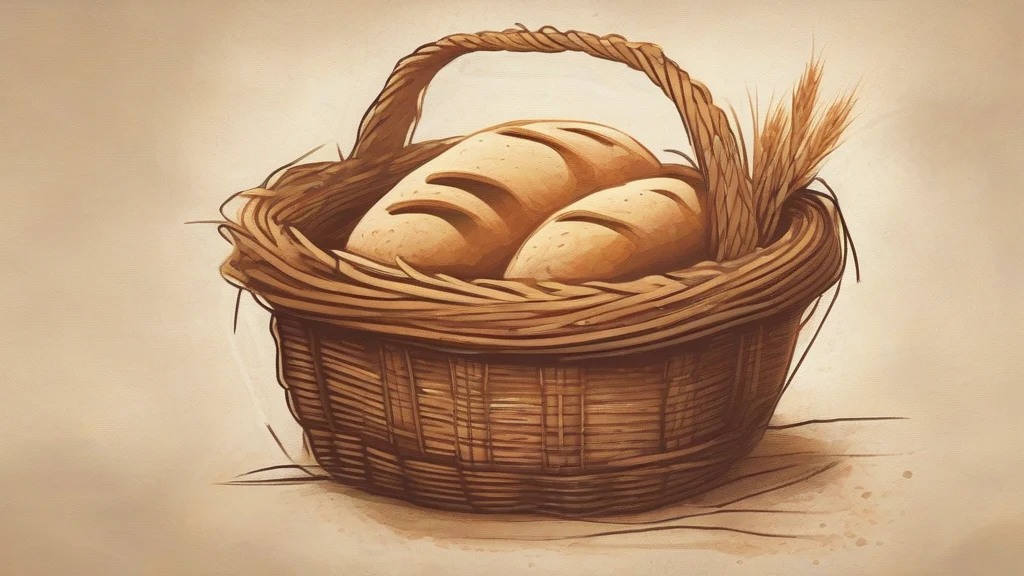
What does bannet mean?
A bannet is a regional British term with two related strands of use. In Scotland, it refers to a wicker basket carried on the back, traditionally used by crofters, fishermen, and farm workers to transport heavy loads such as peat, fish, hay, or harvested crops. The design allowed weight to be borne on the shoulders and back, making it an essential tool of rural labour before modern bags and packs became widespread. In parts of Northern England, particularly in dialect speech, bannet instead names a soft white bread roll, a sense that appears in local bakeries and food writing. The word is not part of standard everyday English vocabulary, so most readers will encounter it only in historical accounts, regional literature, or descriptions of traditional crafts. Its charm lies in this rootedness: it evokes a world of hand-woven containers, coastal landings, and field work. For writers and readers interested in regional heritage, bannet offers a vivid, authentic piece of vocabulary that captures both practical ingenuity and the texture of older rural life in Britain.
A wicker basket carried on the back, used especially in Scotland for transporting loads such as peat, fish, or produce.
"Crofters once carried cut peat down from the moss in a bannet strapped across their backs."
This is the dominant and best-attested sense, found chiefly in Scottish sources.
(Northern English dialect) A soft white bread roll.
"The bakery still sells ham sandwiches made on a fresh bannet."
Restricted to Northern English dialect; unfamiliar outside the region.
The plural follows regular English formation and applies to both senses of the word.
"The crew filled several bannets with herring before dawn."
Long before backpacks, Scottish crofters hauled peat, fish, and hay home in a bannet — a sturdy wicker basket strapped to the back.
Reviewed by Deb Chak, Editor. AI-assisted content curated by RJS Tech Solutions LLP.
Etymology of bannet
Bannet is recorded as a Scots and Northern English dialect word, with its basket sense long established in Scottish usage. Its ultimate origin is uncertain, though it has been associated with Old French terms for baskets and carriers; lexicographers have generally treated it as a borrowing adapted into Scots rather than a native Germanic formation. The Northern English bread-roll sense developed separately within local dialect, likely through association with similar-sounding baking terms such as bannock. The word remains largely confined to these regional traditions.
How bannet is actually used
Bannet is a regional dialectal word rather than part of everyday standard English; it survives mainly in Scotland (as a basket) and in parts of Northern England (as a bread roll). Because usage varies by locality, context usually makes clear which sense is meant.
Easily confused with bannet
A bannock is a flat, round oatcake or griddle bread, whereas a bannet is either a back-carried wicker basket or, regionally, a soft bread roll.
A bonnet is a hat worn on the head, while a bannet is a basket or bread roll; the words are unrelated despite their similar spelling.