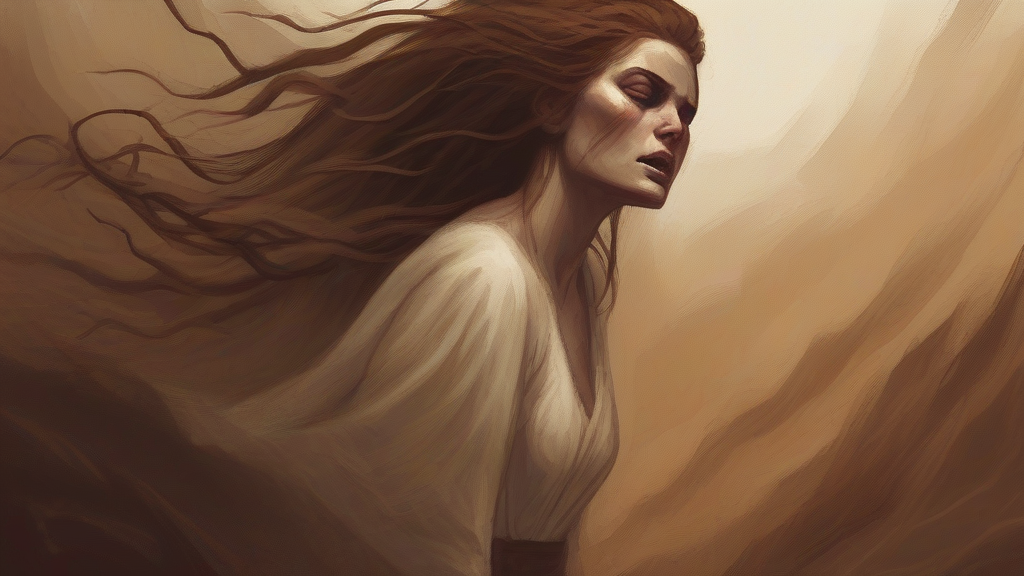
What does banshee mean?
A banshee is a female spirit of Irish folklore whose unearthly wailing is regarded as an omen of impending death, traditionally within a specific family. The name comes from the Irish 'bean sí', meaning 'woman of the fairy mounds', linking her to the supernatural beings of Gaelic legend. In traditional belief, hearing the banshee's mournful cry — often described as keening, the ritual wailing for the dead — meant that a death in the family was near. Over time, the word has also taken on a figurative, often humorous use in everyday English: to 'scream like a banshee' is to make a loud, piercing, wailing noise. This gives the word two registers — an eerie, supernatural one rooted in Celtic mythology, and a playful colloquial one used to describe noisy outbursts. Whether evoking ancient omens or a child's tantrum, 'banshee' remains one of the most vivid figures exported from Irish folklore into the wider English imagination.
nounIn Irish folklore, a female spirit whose wailing cry is said to foretell the death of a member of a family. By extension, a person or thing that makes a loud, wailing or shrieking noise.
- A female spirit in Irish folklore whose mournful wail is an omen of death, especially within a particular family.
- Figuratively, anyone or anything that makes a loud, piercing, wailing sound (often used humorously, as in 'screaming like a banshee').
"Legend held that when the banshee cried beneath the window, someone in the household would soon die."
"The old storyteller swore he had heard the banshee keening on the night his grandfather passed."
"The toddler howled like a banshee when it was time to leave the playground."
The standard English plural is 'banshees'; some writers preserve the Irish-style uninflected form 'banshee' in folkloric contexts.
"Folklore speaks of many banshees, each attached to a different old family."
The banshee's name literally means 'woman of the fairy mound' — and her scream was believed to be heard only by the family about to lose one of its own.
Reviewed by Deb Chak, Editor. AI-assisted content curated by RJS Tech Solutions LLP.
Etymology of banshee
The word 'banshee' derives from the Irish 'bean sí' (earlier 'ben síde'), meaning 'woman of the fairy mound', from 'bean' (woman) and 'sí' (the fairy mounds or otherworld of Gaelic tradition). It entered English in the late 16th or early 17th century through Anglo-Irish usage, as English speakers encountered Irish funeral customs and beliefs. The related verb 'to keen', describing ritual wailing for the dead, shares this Gaelic background and is closely tied to descriptions of the banshee's cry.
How banshee is actually used
The plural is usually 'banshees', though some writers keep the Irish-style plural 'banshee'. The figurative sense ('like a banshee') is informal and often humorous, while the folkloric sense carries an eerie, supernatural connotation. The word is strongly associated with Irish and Scottish Gaelic tradition.
Easily confused with banshee
'Banshie' is simply an older or variant spelling of banshee, not a different word; both derive from the same Irish term.