
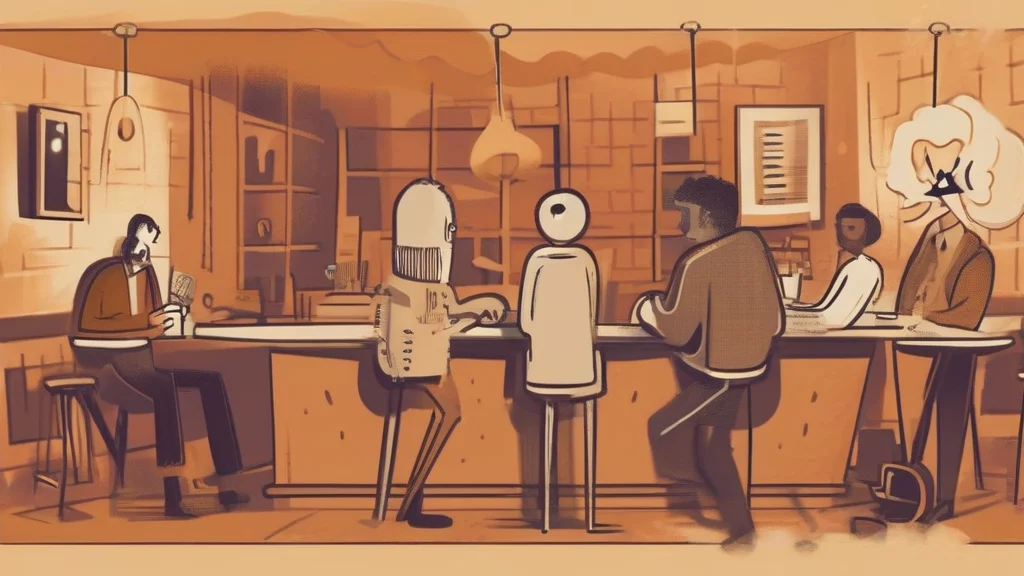
What does banter mean?
Banter refers to the playful, witty exchange of teasing remarks — conversation that is light-hearted rather than serious, and affectionate rather than hostile. It can function as a noun, naming the amusing back-and-forth itself ('the banter around the dinner table'), or as a verb, describing the act of engaging in it ('they bantered about their disastrous camping trip'). The word carries strongly positive connotations of warmth, camaraderie, and social ease; successful banter signals that the participants know each other well enough to joke freely without causing offence. It flourishes in informal settings — among friends, teammates, colleagues, and families — and is particularly associated with British conversational culture, where sharp, teasing humour is often a mark of friendship. The term emerged in English in the late seventeenth century, though its precise origins remain uncertain. Because tone and relationship are everything, the same quip can land as charming banter in one context and as rudeness in another.
Playful, witty, good-humoured teasing or an exchange of light-hearted remarks.
"The radio show's appeal lay as much in the hosts' easy banter as in its music."
Usually uncountable when referring to the general activity; occasionally used with an article for a specific episode of teasing.
To engage in playful, good-humoured teasing or witty conversation with someone.
"The two old friends bantered cheerfully over coffee."
Can be used transitively ('he bantered her about her accent') or absolutely ('they bantered for hours').
Rarely used; 'banter' is normally treated as uncountable. A plural form exists but is uncommon.
"The evening was full of the cheerful banters of old friends."
Nobody is quite sure where 'banter' came from — it appeared in English in the late 17th century and even lexicographers of the day admitted they were guessing at its origin.
Reviewed by Deb Chak, Editor. AI-assisted content curated by RJS Tech Solutions LLP.
Etymology of banter
Banter first appears in English writing in the late seventeenth century, but its origin is genuinely obscure — early lexicographers openly admitted they did not know where it came from, and no consensus has emerged since. Some have speculated about connections to other words, but none of these theories has been verified. What is certain is that the word quickly established itself as the standard English term for witty, teasing conversation, and it has remained in continuous informal use ever since.
Related word forms
How banter is actually used
Banter is informal in register and almost always carries a warm, affectionate connotation — it implies familiarity between the people involved. It is especially prominent in British culture, where quick-witted teasing is often a sign of camaraderie. Tone matters: the same remark can be welcome banter among friends or unwelcome mockery if there is no rapport.
Easily confused with banter
Both mean playful teasing conversation, but 'badinage' is a more formal, literary term borrowed from French, while 'banter' is the everyday word.