
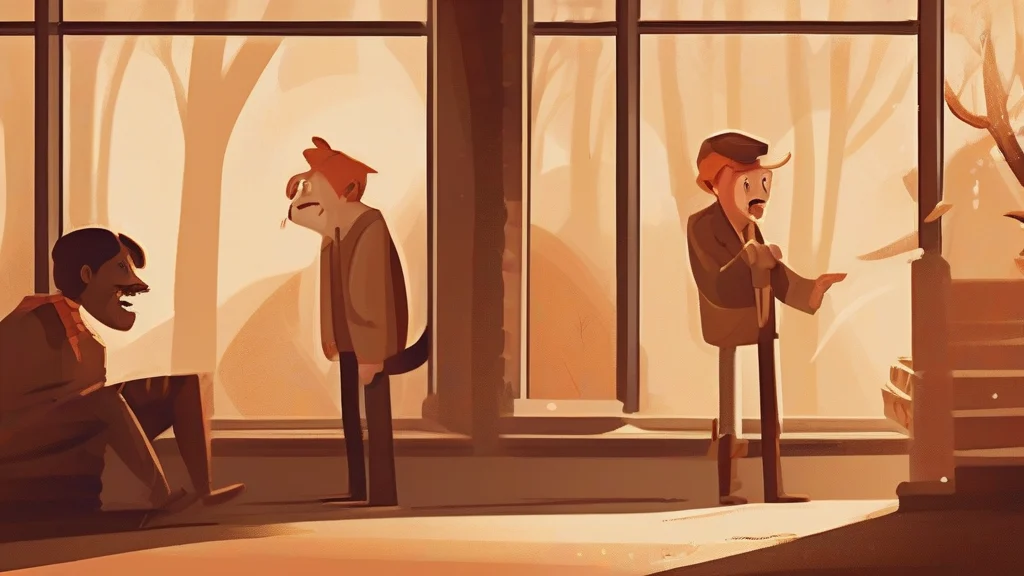
What does raillery mean?
Raillery is a noun for teasing, jesting, or mockery, especially when it is delivered with wit rather than open hostility. In modern use it often suggests verbal sparring among people who understand the joke; its tone can nevertheless be barbed, and in older writing it may mean more generally ridicule or derision. A speaker might be described as engaging in light raillery, while a writer might use the word for satire aimed at a person or institution. The term is useful because it captures a mode of verbal interaction that is neither straightforward praise nor an outright quarrel. Its literary and slightly old-fashioned quality makes it especially effective in descriptions of wit, conversation, and social comedy, while remaining intelligible to contemporary readers.
nounPlayful or witty teasing or mockery, especially of a light-hearted but potentially barbed kind.
- Joking, teasing, or mockery, especially when expressed with wit or good humor.
"Her reply was full of good-natured raillery, but no one took offence."
"The guests met with laughter and raillery as the evening progressed."
"The article uses sharp raillery to question the senator's latest claim."
The plural is used for individual instances of witty mockery or teasing.
"The playwright's sharp railleries delighted the audience."
Raillery is the literary word for the art of the barb: witty enough to amuse, sharp enough to sting.
Reviewed by Deb Chak, Editor. AI-assisted content curated by RJS Tech Solutions LLP.
Etymology of raillery
Raillery was borrowed into English from French raillerie, a noun meaning mockery or teasing derived from railler, “to mock” or “tease.” The English word became established in the early modern period and was associated especially with literary satire and sharp, often humorous criticism. French forms such as railler, railleur, and railleuse preserve cognates of the same source and root.
How raillery is actually used
Somewhat old-fashioned and chiefly literary, though still understandable in modern English. It can suggest good-natured teasing, but it may also carry the implication of sharp, derisive humor.
Easily confused with raillery
Raillery means witty teasing or mockery, whereas railing can mean a barrier or, as a verb, complaining angrily.