What does banty mean?
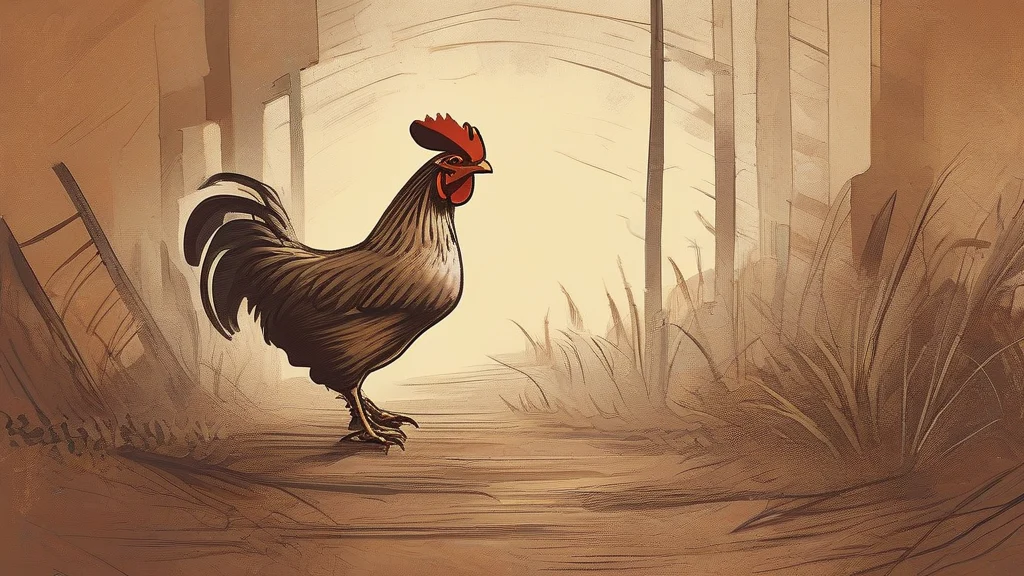
A banty is a miniature domestic chicken belonging to one of the bantam breeds, birds typically a quarter to half the size of ordinary fowl and prized for their ornamental looks and brooding instinct. The word is essentially an informal American variant of 'bantam,' and it has also taken on a figurative sense: because these tiny birds are famously bold and quarrelsome, calling a person a 'banty' suggests someone small in stature but big in spirit — pugnacious, assertive, and unwilling to back down. The name traces back to the port town of Bantam (Banten) on the Indonesian island of Java, where European sailors first encountered the small fowl centuries ago; the same origin gave rise to 'bantamweight' boxing. In everyday use, 'banty' appears most often in rural and farm contexts, in phrases such as 'banty rooster' or 'banty hen.' Though informal, it is a vivid, well-established word that captures a distinctive blend of smallness and swagger.
nounA small domestic chicken of a miniature breed, originally developed from the bantam fowl of Java; by extension, in informal American usage, any small or short person with an aggressive, feisty temperament.
- A diminutive domestic chicken of a miniature (bantam) breed.
- Informal: a small but pugnacious, spirited person.
"The old farmer's yard was full of strutting banties no bigger than pigeons."
"She keeps a flock of banties that scratch around the barnyard like feathered toys."
"He may be the smallest man on the crew, but he's a regular banty when there's work to be argued about."
The plural is formed regularly with -ies.
"Half a dozen banties pecked at grain scattered across the yard."
Named after a Javanese town — 'bantam' chickens take their name from Bantam on Java, and 'banty' is its folksy American cousin.
Reviewed by Deb Chak, Editor. AI-assisted content curated by RJS Tech Solutions LLP.
Etymology of banty
The word derives ultimately from 'Bantam' (modern Banten), a port town on the island of Java where Dutch and Portuguese traders first obtained the small fowl now known as bantams, with the term entering English in the seventeenth century as 'bantam.' The shortened, folksier form 'banty' developed later in American English, particularly in rural speech. Its figurative application to small, combative people stems naturally from the bird's reputation for aggressiveness out of proportion to its size.
How banty is actually used
Primarily informal and rural American English; the standard form 'bantam' is preferred in formal writing. When applied to people, it carries a mildly colorful, sometimes affectionate connotation of feistiness rather than insult.
Easily confused with banty
'Bantam' is the standard spelling and term for the miniature chicken breed and its figurative uses, while 'banty' is chiefly an informal American variant of it.