
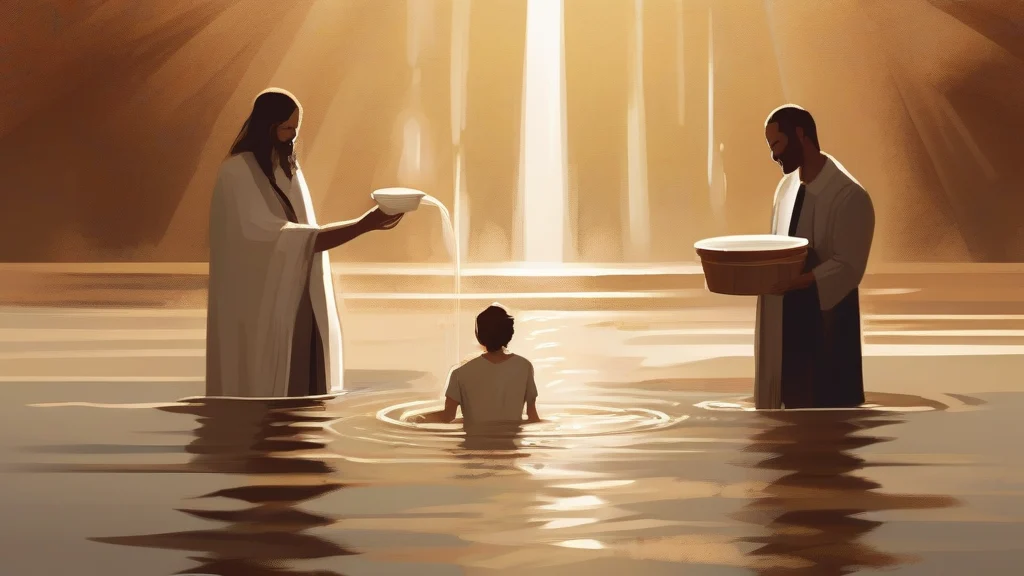
What does baptising mean?
Baptising means performing the Christian rite of baptism, in which water is used to mark a person's entry into the Christian faith and, in many traditions, their spiritual rebirth. Historically, baptism could involve full immersion, the pouring of water, or sprinkling, although immersion is especially associated with the word's original meaning. In figurative use, baptising describes welcoming or initiating someone into a faith, community, profession, or unfamiliar way of life. The word has a formal and distinctly religious character, though the figurative sense can occur in journalism and organisational contexts. The present-participle spelling “baptising” is especially associated with British English, while American English generally writes “baptizing.” The word is worth knowing not only for its central place in Christian practice but also for the vivid history behind it: its Greek ancestor referred literally to dipping or immersing, connecting the modern ceremony with an ancient act of washing.
verbBaptising is the act of baptising someone, especially by immersing them in water or sprinkling water on them as a Christian rite. Figuratively, it can mean welcoming someone into a faith, community, or way of life.
- Performing the Christian rite of baptism.
- Figuratively, welcoming or initiating someone into a faith, group, or new phase of life.
"The minister baptised the baby during the Sunday service."
"The congregation gathered to watch the family baptising their daughter."
"The experienced mentor spent months baptising the new volunteers into the organisation's working culture."
Baptising began as an act of washing: the Greek root means “to dip” or “immerse,” before Christian ritual transformed it into a symbol of spiritual rebirth.
Reviewed by Deb Chak, Editor. AI-assisted content curated by RJS Tech Solutions LLP.
Where does baptising come from?
The English verb comes through Old French and ecclesiastical Latin from Greek βαπτίζω (baptizō), a form related to βάπτω (baptō), meaning “to dip” or “immerse.” Christian writers adopted the word to describe the ritual use of water and the associated idea of spiritual cleansing or rebirth. Its relatives include baptism, baptistery, baptistic, and baptist, while the present participle “baptising” follows the standard British spelling pattern.
Related word forms
How baptising is actually used
This spelling is chiefly used in British English and other varieties that generally prefer -ising; American English more commonly uses “baptizing.” The literal religious sense is the dominant one, while the figurative sense is less common and often conveys initiation, commitment, or entry into a new community.
Easily confused with baptising
Baptism is the Christian rite or ceremony itself, whereas baptising refers to the act of performing it or to the process of initiation associated with it.