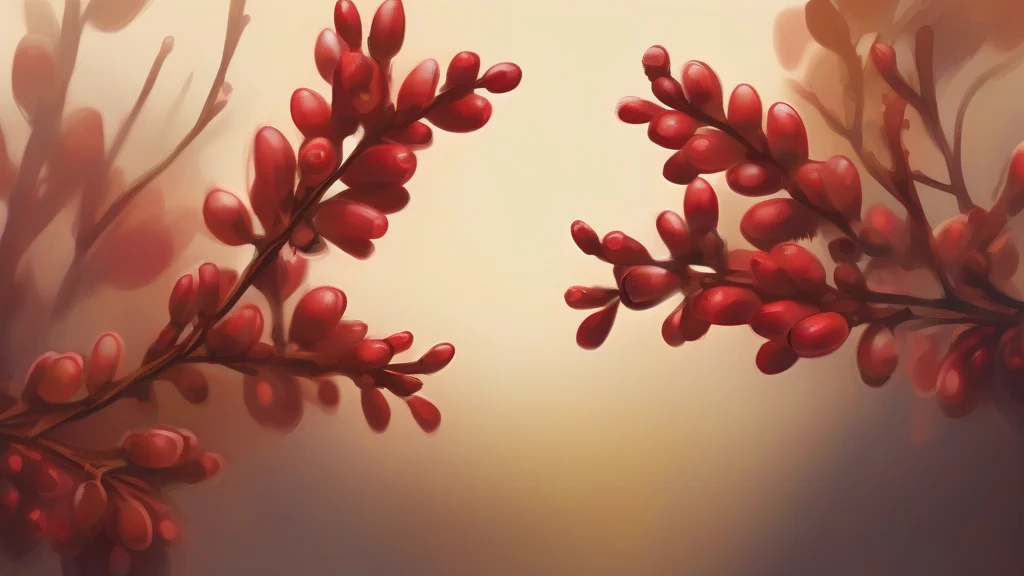
What does barberry mean?
Barberry is the common name for spiny shrubs of the genus Berberis, plants prized both for ornament and for their strikingly tart red berries. The shrubs bear small yellow flowers in spring, dense thorny growth that makes them popular hedging plants, and clusters of elongated scarlet berries in late summer and autumn. Those berries are too sour to eat by the handful, but they shine in cooking — most famously in Persian cuisine, where dried barberries lend bright acidity to dishes like jeweled rice. Gardeners know barberry best through species such as Japanese barberry, grown for colorful foliage though now considered invasive in parts of North America. Historically, the plant carried a darker reputation: it hosts stem rust, a fungal disease of wheat, leading to barberry eradication campaigns in farming regions. The word derives ultimately from Arabic barberis, entering English via medieval Latin and French, and it remains a useful botanical and culinary term today.
nounA spiny deciduous or evergreen shrub of the genus Berberis, bearing yellow flowers and small tart red berries; also refers to those edible but sour berries themselves.
- The spiny shrub of the genus Berberis, often grown as an ornamental hedge.
- The small tart red berry of that shrub, used in cooking and preserves in some cuisines.
"The gardener planted a hedge of barberry along the fence for its dense thorns and bright autumn berries."
"She stirred dried barberries into the saffron rice, adding bursts of sour brightness."
"The landscaper chose Japanese barberry for its vivid foliage, unaware it had become invasive in the region."
Standard pluralization; 'barberries' is especially common when referring to the fruit sold dried for cooking.
"The recipe calls for a handful of dried barberries scattered over the pilaf."
Barberries were banned in America centuries ago — not because of their taste, but because they hosted a fungus that devastated wheat crops.
Reviewed by Deb Chak, Editor. AI-assisted content curated by RJS Tech Solutions LLP.
Etymology of barberry
The word barberry entered English in the early modern period from French berbéris, whose form suggests a connection with 'barbe' (beard), perhaps referring to the plant's bristled or bearded appearance. The name traces back through medieval Latin berberis, itself likely borrowed from Arabic barberīs, reflecting the plant's long history in Mediterranean and Middle Eastern botany and cookery. Its scientific genus name, Berberis, preserves the same root, and the alkaloid berberine takes its name directly from it.
How barberry is actually used
The word is most often encountered in gardening and landscaping contexts, where several species — notably Japanese barberry — are widely planted. The berries are intensely sour and are a familiar ingredient in Persian cooking; they are rarely eaten raw in quantity. Some ornamental species have become invasive in parts of North America, which colors modern usage of the term.
Easily confused with barberry
Bearberry is a low-growing ground-cover plant of the genus Arctostaphylos with mild berries, while barberry is a thorny shrub of the genus Berberis with sharply sour berries.