What does barde mean?
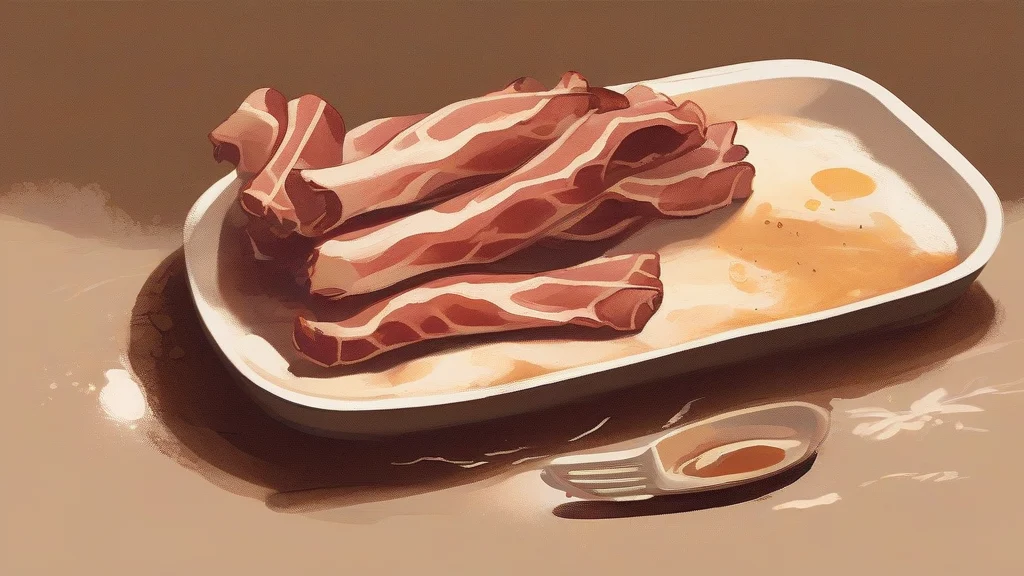
A barde is a strip or thin slice of fat—most often bacon or pork fatback—that cooks lay over lean cuts of meat or poultry before roasting. As the fat slowly renders, it self-bastes the meat beneath, keeping it moist and adding flavour where the cut itself has too little marbling. The technique, known as barding, belongs largely to classical European cookery and appears most often today in older recipe books, charcuterie traditions, and professional kitchens handling very lean game such as venison or veal. A barde may be tied in place or removed partway through cooking so that the surface can brown. Though the word sounds exotic, it is simply the noun form behind the common instruction to 'bard' a roast. For anyone cooking lean meats, knowing this term connects a humble strip of bacon to a centuries-old method of protecting delicate flesh from drying out in dry oven heat.
nounA thin slice or strip of fat, such as bacon or pork fatback, laid over lean meat or poultry before roasting to baste it and prevent it from drying out.
- A strip or slice of fat (typically bacon or fatback) placed over lean meat or poultry before roasting to keep it moist.
"The chef covered the venison loin with a barde of bacon before setting it in the oven."
"The butcher recommended barding the lean saddle of veal with a barde of fresh pork fat."
"She removed the barde for the final ten minutes so the surface could brown and crisp."
The plural retains the French-style ending; in everyday kitchen speech, cooks more often say 'strips of bacon' or 'bards of fat'.
"Use two bardes of fatback, one over each side of the roast."
Before oven thermometers existed, chefs wrapped lean roasts in strips of bacon called bardes — edible insulation that kept the meat moist.
Reviewed by Deb Chak, Editor. AI-assisted content curated by RJS Tech Solutions LLP.
Etymology of barde
The word entered English from French, where 'barde' carries the same culinary meaning; the French term is generally believed to derive ultimately from a Germanic source, though the exact pathway is not firmly established. English usage is recorded from around the early nineteenth century in cookery writing. It should not be confused with the unrelated word 'bard', meaning poet, despite their similar spellings.
Related word forms
How barde is actually used
Chiefly a term of classical and professional cookery; rarely encountered outside recipes and culinary literature. In modern kitchens the practice is often described simply as 'barding' rather than by the noun itself.
Easily confused with barde
'Bard' most commonly refers to a poet or storyteller, while 'barde' refers to a strip of fat used in cooking; as a verb, 'to bard' means to cover meat with such fat.
'Basting' means spooning or brushing liquid over food during cooking, whereas barding with a barde places solid fat on the meat beforehand.