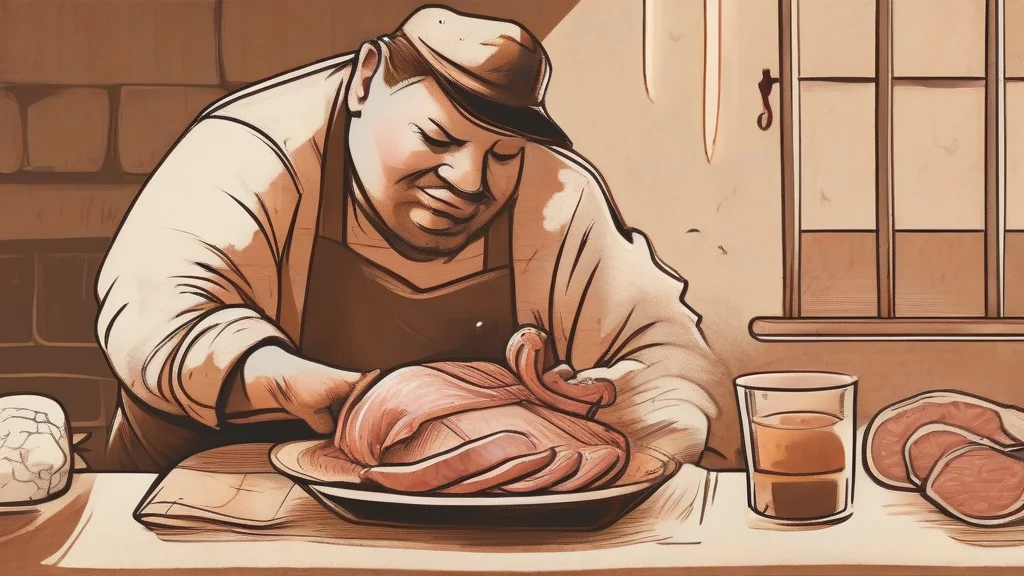
What does fatback mean?
Fatback is a cut of pork consisting of the thick layer of fat that runs along a pig's back, typically cured with salt and sold in slabs or strips. Because it is almost pure fat, with little or no lean meat, it is rarely eaten like bacon; instead it serves as a seasoning, rendered slowly in pots of collard greens, black-eyed peas, beans, and stews to lend depth and richness. The word is closely tied to the traditional cooking of the American South, where inexpensive fatback was long a dietary staple, and it often evokes nostalgia for old-fashioned country kitchens. Cooks distinguish it from salt pork, which may come from the belly or sides, and from bacon, which contains alternating layers of fat and meat. Though less common in modern kitchens, fatback remains valued for authentic regional dishes.
nounFatback is a cut of pork taken from the layer of fat along the pig's back, typically salted or cured and used in cooking to flavor dishes such as greens, beans, and stews. It is distinct from bacon, which is cured from the belly and includes more meat.
- A layer of fat from along the back of a pig, especially when salted or cured and used as a cooking ingredient.
- The fatty flesh of this cut considered as food in general.
"She simmered the collard greens with a strip of fatback until the pot was rich with smoky flavor."
"The old recipe called for a piece of fatback to season the black-eyed peas."
"In the rural South, fatback was once a cheap, essential staple of everyday cooking."
The plural is rare and typically refers to multiple pieces or slabs of the cut.
"The butcher had several fatbacks hanging in the curing room."
Before bacon conquered the breakfast table, a slab of salty fatback was what put real flavor into the South's pots of greens and beans.
Reviewed by Deb Chak, Editor. AI-assisted content curated by RJS Tech Solutions LLP.
Etymology of fatback
The word fatback is a straightforward English compound of 'fat' and 'back', formed to name the cut of pork taken from the animal's back. It arose in English usage by the late 18th century and became especially established in American English, particularly in the Southern United States where the cut was a common staple. As an English compound rather than a borrowing, it has no Latin or Greek cognates; related terms are simply other compounds built on the same native words, such as 'backfat', the term butchers use for the uncured fat layer.
How fatback is actually used
Fatback carries strong associations with traditional Southern US cuisine and older, frugal country cooking; it can appear affectionately in nostalgic writing about that food culture. The word is informal to neutral rather than technical, though it appears on ingredient lists. Unlike bacon, it is generally not eaten on its own but used to season other dishes.
Easily confused with fatback
Salt pork is also salt-cured pork fat but is usually cut from the belly or sides, whereas fatback comes specifically from the pig's back.
Bacon is cured and often smoked meat from the pork belly containing both fat and lean layers, while fatback is nearly pure fat from the back.