
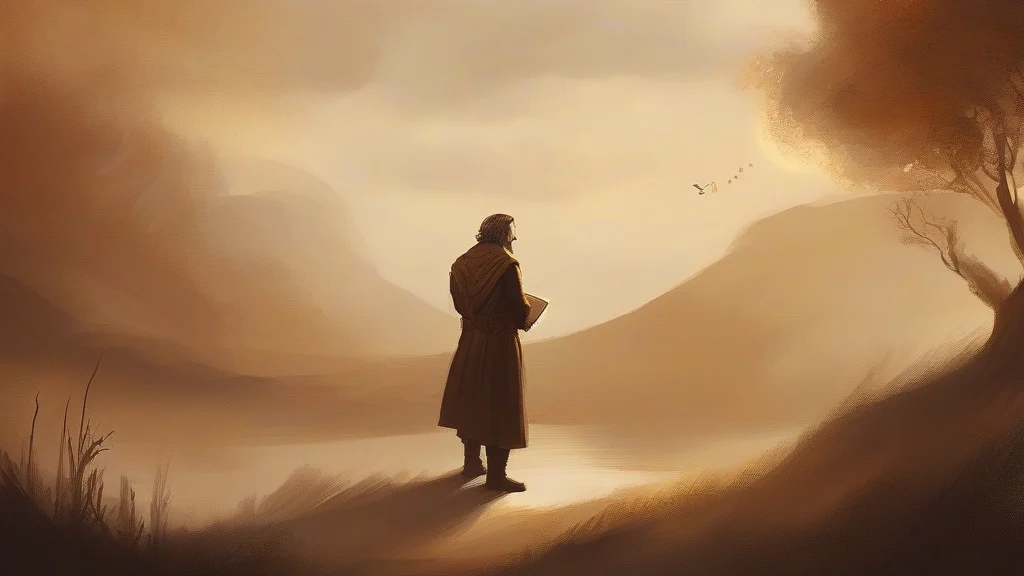
What does bard mean?
A bard is a poet, particularly one held in high esteem or one belonging to the ancient Celtic tradition of professional verse-making. In medieval Ireland, Wales, and Scotland, bards were trained specialists who composed and performed poems celebrating the lineage and exploits of kings and warriors, holding a privileged place in society. Today the word most often appears in literary contexts: Shakespeare is famously known as "the Bard" or "the Bard of Avon," and the adjective "bardic" describes anything relating to the Celtic poetic tradition. The term carries romantic and reverent connotations, evoking wandering minstrels, oral storytelling, and the enduring power of poetry. Though its original institutional role has vanished, "bard" remains a useful shorthand for any poet of great stature or legendary reputation.
nounA bard is a poet, especially one regarded as a master of verse, or historically, a professional poet and storyteller in Celtic societies who composed and recited verses celebrating heroes and their deeds.
- A poet, especially a distinguished or revered one (often capitalized when referring to Shakespeare).
- Historically, a professional poet and singer in ancient Celtic cultures who composed verses reciting the genealogies and heroic deeds of rulers and warriors.
"Shakespeare is often called the Bard of Avon."
"The old bard wandered from village to village, singing tales of heroes long dead."
"Literary critics still debate whether any modern writer can rival the Bard's command of language."
Standard plural; used both for historical Celtic poets and for poets generally.
"In ancient Wales, bards underwent years of rigorous training before earning full rank."
The word "bard" was once an insult — Greek and Latin writers used it to sneer at Celtic poets as uncivilized — until the Romantics turned it into a badge of honor for poets like Shakespeare himself.
Reviewed by Deb Chak, Editor. AI-assisted content curated by RJS Tech Solutions LLP.
Etymology of bard
The word "bard" comes from the Gaelic and Welsh word for a Celtic poet-minstrel, entering English via Scottish Gaelic "bard" and Irish "bard." It first appeared in English in the 15th century, initially carrying a somewhat dismissive tone in classical usage before being rehabilitated by Romantic-era writers who idealized the figure. Related forms include "bardic" (adjective), "bardolatry" (excessive reverence for Shakespeare), and "bardess" (a female bard), all built on the same root.
Related word forms
How bard is actually used
When capitalized as "the Bard," it almost always refers to William Shakespeare. The term carries a romantic, elevated connotation today, though in medieval Celtic contexts it denoted a specific professional class with formal training. The adjective form "bardic" relates to this Celtic tradition specifically.
Easily confused with bard
"Barred" means blocked or prohibited (past tense of "bar"), while "bard" refers to a poet or Celtic minstrel.